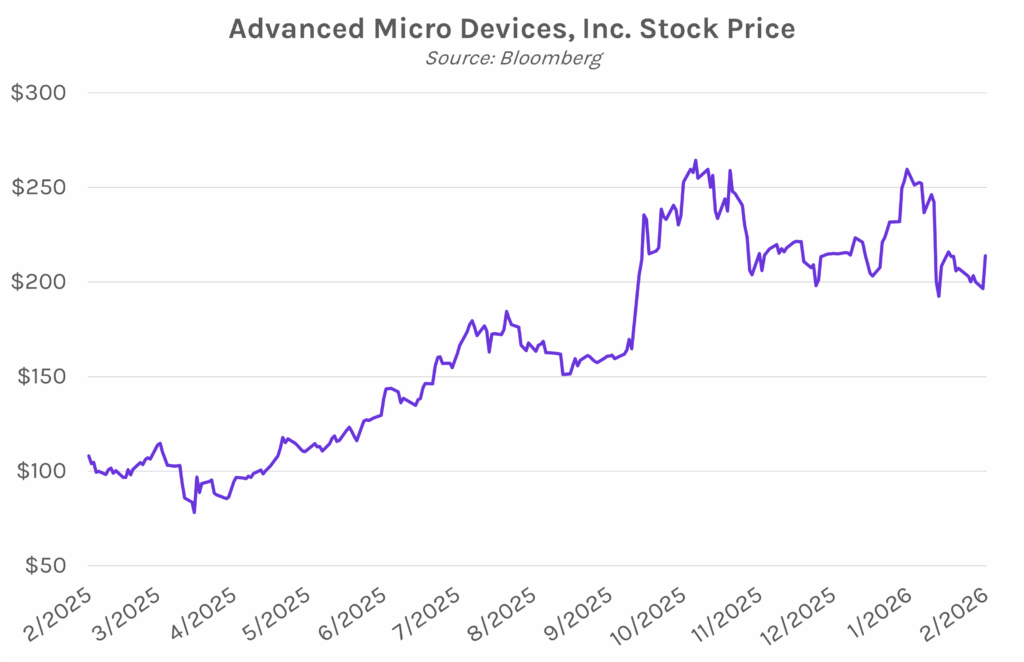
Yields mixed on hawkish Fed commentary. Treasury yields traded in a 2-3 bp range today, with the front-end inching slightly higher and the long-end lower. Yields had a muted reaction to better-than-expected consumer confidence data, with today’s curve flattening driven by corporate bond sales and hawkish Fedspeak. The 2-year yield closed 2 bps higher at 3.46%, while the 30-year closed 2 bps lower at 4.68%. Meanwhile, equities rallied following yesterday’s selloff, with the S&P 500 and NASDAQ closing 0.77% and 1.04% higher, respectively. Advanced Micro Devices, Inc. led the climb, closing nearly 9% higher after announcing an AI chip deal with Meta Platforms Inc.
Fed’s Collins focused on inflation, while Barkin sees risks to both sides of the dual mandate. Boston Fed President Susan Collins sees policy rates likely to stay unchanged “for some time” as recent data shows labor market stabilization, while inflation remains above the Fed’s 2% target. Collins elaborated, “After 175 basis points of easing over the past year and a half, we are at mildly restrictive, perhaps quite close to neutral already.” Meanwhile, Richmond Fed President Tom Barkin still also sees downside risks to the labor market, though he believes that policy rates are currently well positioned. Barkin noted, “Nobody wants inflation to stall, nobody wants the labor market to weaken further.” Collins is not currently a FOMC voter, while Barkin is an alternate voting member.
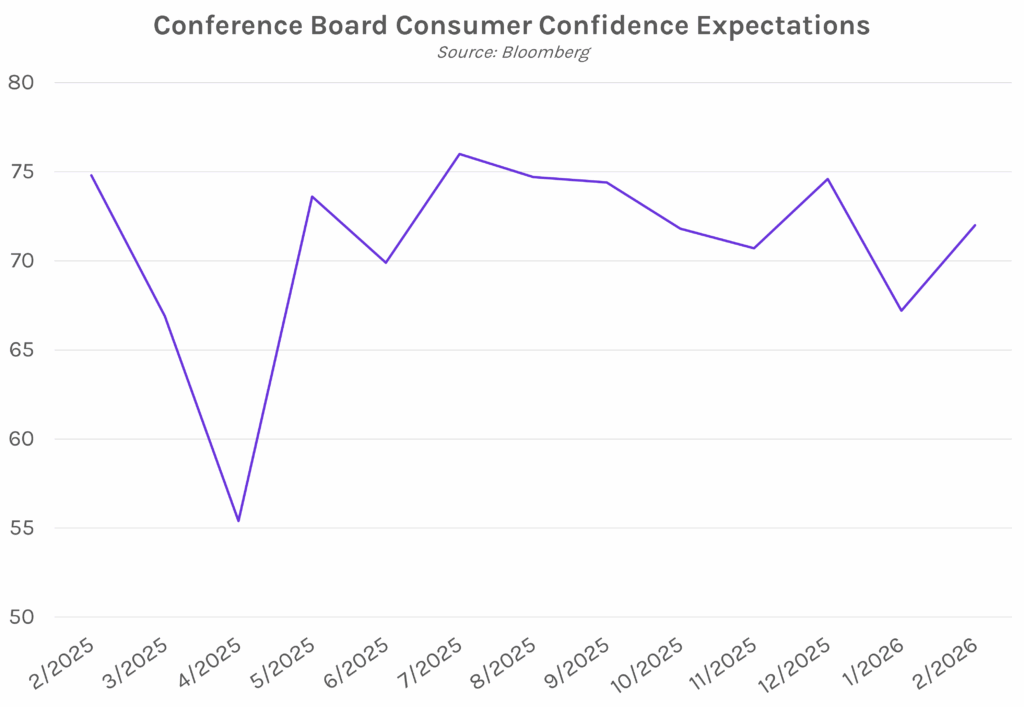
Consumer confidence rises on labor market optimism. The Conference Board gauge for consumer confidence rose to 91.2 in February, above estimates of 87.1 and January’s upwardly revised level of 89.0. The Conference Board’s expectations gauge, which measures consumer sentiment for the next six months, also climbed to 72.0. That represents a nearly five-point increase from the prior month, marking the largest jump since July. However, the present situation index continued to decline, falling to 120.0 from an upwardly revised 121.8 in January. This month, survey respondents expressed cautious optimism following recent labor data showing signs of stabilization, while inflation has somewhat moderated. The Conference Board’s survey period also occurred before the Supreme Court struck down President Trump’s tariffs, a decision that could further ease consumer concerns about high prices.