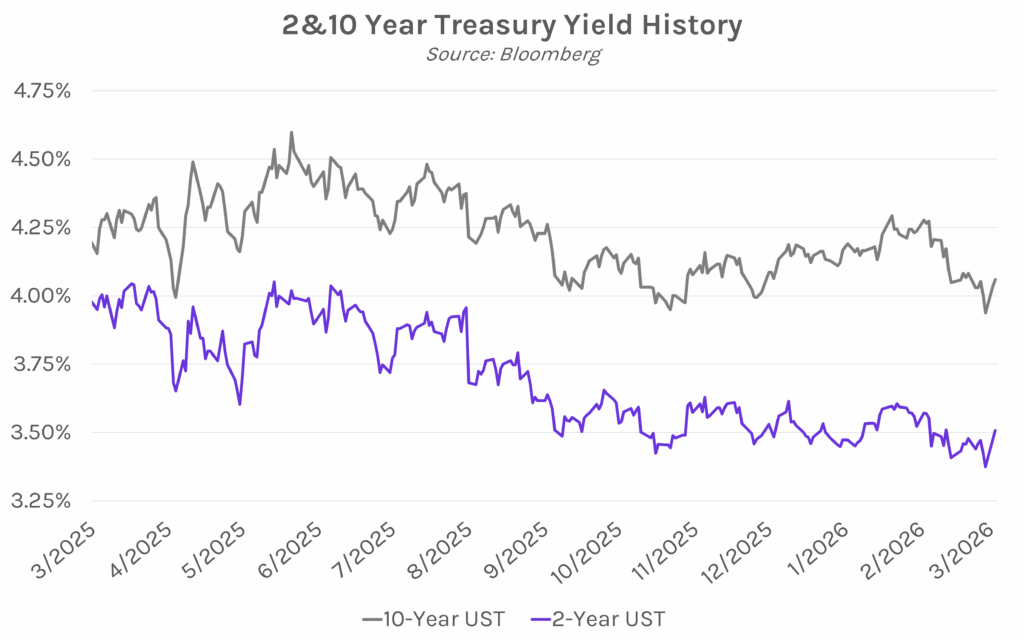
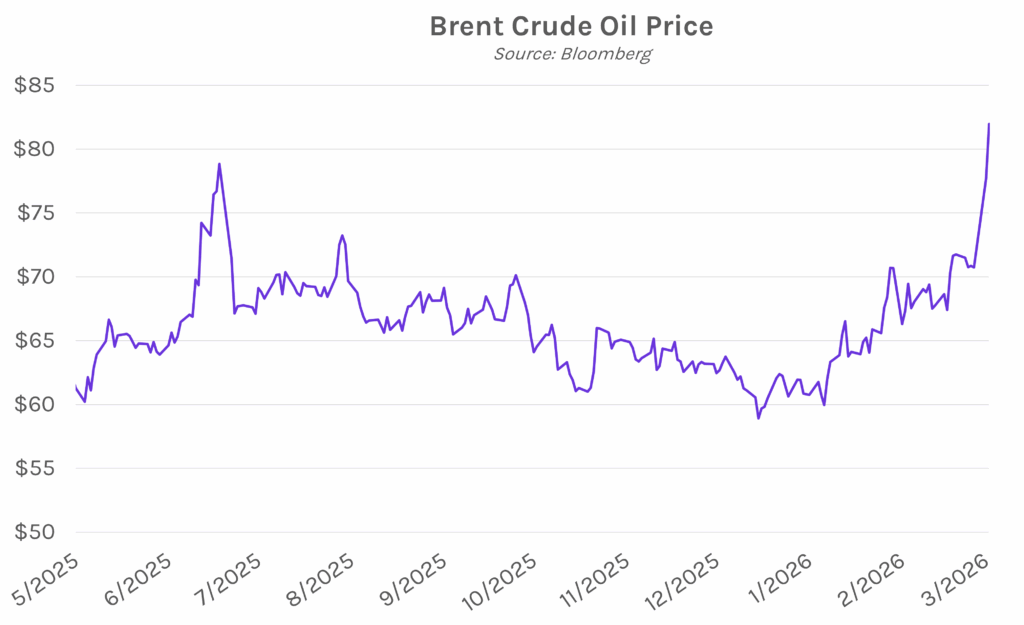
Yields climb as oil-related inflation risks remain. Treasury yields soared another 8-12 bps this morning as oil-driven inflation concerns continued, though the move partially reversed following President Trump’s announcement that the US will ensure safe shipping lanes in the critical Strait of Hormuz. Yields ultimately closed 2-3 bps higher across the curve, with the 2-year yield at 3.51% and the 10-year yield at 4.06%. Meanwhile, Brent crude futures closed at $81.40 per barrel, after earlier rising ~9% to briefly hit the $85 price level. Equities sold off, though Trump’s announcement fueled a rebound from intraday lows, with the S&P 500 and NASDAQ closing 0.94% and 1.02% lower, respectively.
Trump says the US will escort and insure oil tankers. President Trump said on social media today that the US will offer insurance to oil tankers through the US International Development Finance Corporation, a move driven by concerns that other ship insurers withdrawing coverage on ‘war risk’ policies would put additional upward pressure on oil prices. The president added that, “if necessary, the United States Navy will begin escorting tankers through the Strait of Hormuz, as soon as possible.” Oil prices briefly pared gains on the announcement, a positive sign for the White House and American consumers concerned about inflation and affordability. Gasoline prices have already hit a five-month high since conflict broke out over the weekend. Bob McNally, president of consulting firm Rapidan Energy Group said, “the announcement may help reassure traders,” but added that “full resumption of Hormuz flows will require weeks instead of hours or days.”
Fed’s Kashkari, Williams cite Iran War as new driver of uncertainty. After the recent war that has unfolded in Iran, Minneapolis Fed President Neel Kashkari is no longer confident in his previous outlook of one 25 bp rate cut for 2026 and notes that the Fed will need “a lot more data.” Kashkari said, “Right now it’s just too soon to know what imprint this has on inflation and for how long.” Meanwhile, New York Fed John Williams views the market impact as “reasonably muted,” with oil prices higher, but not “in a dramatic way.” When asked about the possible inflationary impact, Williams said, “We’ll have to see how persistent this is.” Fed officials are expected to keep policy rates unchanged when they meet later this month.