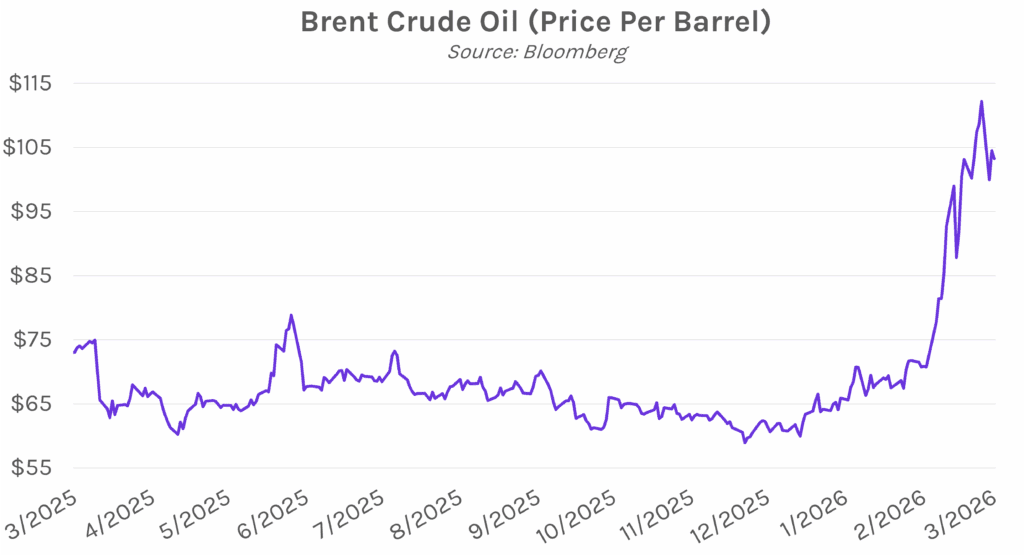
Yields decline as war resolution prospects remain uncertain. Treasury yields declined today on optimism stemming from recent US efforts to establish a ceasefire with Iran. Those efforts overshadowed Iran’s rejection of the current ceasefire proposal, yesterday’s strike on a nuclear power plant in Iran, and continued strikes led by Iran today. The 2-year yield ultimately closed flat at 3.89%, while the 10-year yield closed 3 bps lower at 4.33%. Meanwhile, Brent is now trading around $103 per barrel after closing below $100 on Monday. Equities advanced as the US continues to push for a deal with Iran, with the S&P 500 and NASDAQ closing 0.54% and 0.77% higher, respectively.
Iran rejects US ceasefire proposal. According to state-owned media, Press TV, Iran rejected the US peace proposal as it has its own conditions for a ceasefire. A senior Iranian security official said that Iran wants the US and Israel to guarantee that they will not resume attacks, provide reparations for war damages, and recognize Iran’s authority over the Strait of Hormuz. The US ceasefire proposal was a 15-point plan, delivered by Pakistan. The proposal included terms such as Iran dismantling its key nuclear facilities and using a reduced missile supply for self-defense purposes only. White House Press Secretary Karoline Leavitt said that the US has been involved in “productive conversations” over the last few days. Iran’s Foreign Minister, Abbas Araghchi, said there have been indirect “exchanges of messages,” but not negotiations.
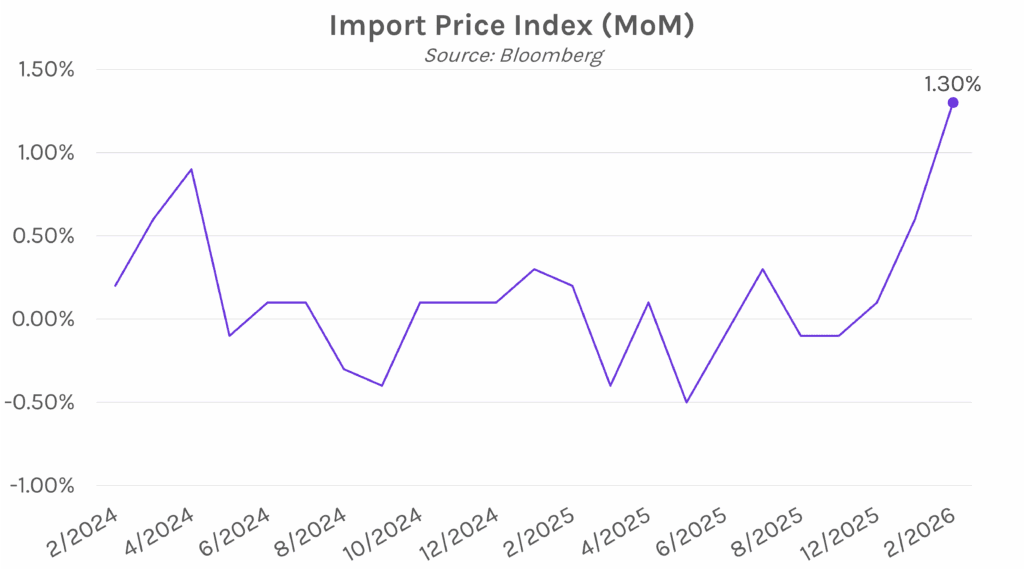
US import prices see biggest jump since 2022. Import prices increased 1.3% MoM in February, a surge from a 0.6% increase in January. The increase was partly driven by higher petroleum and natural gas prices, though the data predates the Iran War, suggesting inflation risks may be even more pronounced going forward. Oren Klachkin, an economist at Nationwide, said, “Given inflation momentum and the Mideast conflict’s anticipated impacts, price pressures will turn higher before they turn lower.” Import prices, excluding petroleum, still soared 1.2%, the fastest pace since January 2022, as capital goods and consumer merchandise costs increased. Imported capital goods saw the largest monthly increase since 1988, with higher prices for computers, semiconductors, and industrial machinery leading the advance. Export prices also jumped 1.5%, the largest increase since May 2022.