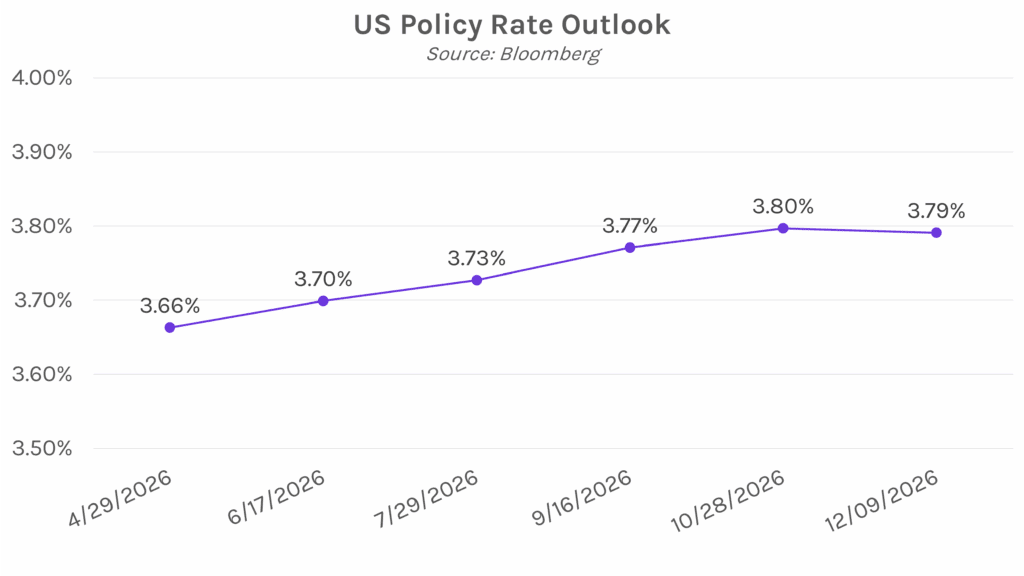
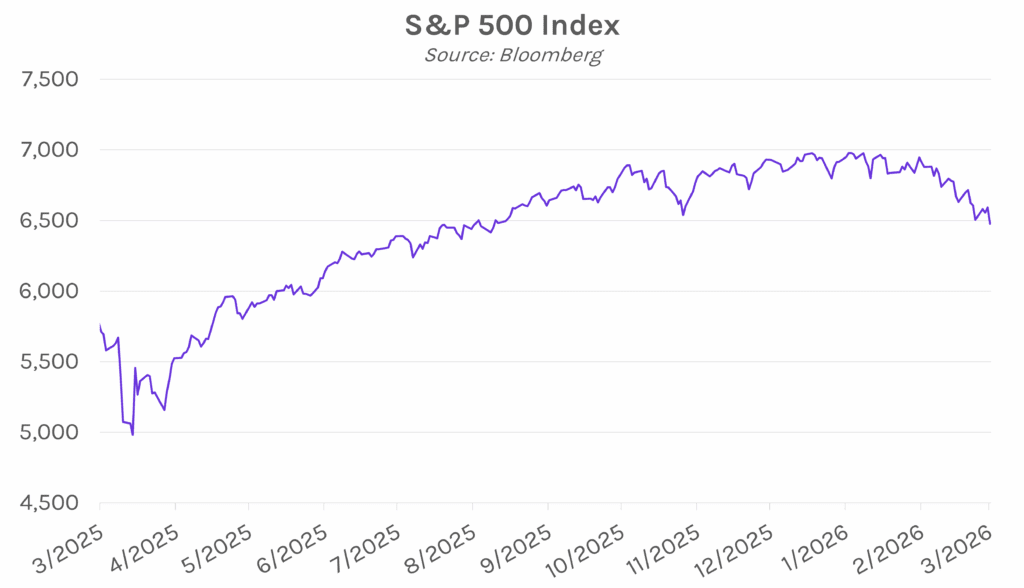
Yields rise as ceasefire odds wane. Treasury yields surged today on doubts about a potential peace agreement between the US and Iran. Yields declined 3-4 bps from intraday highs in the late afternoon after Trump announced that he was extending his ceasefire on Iranian energy facilities, though the move reversed almost immediately thereafter. The 2-year yield closed 10 bps higher at 3.99%, while the 10-year yield closed 8 bps higher at 4.41%. Meanwhile, Brent is now trading near $108 per barrel, and equities slid with the S&P 500 and NASDAQ closing 1.74% and 2.38% lower, respectively. The S&P 500 closed at its lowest level since September.
Trump extends timeline for Iran to reach a deal. Over the weekend, President Donald Trump said he would postpone strikes on Iranian energy infrastructure for five days as he claimed “productive conversations” were ongoing. Trump announced today that he would extend this deadline by 10 days because talks were going “very well.” Trump posted on social media, “As per Iranian Government request, please let this statement serve to represent that I am pausing the period of Energy Plant destruction by 10 Days to Monday, April 6, 2026, at 8 P.M., Eastern Time.” It remains unclear who the US is negotiating with as Iranian officials have continuously denied ongoing negotiations. According to Iran’s Tasnim News Agency, Iran is waiting for a response after it rejected the original ceasefire proposal the US presented. Both Israel and Iran continued air strikes against each other today.
Fed’s Cook sees higher inflation risk due to Iran War. Fed Governor Lisa Cook argued today that the ongoing Iran conflict has made inflation a greater concern than labor market strength, which Cook said is currently “in balance, but precariously so.” Cook explained that tariffs implemented last year already shifted inflation further away from the Fed’s target, and that the ongoing conflict in the Middle East can potentially have a large impact. She explained, “We could be at this for much longer than we anticipated. So I think right now, the balance of risks has shifted more to inflation.” Meanwhile, Fed Governor Stephen Miran increased his policy rate projection for 2026 by 50 bps, though he clarified that this was due to recent inflation data, and not due to the potential oil-driven inflation risks from Iran.