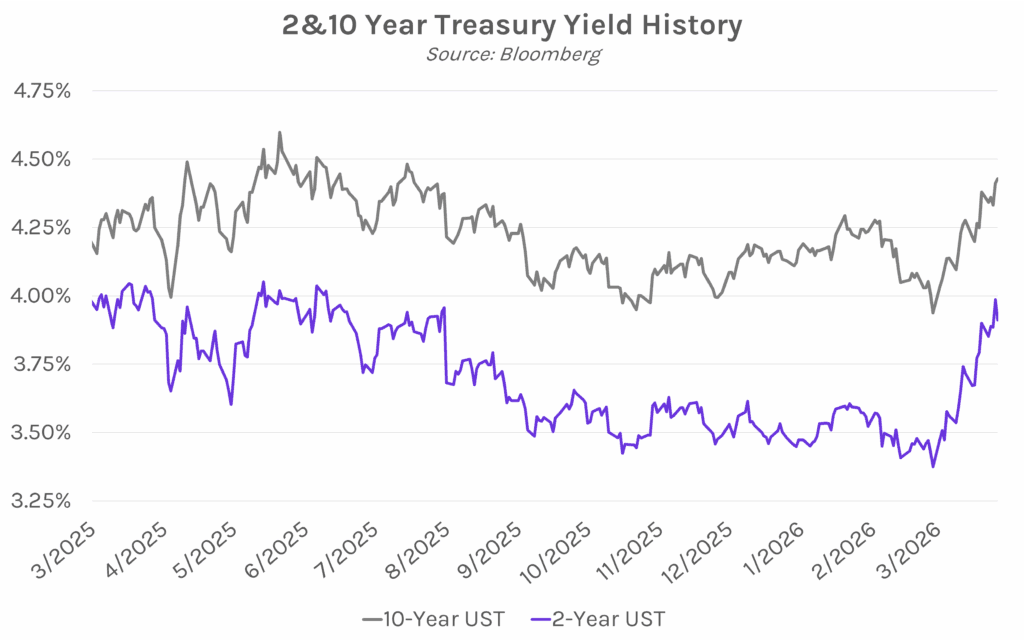
Yield curve steepens as Iran War continues to escalate. Treasury yields rose overnight but declined throughout the majority of the session, largely driven by news that Iran’s counter to the original US ceasefire agreement would be presented today. The war raged on in the interim, as the US and Israel attacked nuclear and steel facilities in Iran, while Iran launched counterstrikes. The 2-year yield closed 7 bps lower at 3.91% (up 1 bp on the week), and 10-year yield closed 2 bps higher at 4.43% (up 5 bps on the week). Meanwhile, equities continued to sell off, with the S&P 500 and NASDAQ dropping 1.67% and 2.15%, respectively. Brent is trading over $114 per barrel, near its highest level this week.
Tensions heighten as US, Israel, and Iran launch attacks. The US and Israel launched bombs on nuclear and steel facilities in Iran today, despite President Trump saying yesterday that he would postpone strikes on energy infrastructure for another 10 days. According to Iranian state media, airstrikes occurred on part of a nuclear complex, a production plant, and two of the nation’s largest steel factories. In response, Iran warned that it will retaliate against steelmakers in the region, with steel plants in Israel, Saudi Arabia, and Qatar, among others, now considered military targets, according to the Tasnim News Agency. Iranian Foreign Minister Abbas Araghchi said on social media, “Attack contradicts POTUS extended deadline for diplomacy.” Iran also initiated airstrikes today, resulting in two damaged ports in Kuwait and triggering missile alerts in Doha.
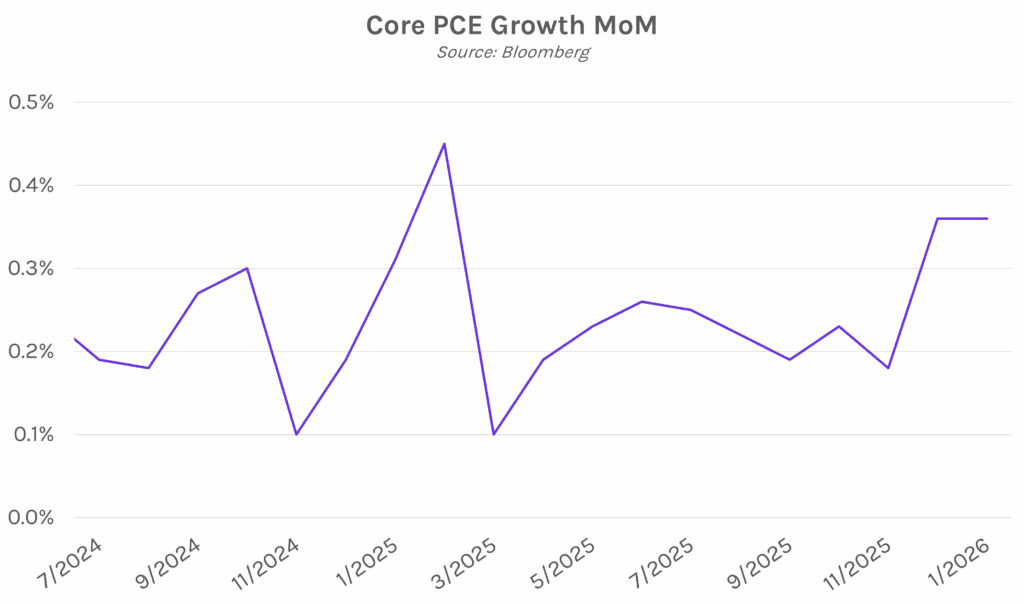
Fed’s Barkin sees Iran War adding to inflation risk. Richmond Fed President Tom Barkin said the Iran conflict could add upward pressure on already elevated inflation, further clouding the economic outlook. Barkin cited recent inflation data which suggested that progress toward the Fed’s 2% target may be stalling. Furthermore, he noted that the latest oil price spike only adds to a series of supply shocks since the pandemic, including semiconductor shortages, the war in Ukraine, tariffs, and immigration enforcement. While many Fed officials have shifted their focus to inflation, Barkin acknowledged that the labor market “feels a bit fragile” and remains a concern.