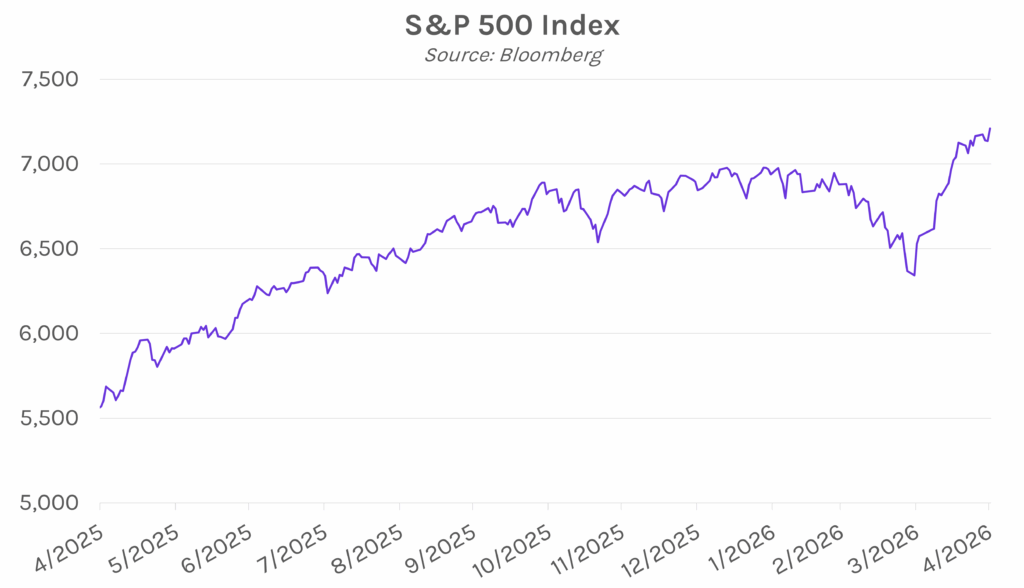
Yields decline as energy prices see relief. The yield curve steepened today, as falling oil prices weighed down the front-end and heavy corporate debt issuance kept long-end yields from fully following suit. The 2-year yield closed 8 bps lower at 3.87%, while the 30-year yield closed 4 bps lower at 4.97%. Brent crude is now trading around $114 per barrel compared to its overnight high of $126.31, even though US and Iran peace discussions remain at a standstill. Meanwhile, equities rallied to close out their best month since 2020, with the S&P 500 and NASDAQ closing up 1.02% and 0.89%, at all-time highs.
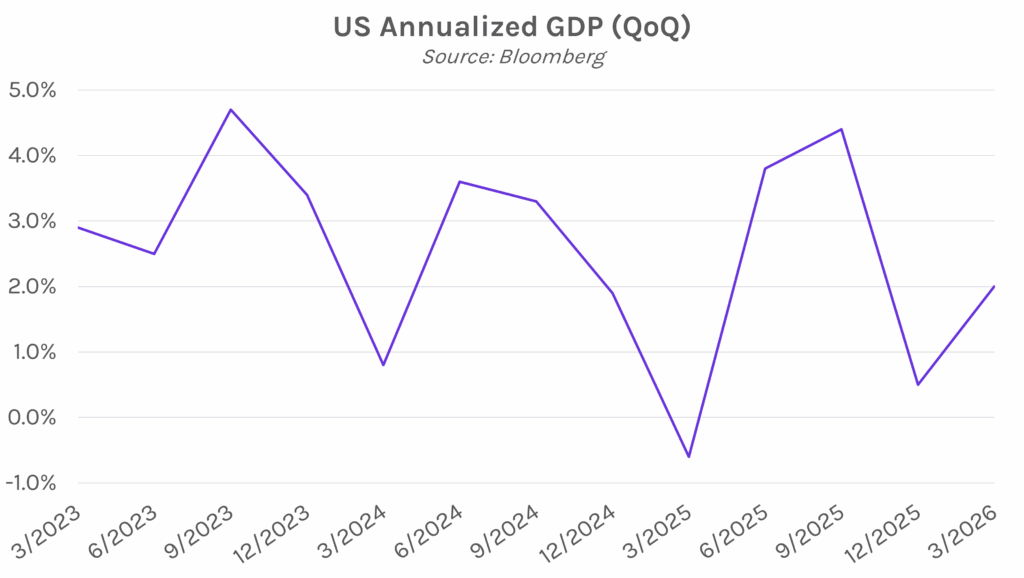
US GDP grew in the first quarter despite a slowdown in consumer spending. US GDP grew 2.0% on an annualized basis in Q1 2026, slightly below estimates of a 2.3% QoQ increase but well above the modest 0.5% growth recorded in Q4 2025, which was affected by the longest-ever US government shutdown. The Q1 expansion was primarily driven by business investment tied to AI, with spending on equipment and structures rising 10.4%, marking the fastest pace in nearly three years. Consumer spending growth slowed from the previous quarter, but still came in above estimates, increasing by 1.6%. Experts believe tax refunds have helped cushion the initial impact of inflationary pressures linked to the war in Iran, though it is likely the full effects have not yet reached consumers. Meanwhile, gas prices have climbed to their highest levels since 2022, and the US savings rate fell in March to its lowest level since 2022.
ECB, BOE hold rates steady, see near-term hikes. The European Central Bank voted to hold deposit rates steady at 2% today, though the central bank’s president Christine Lagarde indicated that they may need to hike rates at their June meeting. She said, “Directionally I know where we’re heading but we shall see, there might be massive changes taking place… There’s one element that is going to have a real real impact. And that is the duration of the conflict.” The Bank of England also voted to leave benchmark rates unchanged at 3.75%, with Chief Economist Huw Pill as the lone dissenter in favor of a rate hike. Governor Andrew Bailey said rates are currently at a “reasonable place” given the weakness in the economy, though a rate hike may be warranted if energy prices remain elevated. Today’s ECB and BOE decisions come the day after the FOMC voted to hold rates steady, with the theme being uncertain inflationary impacts from the war in Iran.