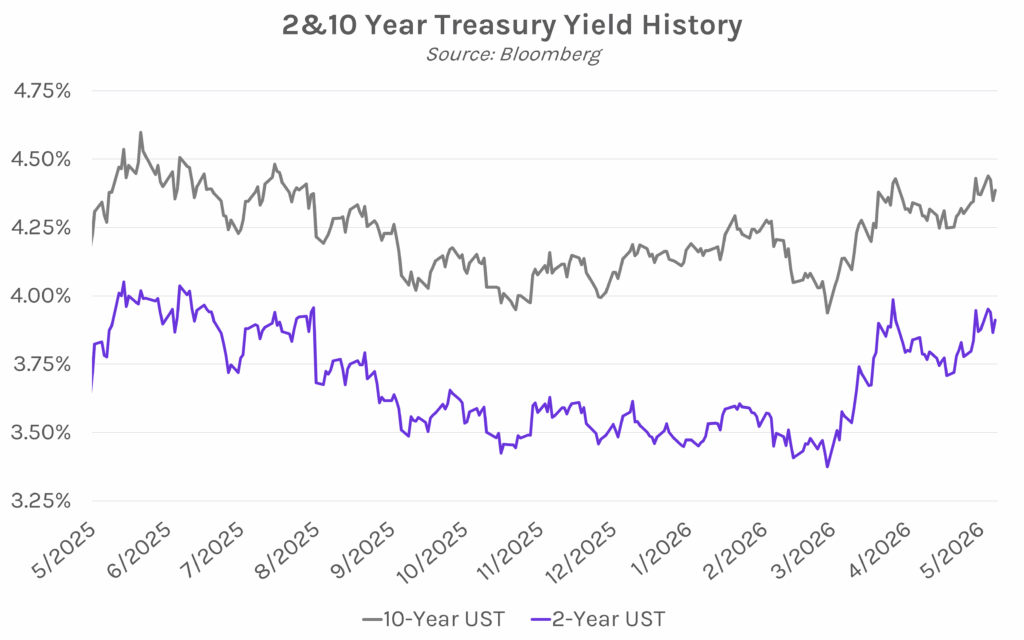
Yields rise as US-Iran tensions heighten. Treasury yields climbed today as the conflict in the Middle East escalated, including explosions in southern Iran and Iranian attacks on US Navy ships. The news marked a sharp reversal from yesterday’s reported progress, where the US expressed optimism that a peace agreement would be met with Iran. The 2-year yield closed 5 bps higher at 3.91%, 9 bps above its intraday low, while the 10-year yield closed 4 bps higher at 4.39%. Meanwhile, equities slipped in a risk-off move, with the S&P 500 and NASDAQ closing 0.38% and 0.13% lower, respectively.
Strikes break out as US awaits Iran’s peace proposal response. The US is currently awaiting Iran’s response to the one-page peace proposal that was proposed earlier this week. It’s reported that Iranian President Masoud Pezeshkian met with Supreme Leader Ayatollah Mojtaba Khamenei, though it is unclear what was discussed. In the meantime, US Central Command said that the American military responded to Iranian attacks on US Navy ships traveling through the Strait of Hormuz today. It was reported that the Iranian attack included “multiple missiles, drones, and small boats,” though “no US assets were struck.” The command noted that it “does not seek escalation but remains positioned and ready to protect American forces.” Tensions also escalated as Israel launched attacks on Lebanon, the first in almost a month since a ceasefire began.
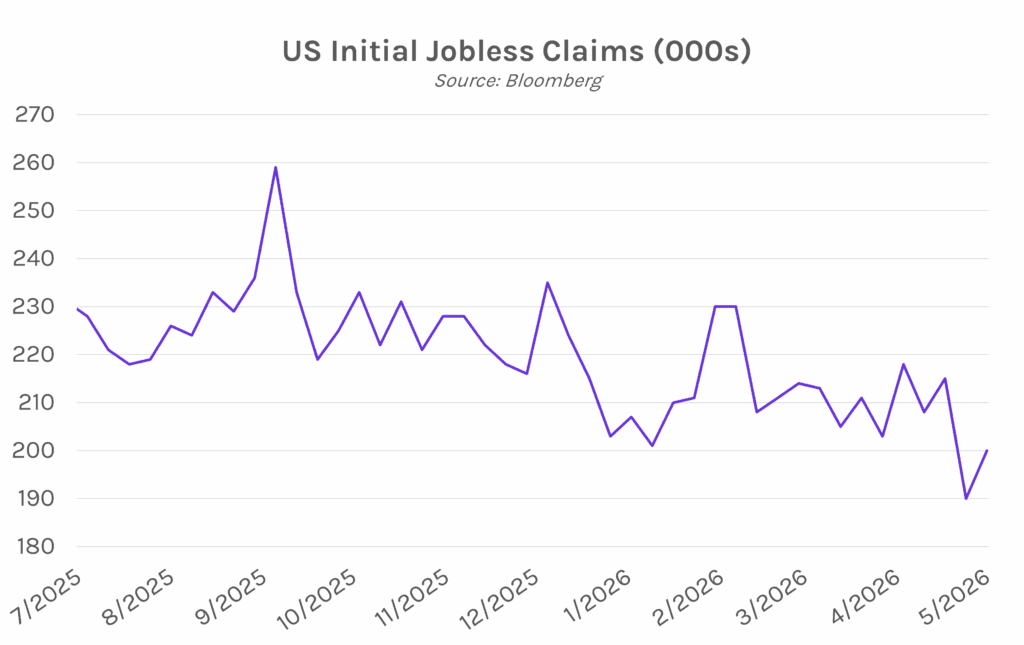
Continuing jobless claims falls to lowest level in over two years. Initial jobless claims rose slightly to 200k in the week ending May 2, according to Labor Department data released today. However, the four-week moving average declined to 203k from 208k, and continuing claims fell to 1.77 million in the week ending April 25, the lowest level since January 2024. Outplacement firm Challenger also released its April jobs report which showed 83.4k layoffs, up from March’s 60.6k but down 20.9% YoY. US employers have announced over 300k job cuts so far in 2026, with technology companies accounting for the majority of layoffs, often citing AI-driven restructuring.