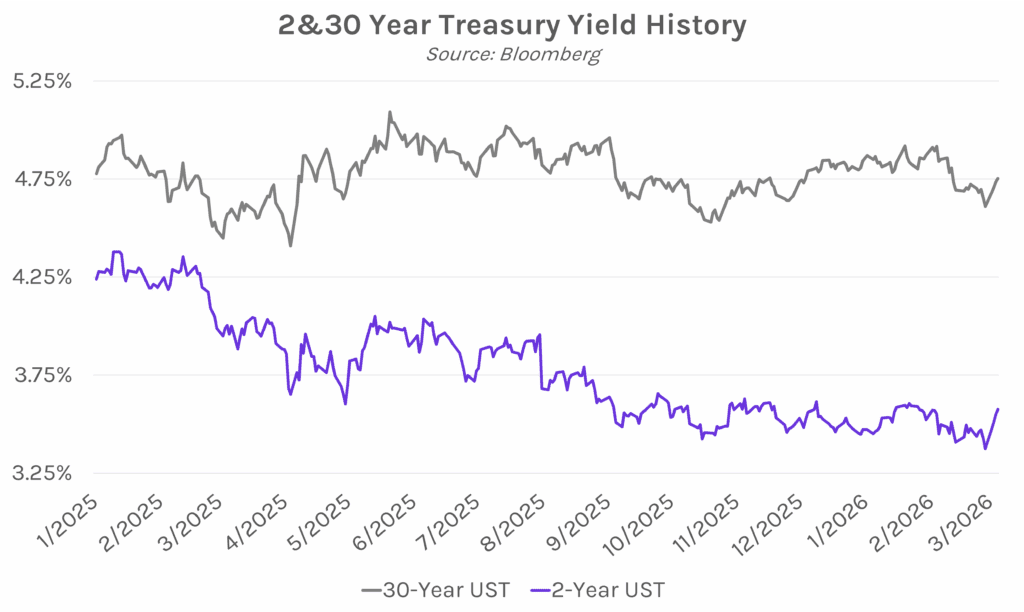
Yields rise as oil prices continue to soar. Treasury yields climbed further as the war in Iran continues to escalate, driving oil prices higher and increasing concerns about energy-related inflation. Yields are up 14-20 bps on the week, with the 2-year yield closing 3 bps higher today at 3.58% and the 30-year yield 2 bps higher at 4.75%. Meanwhile, equities declined as chipmaker names slid on news that the Trump Administration may require permits to sell AI chips. The S&P 500 and NASDAQ closed 0.56% and 0.26% lower, respectively. WTI crude closed at $81.01 per barrel, up from yesterday’s $74.66 close.
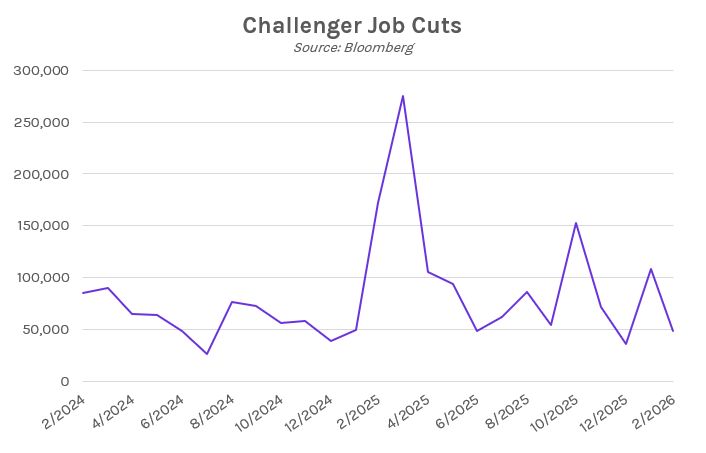
Job cuts data offer another sign of labor market stabilization. Outplacement firm Challenger’s released their February job cuts data today, with companies reporting just 48.3k layoffs last month. While January’s 108.4k layoffs was the highest since 2009, February’s figure is also down 71.9% from last year, when the Trump Administration slashed federal jobs. Technology sectors accounted for over 20% of February’s firings, while expected layoffs were also elevated among education and industrial goods companies. Today’s report offered another bright spot for the labor market as hiring plans more than doubled in February compared to the prior month, with 12.8k job openings reported. February government jobs data is set to release tomorrow, and is expected to show steady unemployment and moderate job growth.
Fed’s Bowman, Barkin shift focus away from labor market stability. Fed Vice Chair for Supervision Michelle Bowman suggested that she may support holding rates steady at the upcoming FOMC meeting, saying “Since the January meeting, we’ve started to see more information that is pointing a little bit more to signs of stabilizing in the labor market.” Richmond Fed President Tom Barkin similarly said that recent data suggests that the balance of risks have shifted towards inflation.He now remains focused on tackling inflation, though that depends on the impact of the war in Iran on the US economy. Barkin said, “Gas prices, obviously, if they’re up, that is inflationary. Textbook monetary policy would be you look through a short-term shock, but you don’t look through a long-term shock, and I think that’s a lot of the assessment people are going to have to make.”