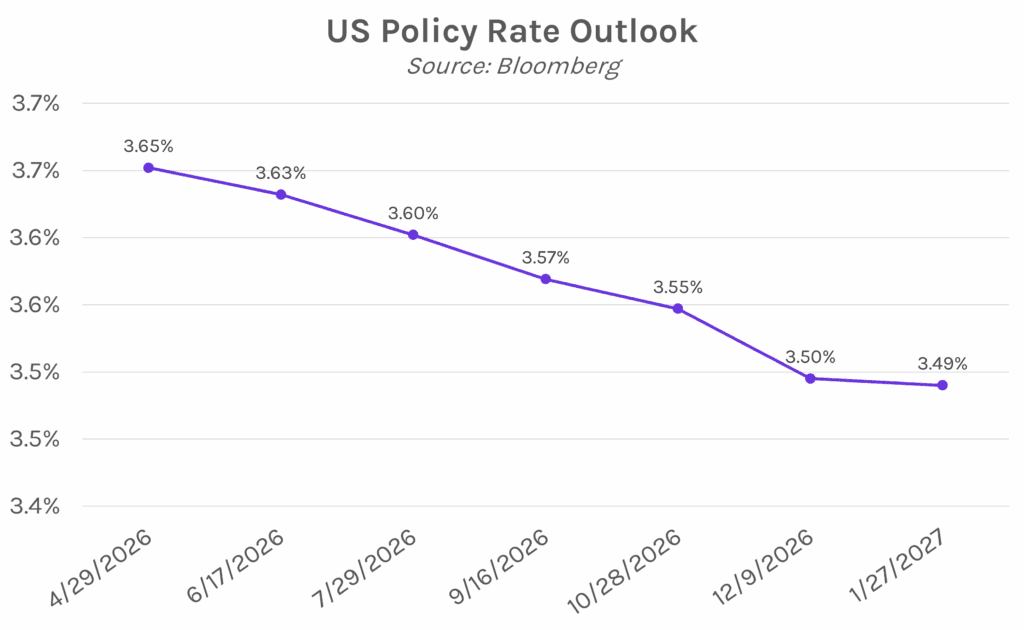
Yields rise as Fed holds policy rates, cites uncertainty on Iran War. Treasury yields edged higher this morning as oil prices continued to surge, with Brent crude closing at $107.38, up from intraday lows of $100.44. Volatility then surged despite the FOMC’s vote to hold rates steady, as Chair Powell discussed uncertainty over the Iran War and its potential inflationary impact. Futures markets now see a rate hike as more likely than a rate cut at the April FOMC meeting, and a rate cut is not fully priced in until July 2027. The 2-year yield closed 10 bps higher at 3.77%, and the 10-year yield closed 7 bps higher at 4.27%. Meanwhile, equities slid, with the S&P 500 and NASDAQ closing 1.36% and 1.46% lower, respectively.
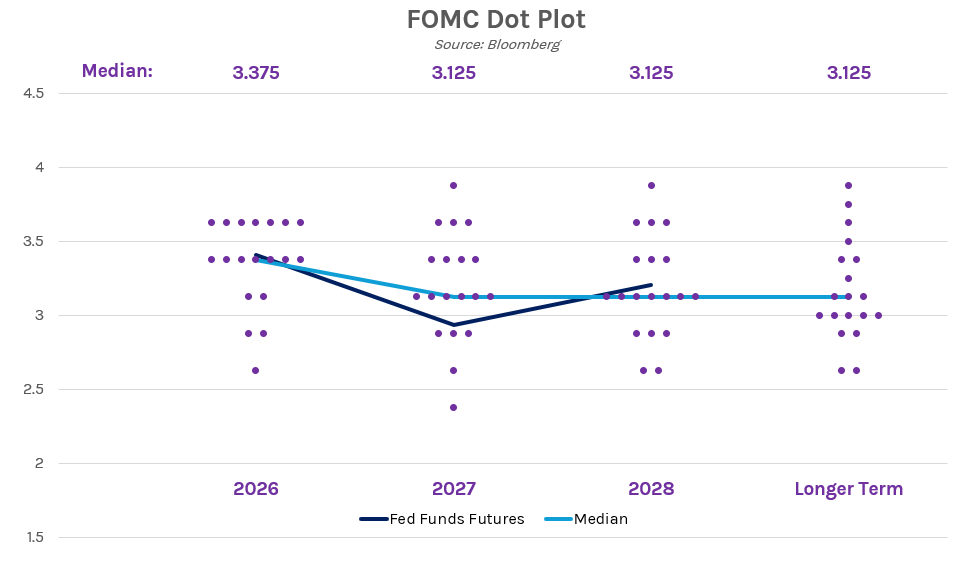
Fed holds rates steady as Powell says he’ll stay. Fed officials voted 11-1 to hold the target benchmark rate between 3.50% and 3.75%, with Governor Miran dissenting in favor of a quarter-point cut. Fed focus remains on inflation, especially among goods prices, which have been driven up by tariffs. The committee increased their 2026 inflation outlook to 2.7%, from 2.4% previously. The outlook for core inflation, which excludes volatile food and energy prices, also rose to 2.7%. Today’s meeting statement emphasized economic uncertainty due to the war in Iran, a point Chair Powell highlighted in his post meeting remarks, saying “nobody knows” the “scope and duration of the potential effects on the economy.” Powell also used the press conference to make a rare public statement on the future of the central bank, stating he had “no intention” of resigning from the Board of Governors until the DOJ investigation into the Fed building renovation is “well and truly over.” Powell said he would serve as chair pro tempore if his successor is not confirmed before his term ends in May. The full FOMC statement with a side-by-side comparison from the last meeting can be read here.
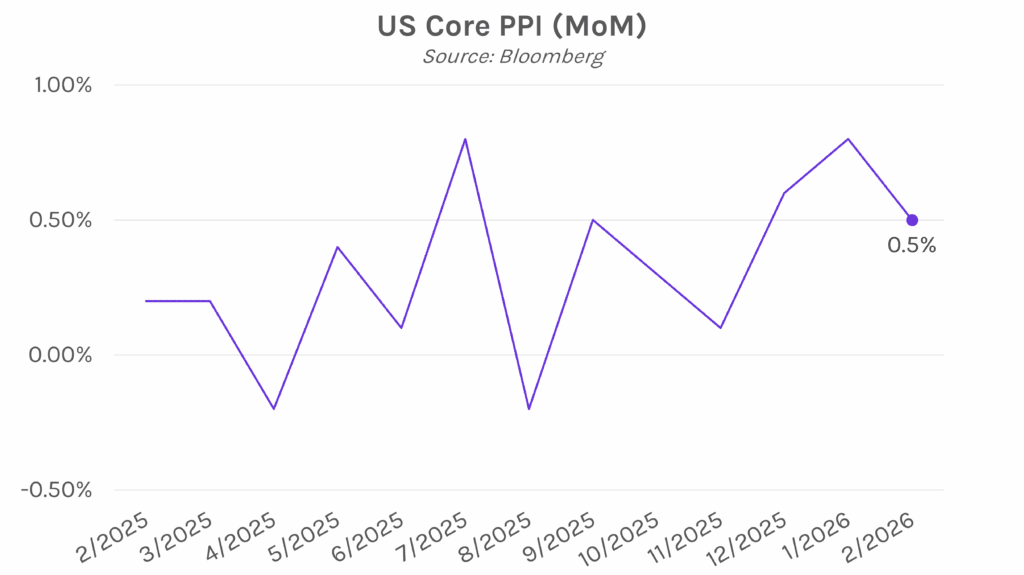
Producer Price Index posts surprise increase. Headline and core MoM PPI unexpectedly jumped 0.7% and 0.5% in February, respectively, versus forecasts of 0.3%. Notably, the February data excludes impact from the Iran conflict; Thomas Ryan, an economist at Capital Economics, said, “The large upside surprise to the PPI in February confirms that stronger inflationary pressures were already making their way through supply chains even prior to the surge in oil prices.” The advance was largely driven by increases in services costs, such as travel accommodations, food wholesaling, and investment services. Food prices also saw the biggest increase since 2021, due to a surge in vegetable prices.