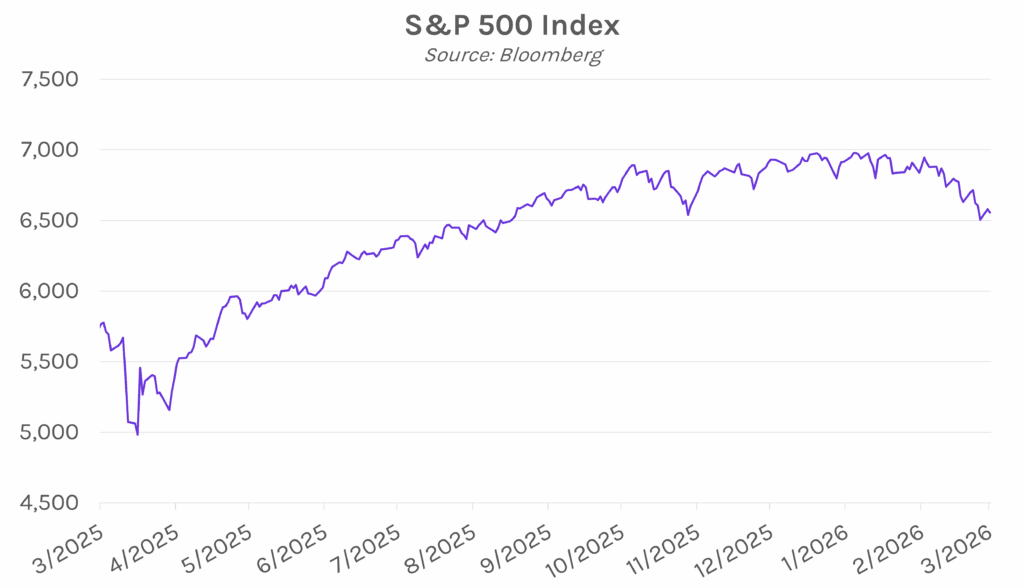
Yields reverse earlier climb on hopes of war resolution. Treasury yields climbed as many as 11 bps to intraday highs on news that 3,000 American soldiers are likely to be deployed to the Middle East, though no decision to put boots on the ground has been made yet. The move quickly reversed course on news that the US and Iran may hold talks as soon as Thursday and yields later plummeted 4-9 bps on a report that the US is working on a 1-month ceasefire agreement. The 2-year yield closed 4 bps higher at 3.89%, while the 10-year yield closed 2 bps higher at 4.36%. Meanwhile, equities slid, with the S&P 500 closing 0.37% lower, recovering from a near 1% drop earlier in the day.
Iran allowing “non-hostile” ships to cross Strait of Hormuz. In a letter to members of the International Maritime Organization, Iran said that foreign ships can cross through the Strait of Hormuz, as long as they are following Iran’s regulations and not supporting aggressive acts against the nation. The letter also noted that “non-hostile vessels” may “benefit from safe passage through the Strait of Hormuz in co-ordination with the competent Iranian authorities.” This comes after President Trump gave Iran an ultimatum to reopen the Strait of Hormuz on Saturday, though he later postponed the threat as he claims he had “productive” talks with Iran, which Iran denies. According to people familiar with the matter, Iran has also begun charging fees on some commercial ships passing through the Strait, though only a few ships appear to have traversed through the waterway recently.
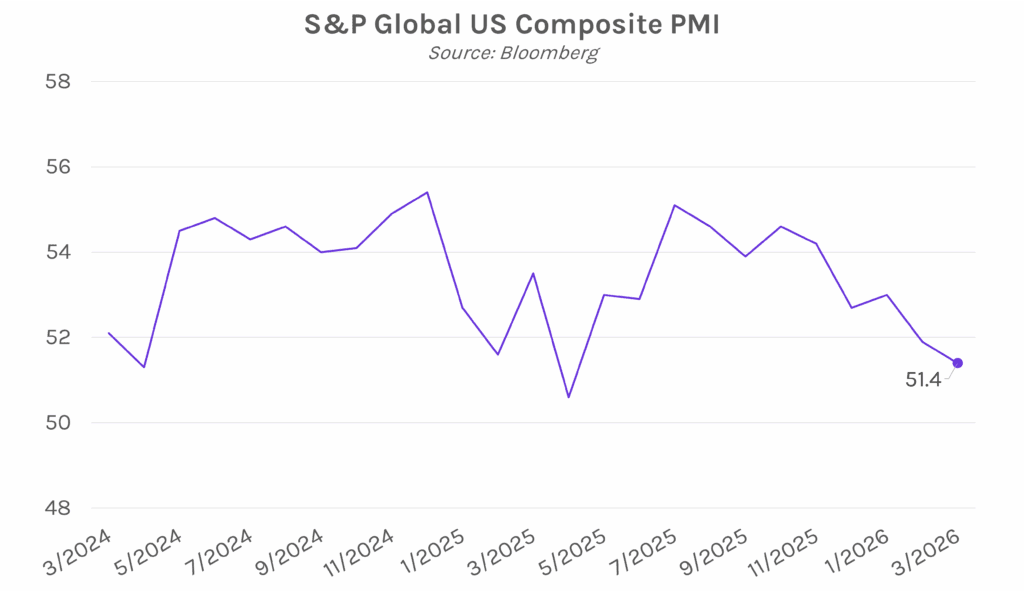
March business activity growth slows as Iran War unfolds. The S&P Global Composite PMI flash reading declined to 51.4 from 51.9 last month. The decline comes as services activity saw the weakest growth in almost a year, with the gauge at 51.1 versus 52 expected. Services’ input prices also rose to the highest level since May. Many companies passed along these costs to their customers, as the survey posted the biggest jump in selling prices in over three years. Chris Williamson, chief business economist at S&P Global Market Intelligence, said, “Companies are reporting a hit to demand from the additional uncertainty and cost of living impact generated by the conflict.” Meanwhile, manufacturing showed continued stabilization, with the index at 52.4 on continued acceleration in orders and production.