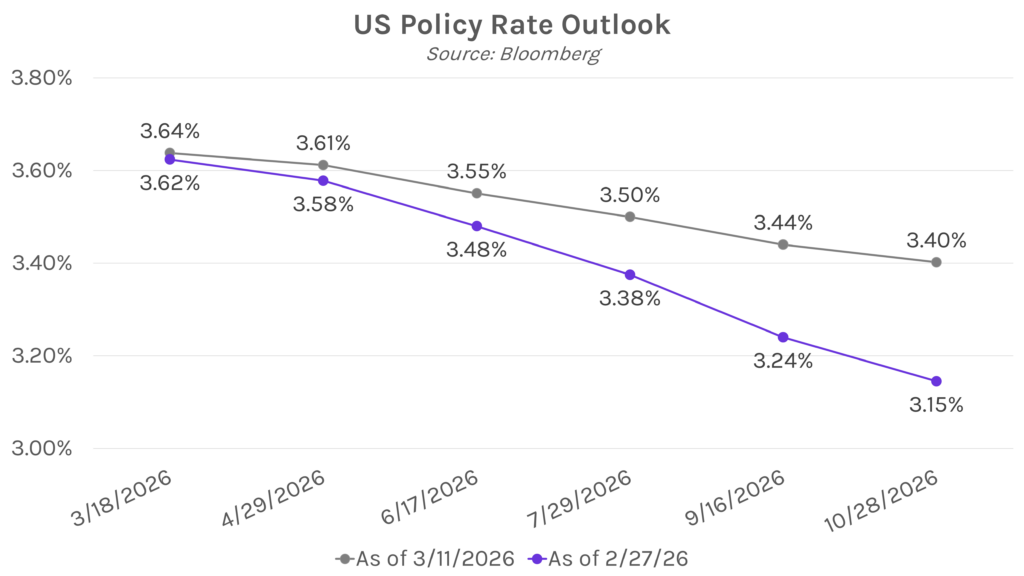
Yields climb as oil rally continues. Treasury yields rose over the course of today’s session on inflation concerns as oil continues to rally on the war in Iran. Despite a tame CPI print today, futures markets are only pricing in one 25 bp rate cut this year because of the oil-driven inflation risk, versus between 2-3 cuts prior to the war’s outbreak. Yields closed 6-9 bps higher across the curve, with the 2-year yield at 3.65% and the 10-year yield at 4.23%. Meanwhile, equities were little changed, with the S&P 500 closing 0.08% lower and the NASDAQ closing 0.08% higher.
IEA to facilitate release of 400 million barrels of oil. President Trump announced today that the International Energy Agency would “coordinate the release of a record 400 million barrels of oil from various national petroleum reserves around the world,” in an effort to counteract disruptions caused by the war in Iran. Trump said the move would “substantially reduce the oil prices, as we end this threat to America and this threat to the world.” The 400-million-barrel drawdown would far exceed the previous largest-ever release of 183 million barrels by IEA member states following Russia’s invasion of Ukraine in 2022. Despite the announcement, US WTI crude futures continued to rise, ending the day up 4.6%, at $87 a barrel.
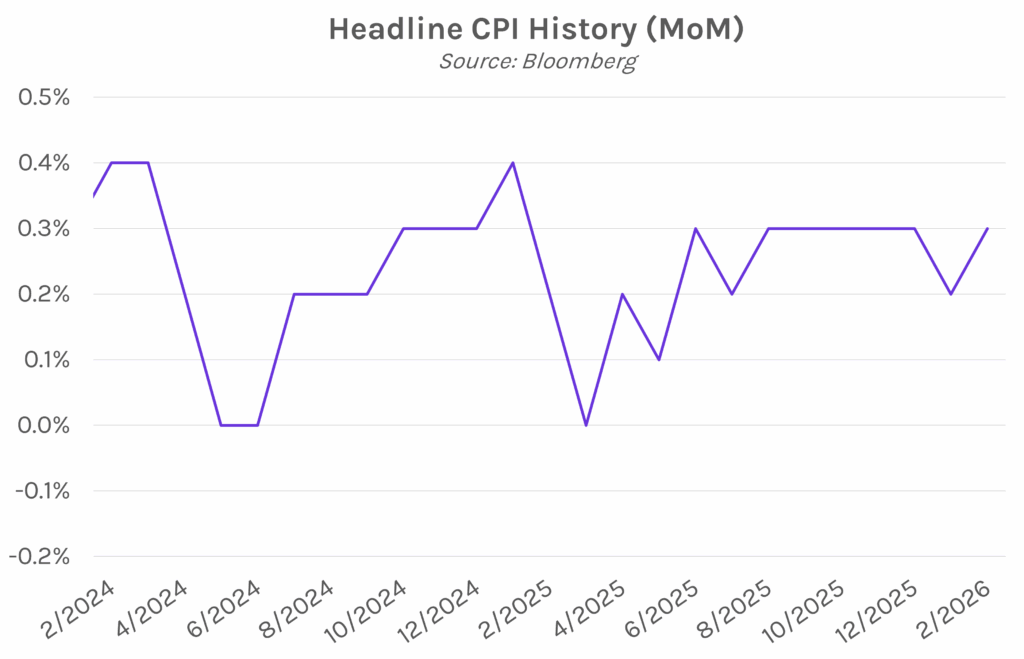
Pre-war inflation data cooled as expected. Februaryconsumer price index data showed inflation easing in line with expectations before the war in Iran began. Headline CPI rose 0.3% MoM, higher than January’s 0.2% increase but matching estimates. Core CPI, which excludes volatile food and energy prices, rose 0.2% MoM, also in line with forecasts. Year-over-year, CPI and core CPI increased 2.4% and 2.5%, respectively. Today’s report showed that reduced used car, auto insurance, and housing prices helped keep inflation in check, even as gasoline and grocery prices climbed. US inflation has generally trended downwards in recent months, although the conflict in the Middle East has revived price concerns. Oil, gas, and fertilizer costs have already risen significantly in the first eleven days of the war. Carl Weinberg, chief economist at High Frequency Economics, believes higher energy prices will raise trucking and airfare costs and also flow through to food and other goods.