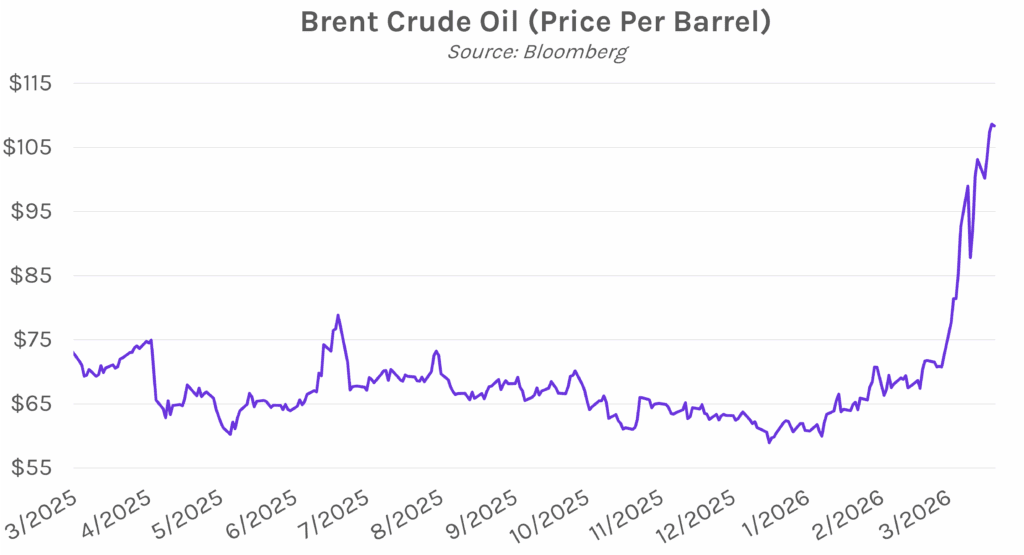
Yields rise on continued volatility from Iran War. Treasury yields climbed 14-15 bps today as news of potential escalation in the Middle East increased market anxiety over the potential inflationary impact of the war. The move largely held, with yields closing 11-13 bps higher across the curve. The 2-year yield ultimately closed at 3.90% (up 18 bps on the week), and the 10-year yield closed at 4.38% (up 10 bps on the week). Meanwhile, equities sold off further, with the S&P 500 and NASDAQ closing 1.51% and 2.01% lower, respectively. Brent closed above $109 per barrel, down from its intraday high of $113.04.
President Trump considering “winding down” the war in Iran. President Trump posted on social media today that the US has gotten “very close to meeting our objectives as we consider winding down our great Military.” Trump also said he would leave the effort of reopening the Strait of Hormuz to “other Nations who use it.” He claimed the US does not utilize the critical shipping lane, adding, “it’ll open itself.” Despite the post seeming to suggest an end to American military involvement, earlier today Trump remarked that he doesn’t “want to do a ceasefire.” Furthermore, reports have suggested the White House may be weighing military action focused on Kharg Island, Iran’s main hub for oil exports, with additional ships and marines potentially being deployed to the region.
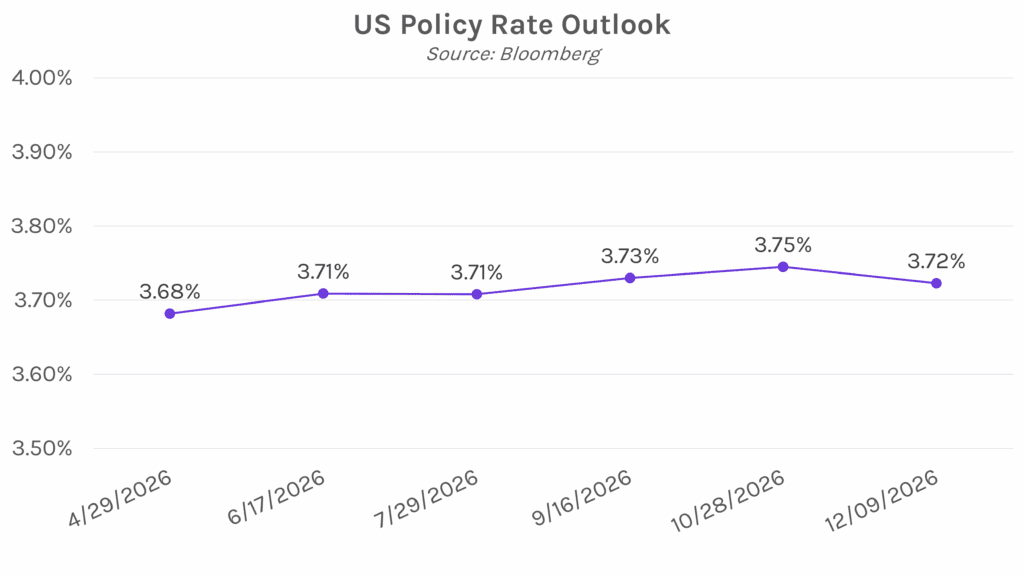
Fed’s Waller hesitant on future rate cuts as oil surges. Fed Governor Christopher Waller said that “caution is warranted” as the impact of surging oil prices due to the Iran War remains unclear. Despite his concern on the potential inflationary impacts, Waller said, “It doesn’t mean that I’m going to stay put for the rest of the year. I just want to wait and see where this goes.” Waller noted that if the labor market deteriorates further, he will advocate for cutting rates later this year. Waller dissented at the January FOMC meeting in favor of a 25 bp cut, citing continued weakness in the labor market. However, at this week’s March meeting, Waller voted to leave rates unchanged, though he said that he would have dissented again if it were not for the ongoing uncertainty from the war.