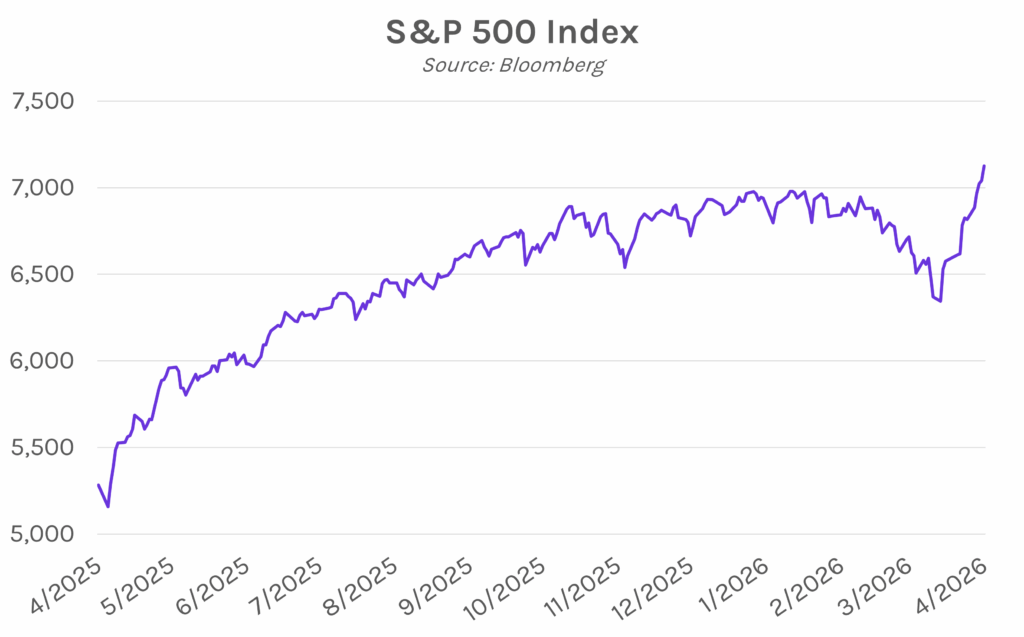
Yields plummet as Strait of Hormuz reopens. Treasury yields plunged ~6 bps this morning on news that the Strait of Hormuz reopened to commercial vessels. Though the US and Iran still have not reached an agreement, the reopening of the strait provided relief for energy markets and fueled optimism heading into continued negotiations this weekend. Yields closed 5-7 bps lower across the curve, with the 2-year yield at 3.71% (down 9 bps on the week) and the 10-year yield at 4.25% (down 7 bps on the week). Meanwhile, equities soared further, with the S&P 500 up 1.20% to close at 7,126.06, marking an all-time high for the third consecutive day.
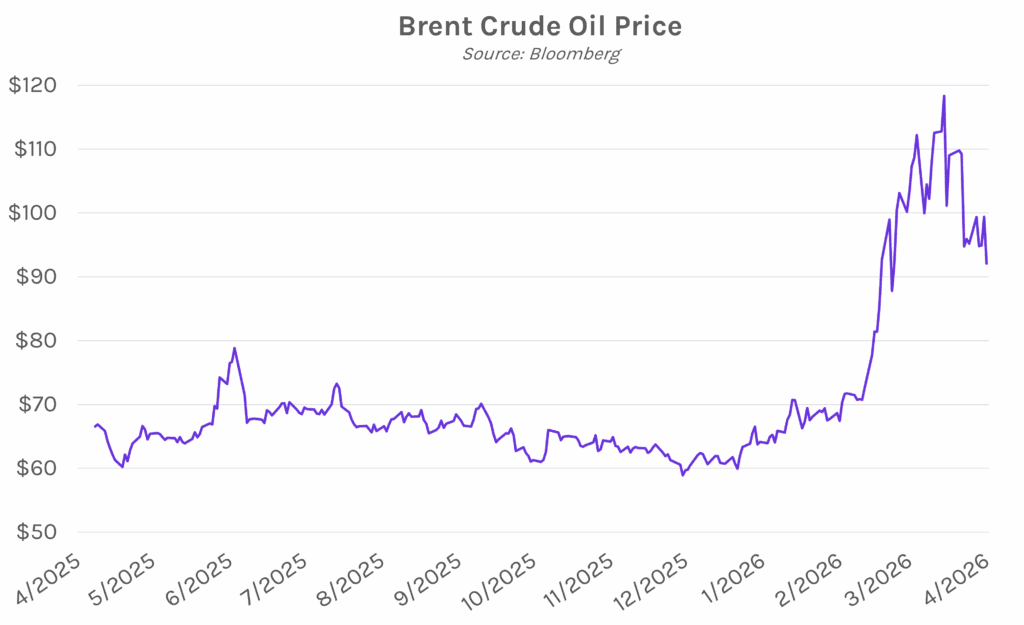
Iran reopens the Strait of Hormuz ahead of continued negotiations with the US. After Israel and Hezbollah agreed to a 10-day ceasefire, Tehran announced the Strait of Hormuz has reopened. Iran’s Foreign Minister, Abbas Araghchi, said on social media that the strait is fully open to commercial vessels, though ships must follow routes designated by Iranian authorities, and it remains unclear whether Iran will impose tolls. President Trump celebrated the development but said the US naval blockade of Iranian ports would continue “until such time as our transaction with Iran is 100% complete.” Iranian officials have pushed back, reiterating their view that the blockade violates the ceasefire. Oil prices fell on news of the strait reopening and growing optimism about a potential US-Iran deal. Negotiators from both countries are expected back in Islamabad ahead of the next round of peace talks on Monday, with the current ceasefire set to expire on Tuesday.
Fed’s Waller remains wary of potential war impacts. Fed Governor Christopher Waller expressed that he is cautious about the policy path ahead due to energy price shocks from the war in Iran. Waller explained that Fed officials should be able to look through energy supply shocks if the Strait of Hormuz remains open and trade is normalized. In that scenario, Waller would be “more inclined toward cuts to support the labor market later this year when the outlook is more steady.” Meanwhile, if trade flows are not able to normalize, “the more likely it is that these elevated prices will bleed into other prices,” and limit the ability of the Fed to cut rates in support of the labor market.