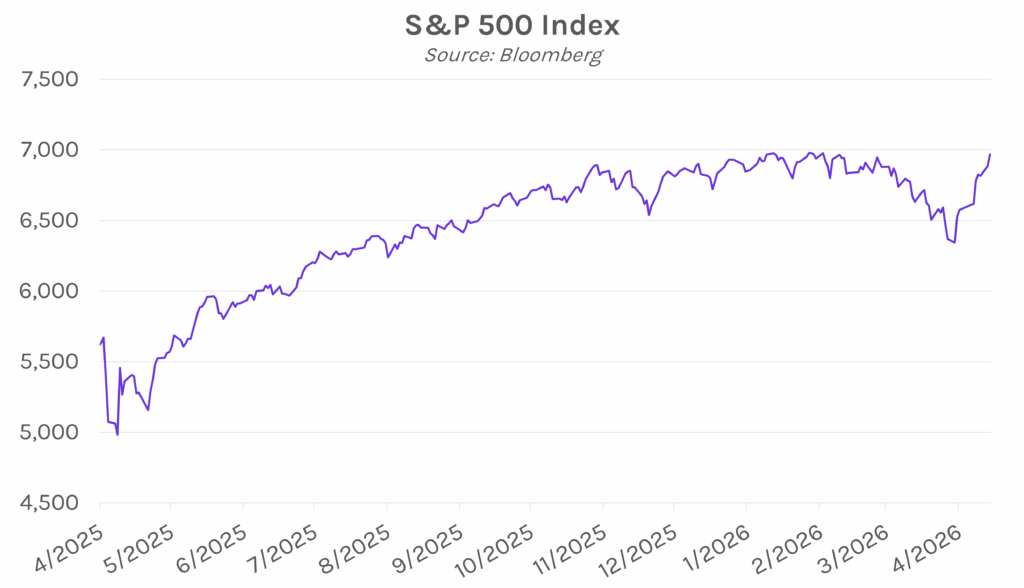
Yields fall on continued hope for a US-Iran deal. Market volatility was muted in the aftermath of softer-than-expected March PPI data this morning, with yields initially dipping slightly before rising ~3 bps to intraday highs. Yields then declined throughout the remainder of the session on lasting hopes that a US-Iran peace deal could be achieved in an upcoming round of negotiations. The 2-year yield closed 3 bps lower at 3.75% while the 10-year yield closed 5 bps lower at 4.25%. Meanwhile, equities rallied, with the S&P 500 up 1.18% today, now near its all-time high of 6,978.60. Oil prices also saw some relief on optimism for a resolution to the war, with WTI crude trading around $92 per barrel, down from $99.08 at yesterday’s close.
US and Iran to continue talks as ceasefire deadline nears. Additional peace negotiations between the US and Iran are being coordinated for the coming days as the existing two-week ceasefire expires next Tuesday. Details are still to be finalized, though there are proposals to continue negotiations in Pakistan, where progress stagnated last weekend. President Trump said talks could take place “over the next two days.” In the meantime, the US Navy blockade near the Strait of Hormuz continued, with more than 12 vessels in the Gulf of Oman. Iran is supposedly contemplating pausing shipments through the strait to prevent any escalation with the blockade as negotiations with the US proceed.
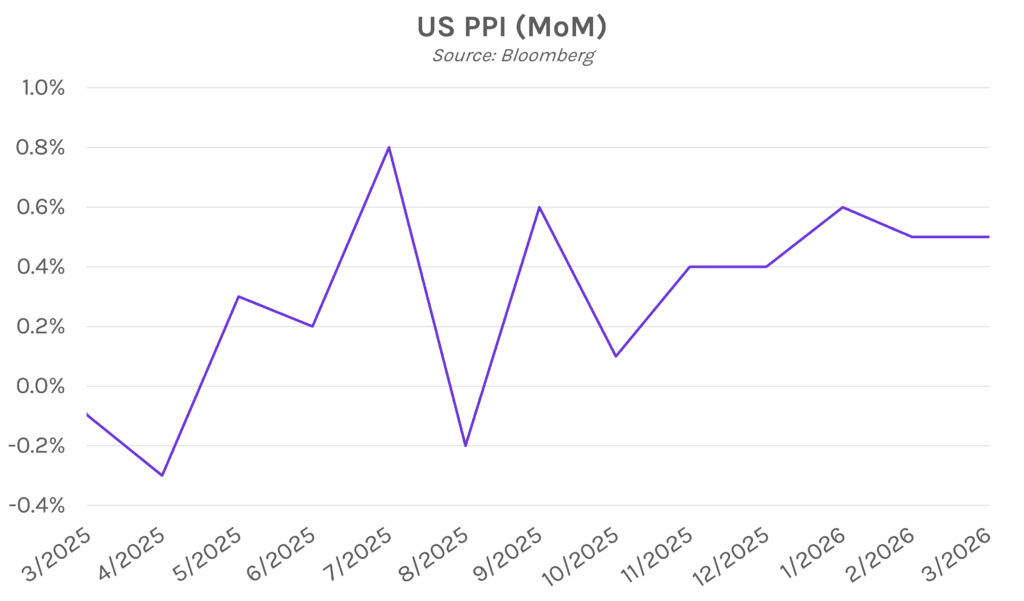
PPI rises less than expected despite surging energy costs. The producer price index increased 0.5% in March, significantly below the forecasted 1.1% rise and unchanged from the prior month. PPI excluding food and energy rose just 0.1% MoM, below expectations of 0.4%. On an annualized basis, headline PPI increased 4.0%, while PPI excluding food and energy increased 3.8%, both below estimates of 4.6% and 4.1%, respectively. Samuel Tombs, chief US economist at Pantheon Macroeconomics, noted, “The modest rise in the core PPI in March brings some genuinely good news,” though he caveated that “PPI energy prices will rise considerably further in April.” Many experts remain concerned about US inflation and energy prices, as the effects of the Iran conflict have yet to be fully realized.