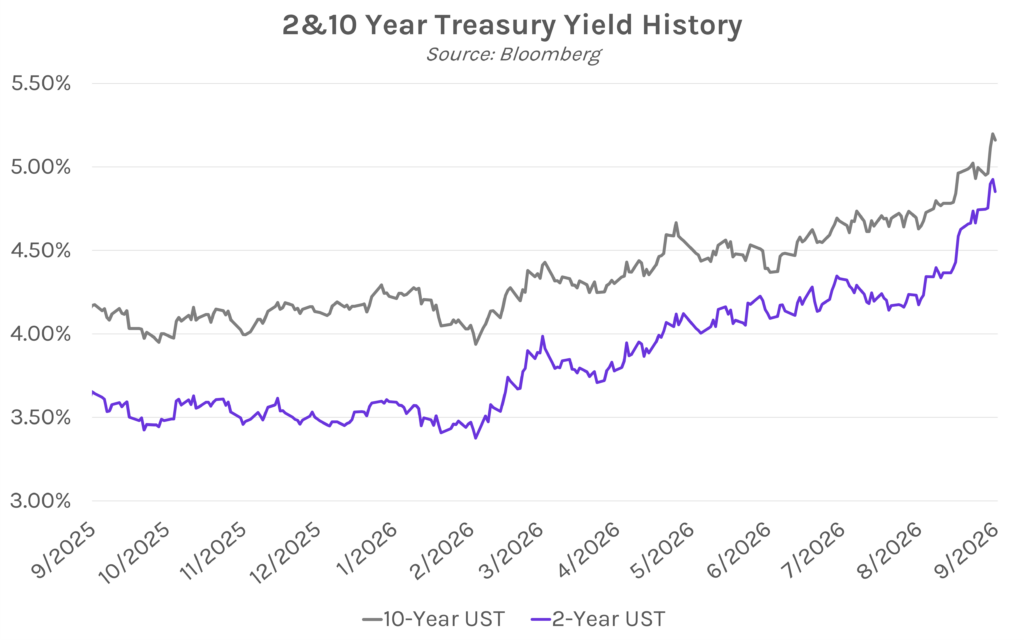
Yields fall on positive US-Iran signs. Treasury yields declined alongside oil on reports that US negotiations with Iran have progressed beyond initial stages, with Iran presenting a plan to end the war. The 2-year yield closed 7 bps lower at 4.85% (up 11 bps on the week), while the 10-year yield closed 4 bps lower at 5.16% (up 16 bps on the week). WTI crude is now trading at ~$92.50 per barrel, compared to its high of $106.49 per barrel this month. Meanwhile, equities rallied on the peace deal hopes, with the S&P 500 and NASDAQ closing 0.51% and 0.48% higher, respectively.
Iran proposes seven-day plan to reopen Hormuz. Iranian Foreign Minister Aragchi told reporters today that earlier this week Tehran gave US mediators a proposal for a seven-day plan, after which the Strait of Hormuz would be reopened and peace talks would restart in hopes of a final deal. Reportedly, talks have moved beyond initial stages, and Iranian President Pezeshkian said his country would be willing to make a deal before US midterm elections in November. While details are limited, the terms of the proposal are said to be largely in line with the Memorandum of Understanding signed by President Trump in June. However, a senior Iranian official said they will not make concessions to their nuclear program, even if the US agrees to the proposal to reopen the Strait.
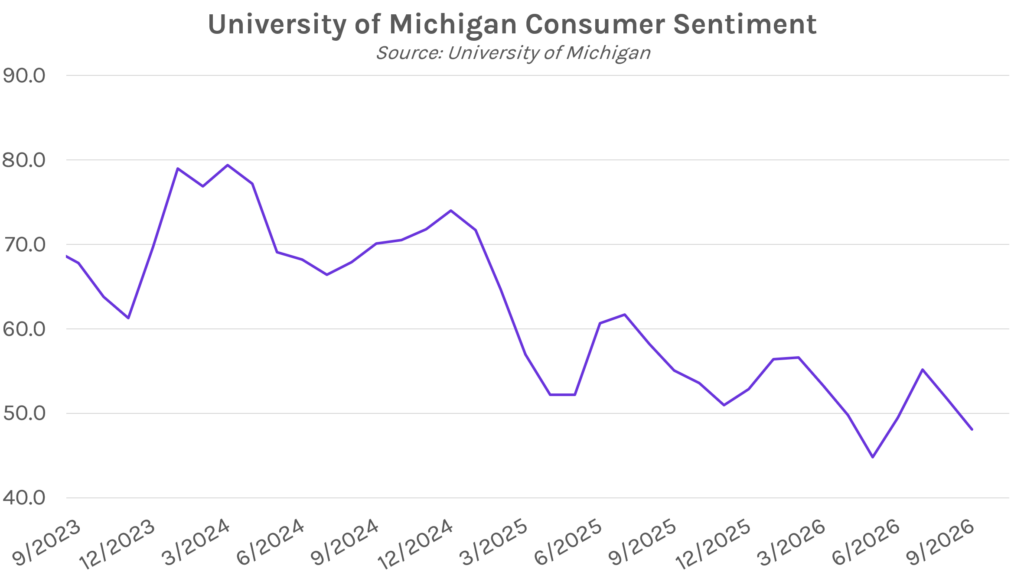
Consumer sentiment dips on worries over elevated prices. The University of Michigan consumer sentiment index released today fell to 48.1 for September, the lowest reading in four months and below August’s 51.7. The decline comes as consumers anticipate a 4.6% increase in prices over the next year and a 3.4% annualized increase in the long term. Rising energy prices were a key factor, as gas prices continue to climb and diesel prices hit a record high in September. The survey director, Joanne Hsu, said, “Despite political differences, consumers unanimously believe that the outlook for the economy has diminished.”