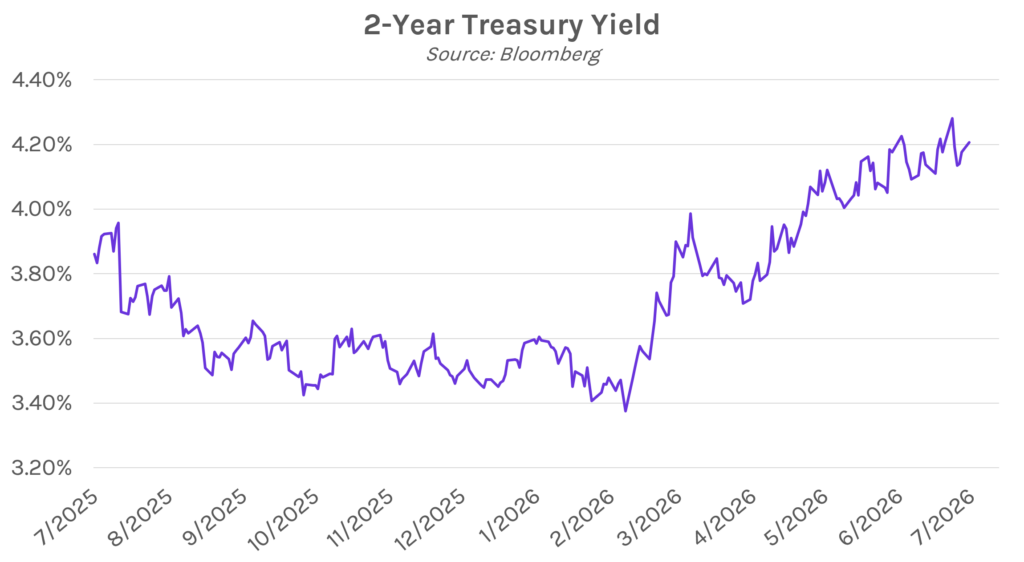
Yields rise as escalating Iran conflict lifts oil. Treasury yields climbed across the curve today as another increase in oil, driven by intensifying US-Iran attacks, revived concerns that higher energy costs will keep inflation elevated. The 2-year yield closed 3 bps higher at 4.21% and the 10-year yield closed 4 bps higher at 4.59%. Equities were lower on fading chip stock optimism as well as oil price concerns, with the S&P 500 falling 0.19% and the NASDAQ down 0.05%. Brent crude touched $91 during the session, its highest level since June, before settling ~4.6% higher on the day, near $89 per barrel.
US-Iran conflict escalates as Houthis announce maritime blockade. The US struck Iran for a tenth consecutive day, widening its targets beyond coastal radar and drone sites to roads, tunnels, railways, and port infrastructure. Iran has expanded its own attacks across the region, striking US allies and commercial shipping in the Gulf of Oman. Qatari and Pakistani mediation efforts that sustained the June ceasefire agreement have stalled. Meanwhile, the Yemen-based Houthi militia announced a maritime blockade on Saudi Arabia, cutting off the Bab al-Mandab, a narrow waterway at the southern end of the Red Sea. The waterway serves as Saudi Arabia’s partial bypass of the Iranian blockade in the Persian Gulf, and its closure is an escalation that threatens additional disruptions to global energy markets.
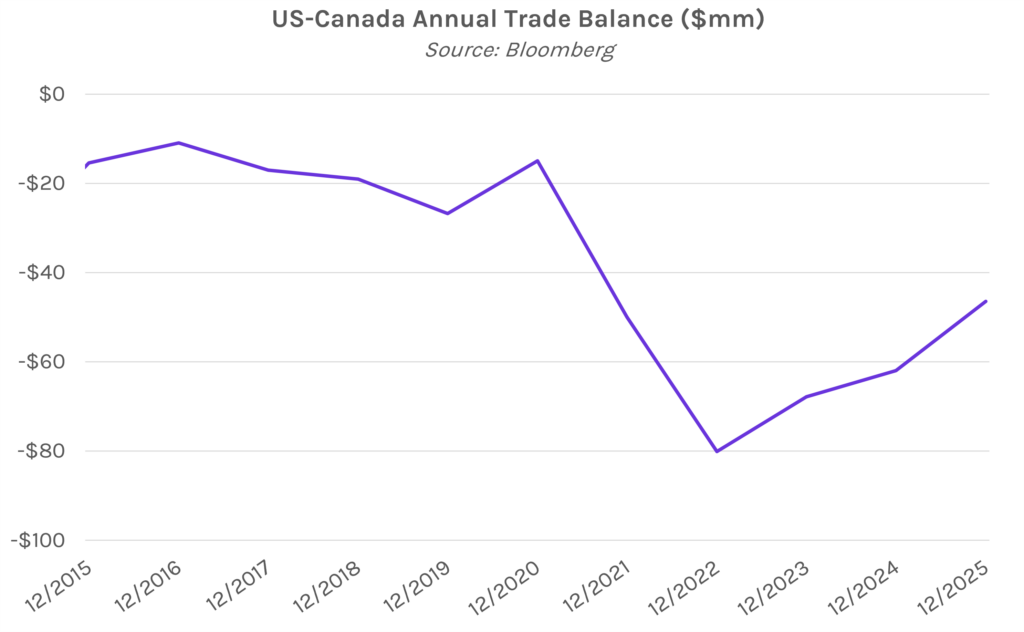
Trump announces 50% tariff on Canadian imports. President Trump today announced an additional 50% levy on Canadian goods, with the tariffs including goods such as cement, wine, and hockey sticks. The White House cited what the administration called Canada’s “continued discrimination” against the US, and the tariffs will apply to all covered goods even if they fall under the existing USMCA free trade agreement. The Trump administration invoked Section 338 of the Tariff Act of 1930, which allows the president to impose duties of up to 50% on countries found to be discriminating against US commerce. The tariffs take effect 30 days after signing; the first use of the authority since 1949.