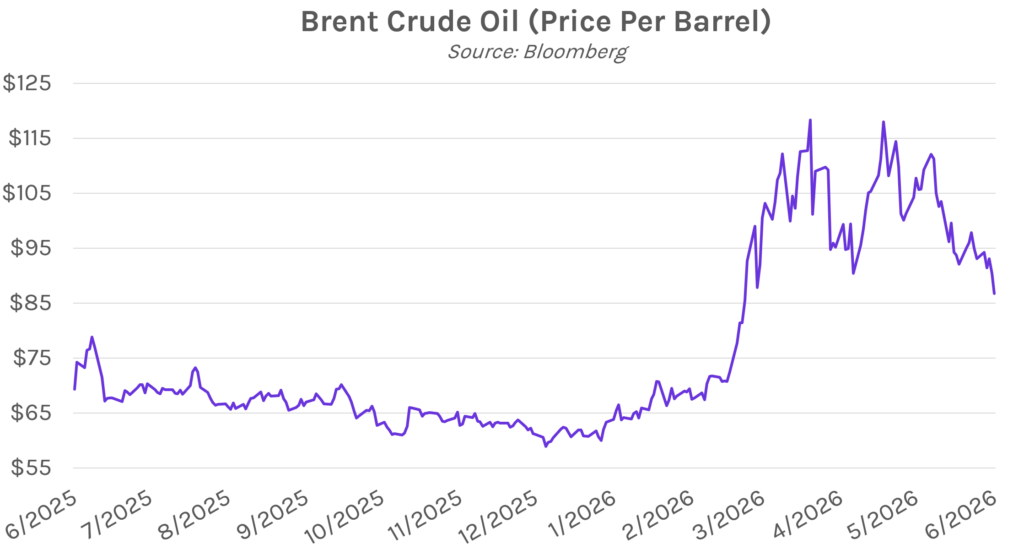
Yields edge higher despite potential reopening of the Strait of Hormuz. Treasury yields rose across the curve, partly reversing Thursday’s sharp decline, as markets awaited a potential US-Iran peace deal announcement. The 2-year yield closed 2 bps higher at 4.08% (down 7 bps on the week), while the 10-year closed 2 bps higher at 4.48% (down 5 bps on the week). Equities continued to rise, with the S&P 500 and NASDAQ closing 0.50% and 0.31% higher, respectively. Brent crude sank nearly 4% to $86.80 per barrel on peace deal optimism.
US-Iran peace deal could be signed within days. Middle East negotiations appear to be progressing as a White House official today said that the odds of a deal are 80-85%, Iranian Foreign Minister Abbas Araghchi posted on social media that an agreement “has never been closer,” and President Donald Trump reposted the statement. According to the US official, the deal would bar Iran from a nuclear weapons program while permitting civilian nuclear energy. Enriched nuclear materials would be removed from Iran, and both sides would work to end the blockade of the Strait of Hormuz. If these requirements were met, the US would then lift sanctions on Iran. Tehran has not confirmed the terms as outlined by the Trump Administration.
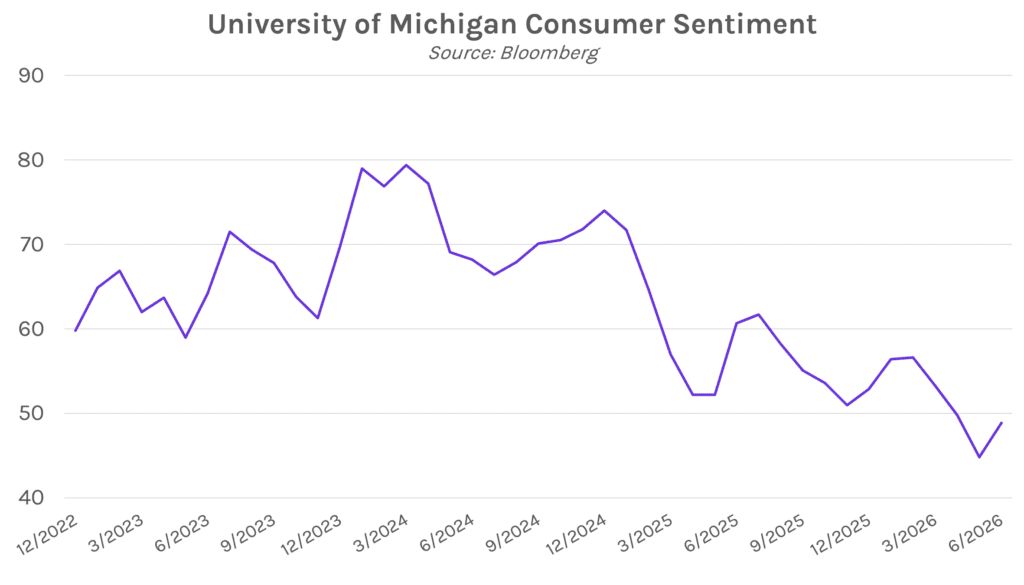
Consumer sentiment rebounds from record low. University of Michigan consumer sentiment rose to 48.9 in June, up from May’s record low of 44.8 and above estimates of 46.0, though still the second lowest reading on record dating back to the 1970s. The current conditions measure rose to 48.4 while the expectations gauge surged to 49.3, up from 44.9 in the prior period. Short- and long-term inflation expectations eased to 4.6% and 3.4%, below both the prior period and estimates of 4.9% and 3.8%, respectively. The improvement was partly driven by a pullback in gas prices over recent weeks, which has eased pressure on personal finances, though prices remain above pre-war levels and continue to weigh on overall sentiment.