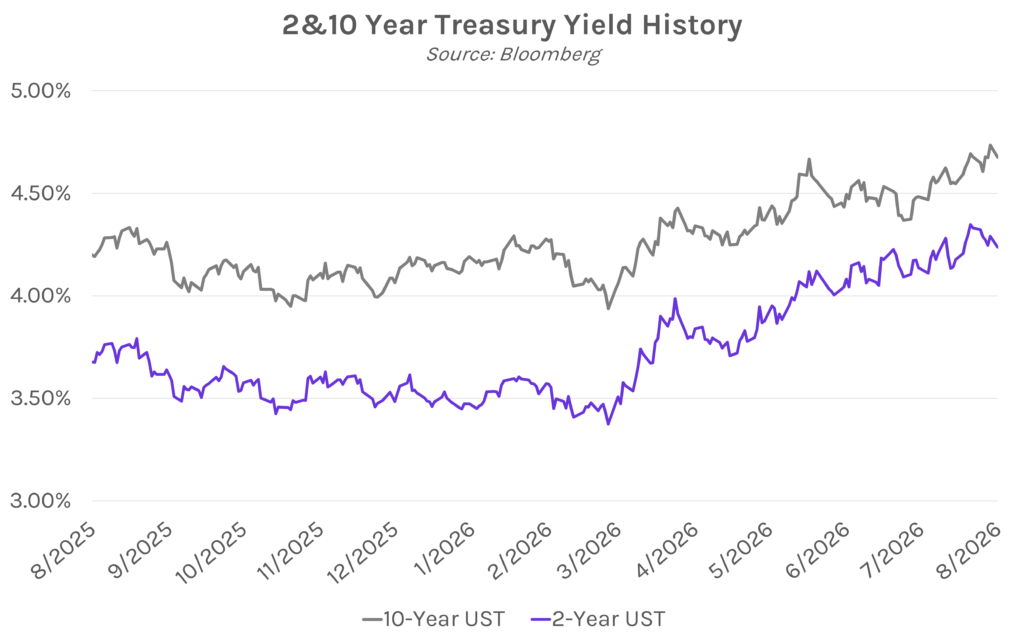
Yields drop as US-Iran tensions calm. Treasury yields fell today as the US called off weekend strikes in Iran, despite reports on Friday that President Trump had ordered new attacks. Yields closed 5-6 bps lower across the curve, with the 2-year yield at 4.24% and the 10-year yield at 4.68%. Meanwhile, equities rallied as the news from the Middle East improved risk sentiment, with the S&P 500 and NASDAQ closing 1.48% and 2.13% higher, respectively. Brent crude is down 7% on the day, trading around $84 per barrel.
Trump gives Iran one “last chance” to sign a deal. President Trump called off planned strikes on Iran and declared that negotiations would resume today, adding that a deal was in place for the Strait of Hormuz to reopen as soon as tomorrow. Trump warned this is the nation’s “last chance” to reach an agreement. Tehran refuted claims that talks with the US are ongoing, however Iran’s Foreign Ministry separately announced it is in discussions with Oman to open a “temporary” route for vessels to travel through the Strait. Separately, the Houthi blockade in the Red Sea has caused Saudi oil tankers to divert around Africa, as tensions across the region remain elevated.
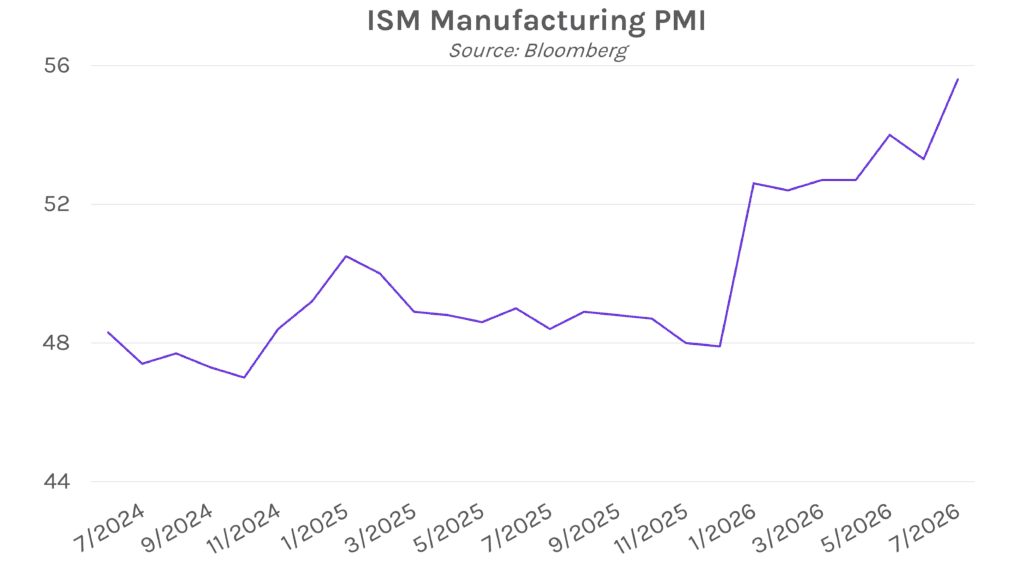
Manufacturing PMI reaches four-year high. The ISM Manufacturing PMI posted its highest reading since May 2022 today, rising to 55.6 in July. The print beat expectations of 53.9 and June’s 53.3, marking the seventh consecutive month of expansion. The ISM measure of production hit 58.5, the highest level since 2021, while the employment gauge ticked up for the first time since 2023. Susan Spence, Chair of the ISM Manufacturing Business Survey Committee, attributed the hiring increase to resilient demand, as new orders also rose. Spence expects the hiring trend to continue, as “companies are seeing six or more months of these solid demand factors going in the right direction.”