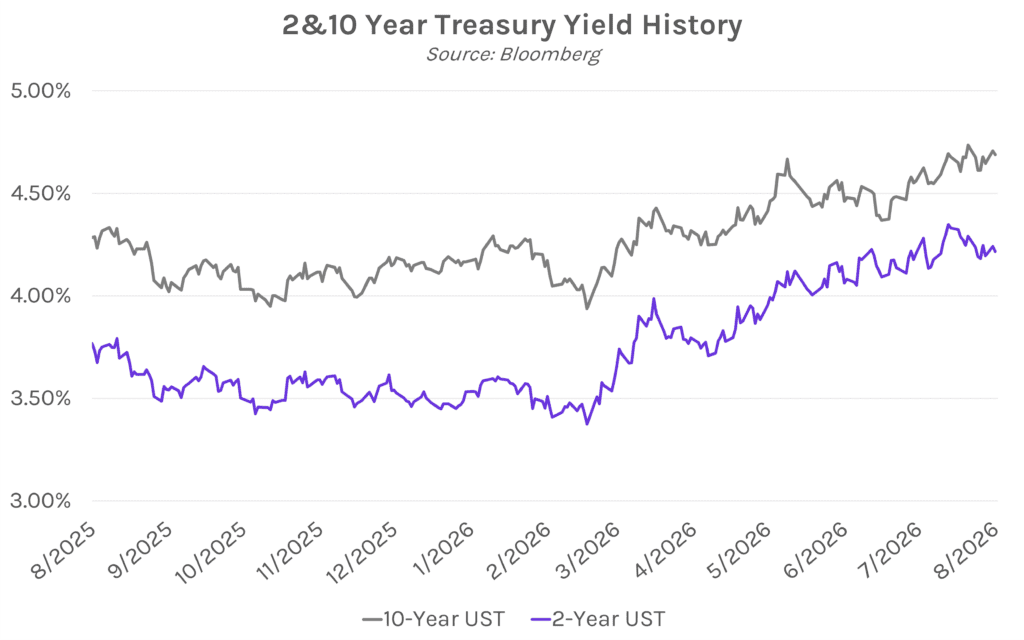
Yields decline as Hormuz hopes return. Treasury yields edged lower today as hopes were revived for a deal to reopen the Strait of Hormuz after Pakistan’s defense minister shared that the US and Iran were “close to some sort of an arrangement,” though Iran later said it would not budge until its demands were met. Yields ended the day 1-3 bps lower across the curve, with the 2-year at 4.21% and the 10-year at 4.69%. Meanwhile, equities fell, with the S&P 500 and NASDAQ closing 0.32% and 0.60% lower, respectively.
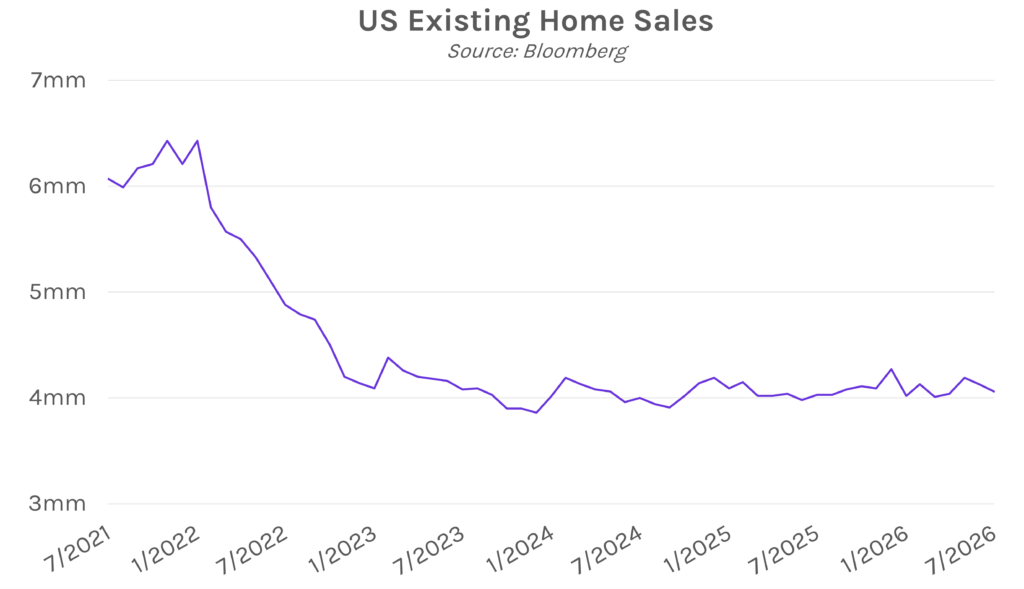
Mortgage rates push home sales to three-month low. Data from the National Association of Realtors showed existing home sales dropped to 4.06 million units in July, a 1.7% decline from June’s revised 4.13 million, though the figure came in slightly above expectations of 4.05 million and marked a 0.7% YoY increase. The median home price rose 2% YoY to $434,100, the highest July figure on record. Carl Weinberg, chief economist at High Frequency Economics, attributed the decline to “people with ultra-low COVID-era mortgages cannot afford to give them up. If no one is selling, no one can be buying, and inventories are low.” Freddie Mac recorded the 30-year fixed mortgage rate at 6.69% last week, the highest level in over a year. NAR chief economist Lawrence Yun noted, “There’s no doubt that the housing market would be thriving if average mortgage rates were to return near 6%.”
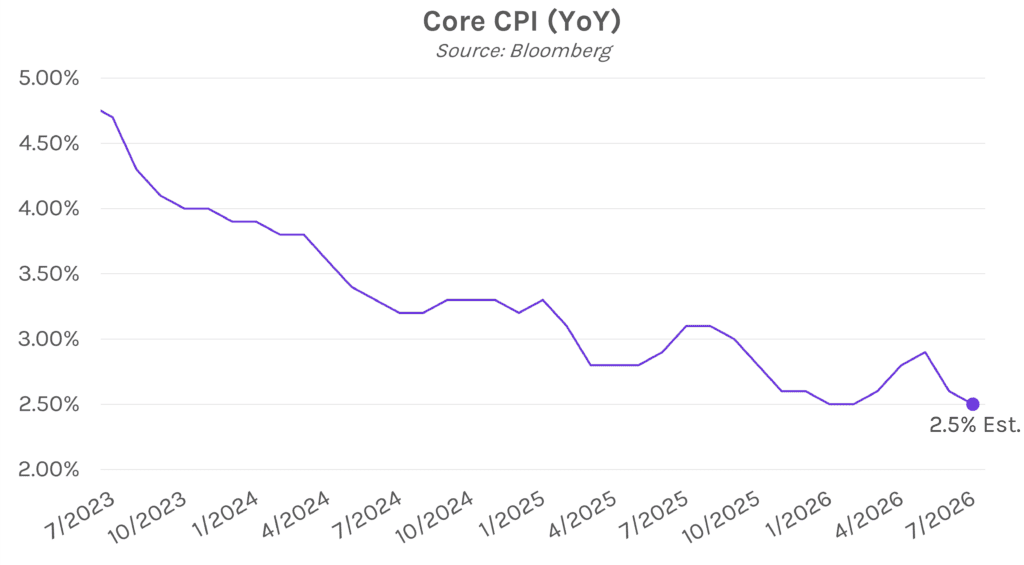
Consumer prices expected to ease in July. The July CPI report due tomorrow is expected to show headline inflation moderating to 3.4% YoY, compared to 3.5% in June. Core CPI, which excludes volatile food and energy categories, is also expected to soften to 2.5% from 2.6% in the prior month. The release follows June’s 0.4% MoM decline in headline CPI, the first negative monthly reading in six years. Energy prices, which fell to pre-war levels at the beginning of the month and have remained below their peak during the Iran crisis, are expected to provide further relief. Dennis Follmer at Montis Financial expects tomorrow’s report “to continue its downward trend which will further support the case for the Federal Reserve to hold rates steady rather than hiking them, even with last Friday’s weak jobs report.”