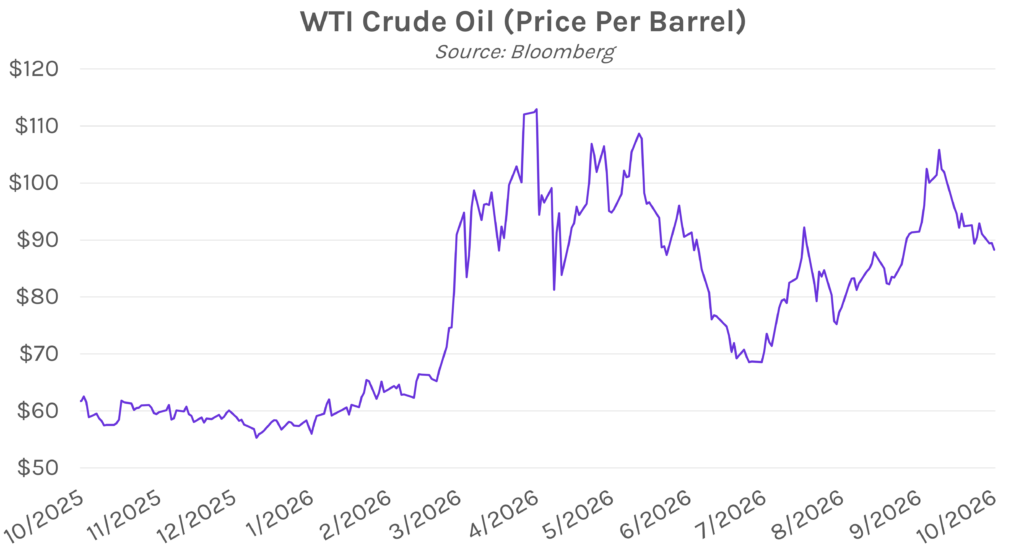
Yields narrowly mixed as oil prices ease. Treasury yields rose overnight, though declined over the remainder of the session as oil prices fell, with WTI crude closing 1.30% lower around $88 per barrel. Relatively strong demand in today’s $39B auction placed additional downward pressure on yields. The 2-year yield closed 3 bps lower at 4.77%, while the 10-year yield closed nearly flat at 5.28%. Meanwhile, equities fell on concerns over inflation and government debt, with the S&P 500 and NASDAQ both closing 0.22% lower.
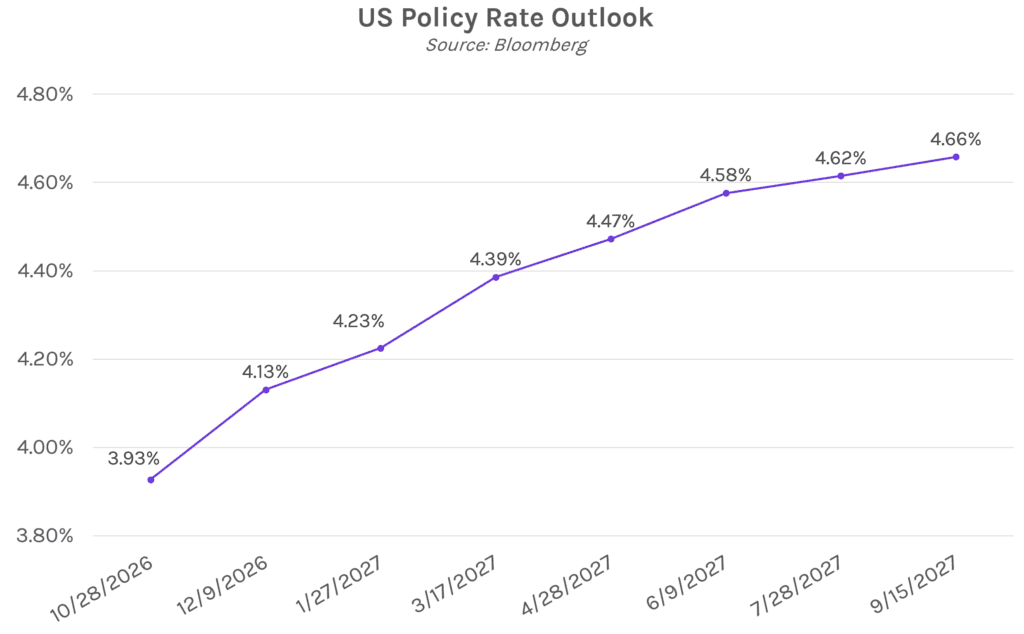
Fed officials see another hike by year-end. The Federal Reserve released the minutes from its September 15–16 meeting today, at which the Committee voted unanimously to raise the target range by 25 basis points to 3.75%–4.00%. As the unemployment rate hovers near historic lows, officials’ concerns centered on inflation. Participants cited “risk-management” against elevated inflation, or their baseline outlook, as their reasoning for raising rates, with several members saying that “underlying momentum in the economy appeared to have increased.” The minutes also stated that, “most participants assessed that another increase in the target range for the federal funds rate would likely be appropriate by year end.” The market is currently pricing in a 19.4% chance of a hike in October and an 81.4% chance of a hike in December.
US mortgage rates climb to three-year high. Mortgage rates for a 30-year fixed-rate loan rose to 7.49% during the week ending October 2, according to data from the Mortgage Bankers Association. Rates jumped 19 bps from the prior period and have risen roughly 0.5% over the past three weeks, marking both the highest level and fastest increase since 2023. MBA data also showed mortgage applications decreased 4.2% for the week ending October 2, a slight improvement from the 6.0% decline in the prior week. Rising energy costs and inflation concerns linked to the Iran conflict have pushed mortgage rates steadily higher, weighing on new and existing home sales.