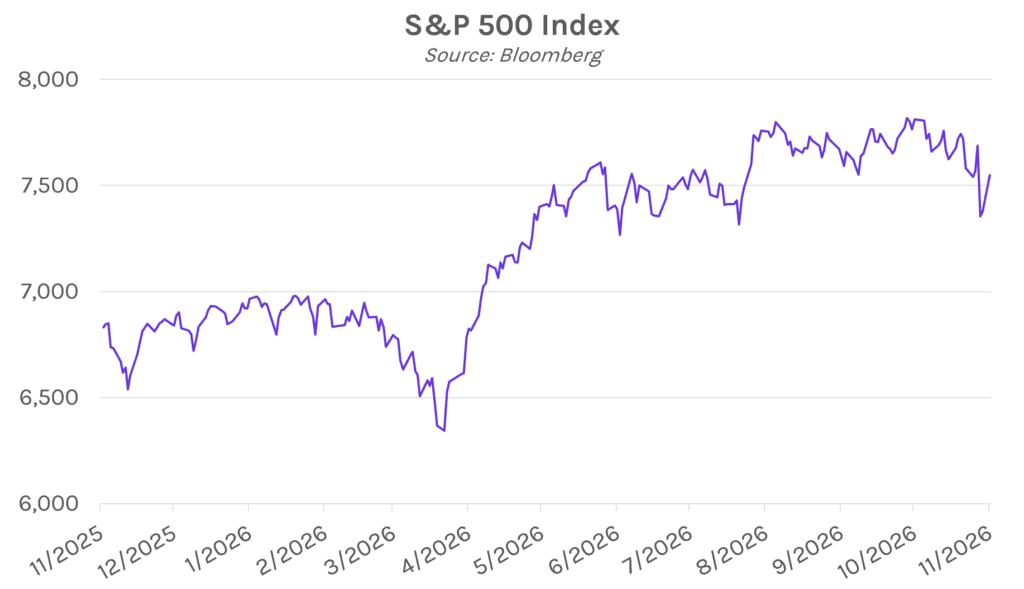
Yields, stocks climb as falling oil eases inflation fears. Treasury yields rose today as markets moved risk-on, with stocks rallying on easing energy prices and positive tech sentiment. Brent crude fell almost 6% during the session after President Trump suggested the Iran war is nearing an end. The 2-year yield closed 5 bps higher at 4.56%, while the 10-year yield closed 3 bps higher at 4.88%. The S&P 500 and NASDAQ closed 2.35% and 2.74% higher, respectively, with the S&P 500 posting its best day since early April.
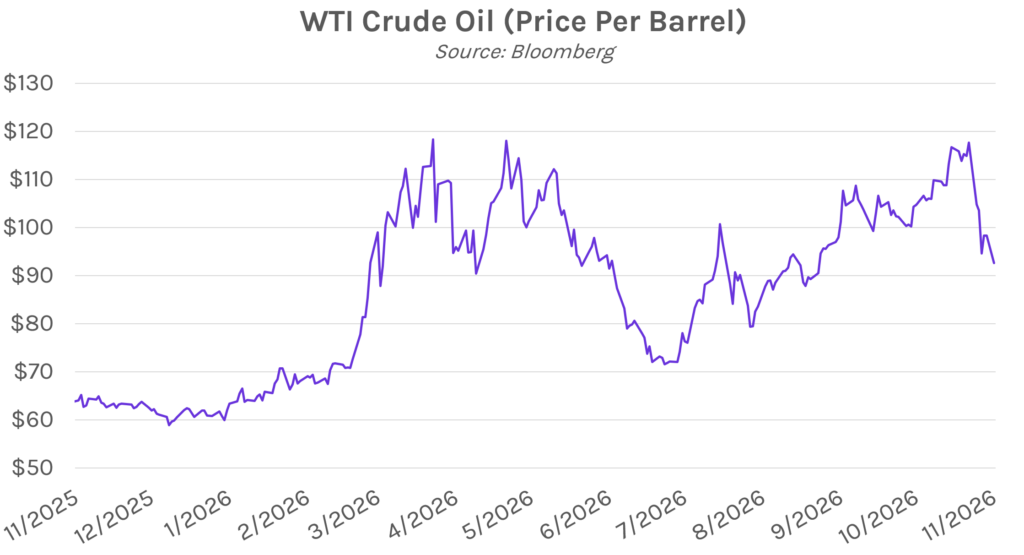
President Trump does not expect additional strikes on Iran. Following a meeting with Qatari Prime Minister HBJ today, President Trump said, “Iran, militarily, is effectively over.” He also signaled against further attacks on the nation, saying the US would keep to the “status quo…at the behest of countries that are [Iran’s] neighbors,” namely naval blockades, rather than launching fresh attacks. Trump also described the US as “fully locked and loaded” should anything develop in the Middle East, but said “taking the military action doesn’t seem to be a very necessary thing.” Sunday evening, US Secretary of State Marco Rubio said Washington and Tehran were not on “the verge of a breakthrough,” citing “unacceptable” demands by Iran. Brent crude futures fell to their lowest level since late August and are currently trading near $93 per barrel.
Goolsbee warns on AI buildout; Barkin wants to move “with care.” Chicago Fed President Austan Goolsbee today pointed to AI infrastructure as a potential driver of lasting inflation. He said, “AI data center buildout is, to my eyes, starting to look more just like old-fashioned demand overheating.” Goolsbee added that, with the labor market stable and growing despite low hiring, “the big problem has been on the inflation side.” Over the longer term, Goolsbee remains optimistic that productivity gains from AI could lead to “long-run deflation.” Also today, Richmond Fed President Tom Barkin spoke, saying he doesn’t “have a base case” for the December FOMC meeting, though he believes the committee should move “with care” as inflation remains the greatest risk. He cited six years with price pressures above the 2% target, saying risks lie on the “inflation side of our dual mandate,” adding that he will look closely at upcoming data releases heading into next month’s meeting.