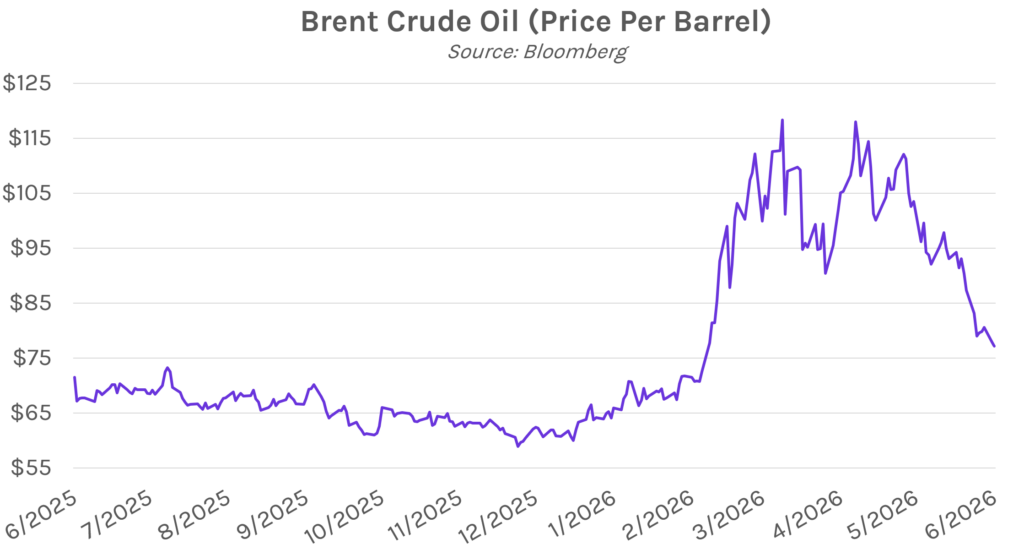
Yields decline as markets shift risk-off. Treasury yields fell throughout the session as concerns over AI company valuations weighed on risk appetite. The 2-year yield closed 3 bps lower at 4.20%, while the 30-year yield closed nearly flat at 4.95%. Meanwhile, equities continued their recent selloff on technology bubble worries, with the S&P 500 and NASDAQ closing 1.44% and 2.21% lower, respectively. Oil prices continued to ease, with Brent crude futures now trading around $77 per barrel, as more vessels begin to travel through the Strait of Hormuz.
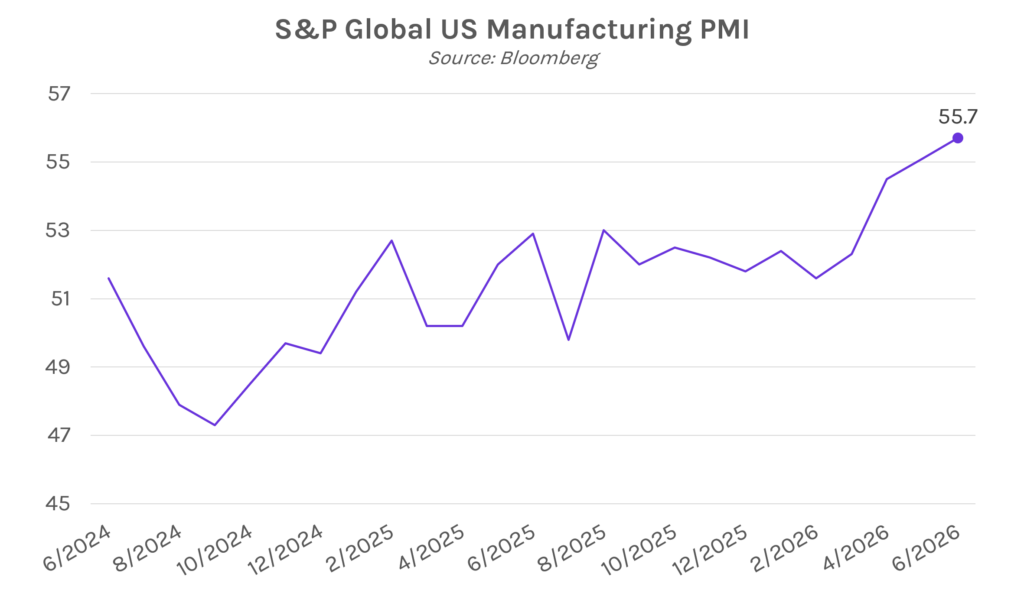
Manufacturing activity hits five-month high. US business activity expanded at its fastest pace in five months in June, with composite PMI rising to 52.2 from 51.5 in May. Both manufacturing and services activity beat expectations as manufacturing climbed to its highest level since 2022, coming in at 55.7 against estimates of 54.6. The services gauge edged up to 51.3 versus forecasts of 51.1, boosted in part by World Cup-related activity. Despite low consumer confidence and high prices continuing to weigh on demand, Chris Williamson, Chief Business Economist at S&P Global Market Intelligence, attributed part of the improvement to “brighter news out of the Middle East has helped restore some confidence among US businesses in June.”
Goolsbee sees inflation moving in the wrong direction. Chicago Fed President Austan Goolsbee said that he remains concerned about whether elevated inflation is temporary, and expressed skepticism that price pressures are easing. Goolsbee said, “We’ve been dealing with an inflation problem that’s well above the target and has been going the wrong way.” US inflation has run above the Fed’s 2% target for more than five years and has accelerated in recent months, largely due to energy price increases from the conflict in Iran. Goolsbee is a non-voting member of the FOMC this year, though his concern over inflation is not unique, as last week’s FOMC Dot Plot indicated that nearly half of policymakers expect at least one rate hike this year.