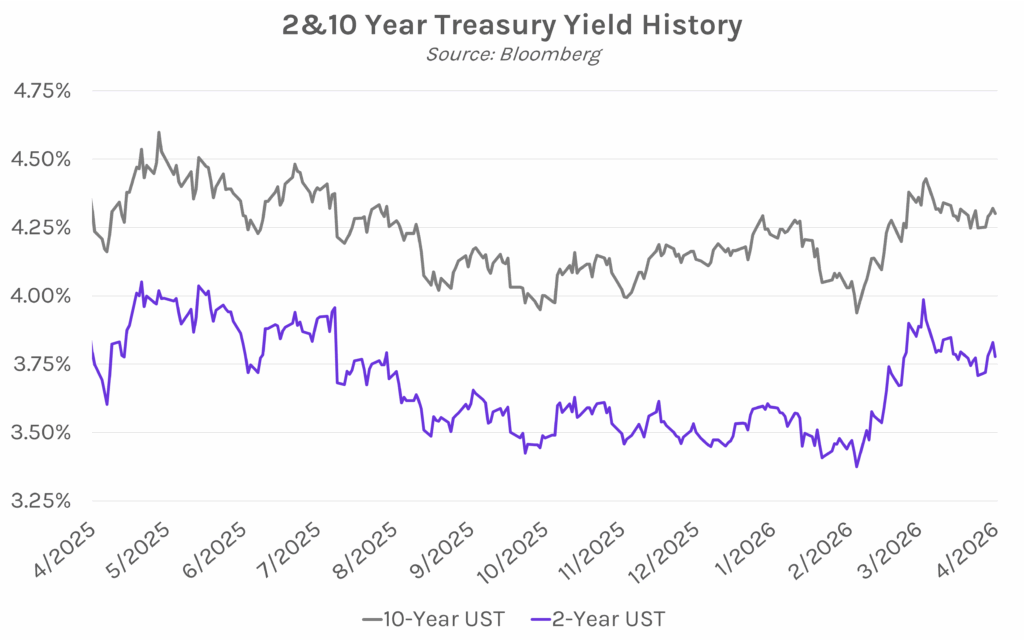
Yields fall as DOJ drops Fed probe. Treasury yields declined 2-3 bps this morning on news that Iran’s Foreign Minister Abbas Araghchi is expected to travel to Islamabad later today for negotiations and that the White House is also sending a team. Yields then plunged 5-6 bps in the immediate aftermath of reports that the DOJ’s probe into Powell is being dropped, likely paving the way for nominee Kevin Warsh’s confirmation as the next Fed Chair. The 2-year yield closed 6 bps lower at 3.78% (up 7 bps on the week), and the 10-year yield closed 2 bps lower at 4.30% (up 5 bps on the week). Meanwhile, equities rallied, with the S&P 500 and NASDAQ closing 0.80% and 1.63% higher, respectively.
DOJ ends investigation into the Fed. The Department of Justice announced today that it was ending the probe into the Fed and Chair Jerome Powell’s building-renovation costs. Jeanine Pirro, US Attorney for the District of Columbia, said on social media, “I have directed my office to close our investigation as the IG undertakes this inquiry. Note well, however, that I will not hesitate to restart a criminal investigation should the facts warrant doing so.” The Fed’s Office of Inspector General is also reviewing the renovation costs, as Powell had requested an evaluation last July. With this, Trump’s Fed chair nominee, Kevin Warsh, now likely faces a smoother path to being confirmed. Republican senator and Banking Committee member, Thom Tillis, previously committed to block the confirmation of any candidate until the DOJ probe was dropped.
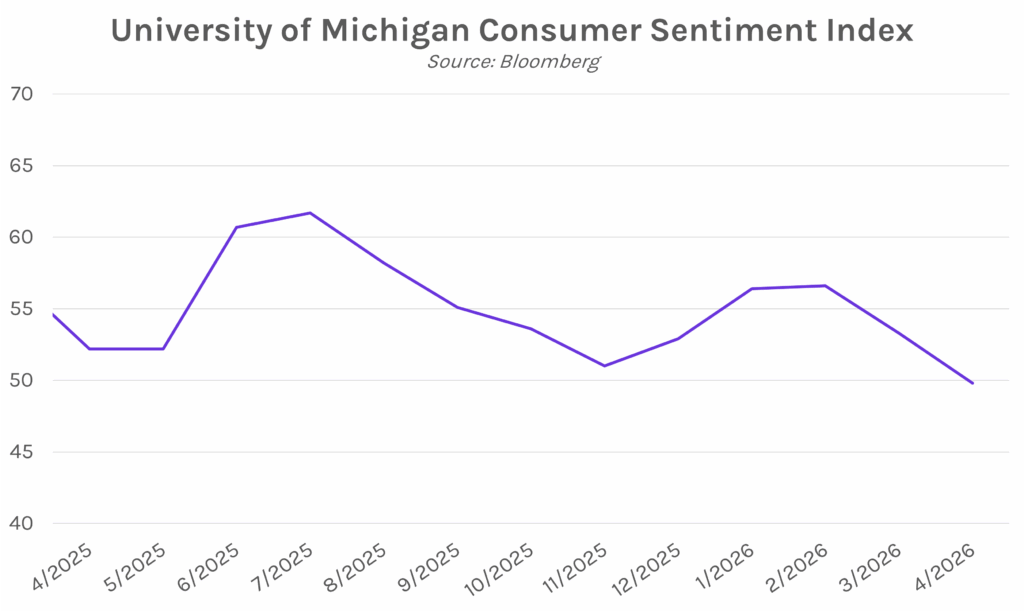
Consumer sentiment hits record low on inflation concerns. Data released by the University of Michigan showed US consumer sentiment fell to 49.8 in April, down from 53.3 in March and marking the lowest reading on record, below levels seen during both the COVID era and the 2008 financial crisis. Today’s print also showed a sharp increase in short term inflation expectations, with consumers now expecting inflation to rise 4.7% over the next year, up from 3.8% in March. The jump is the largest monthly increase since President Trump announced his Liberation Day tariffs last April. The University of Michigan current conditions gauge fell to 52.5, a four-month low, while the expectations gauge fell to 48.1, its lowest level in nearly a year. The report cited consumer concerns around gas prices and rising costs for other goods, driven by oil price volatility and general inflationary pressures stemming from the war in Iran.