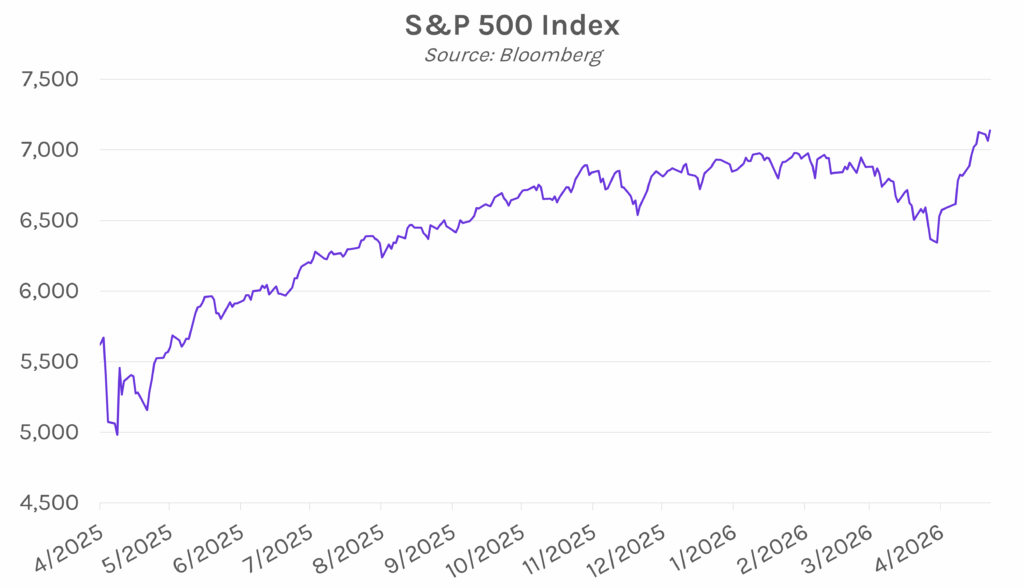
Yields rise on ceasefire extension. Markets turned risk-on today amid the indefinite Iran ceasefire extension and strong corporate earnings results. The 2-year yield closed 2 bps higher at 3.80%, the 10-year yield closed 1bp higher at 4.31%, and the 30-year yield closed nearly flat at 4.90%. Meanwhile, equities soared, with the S&P 500 closing 1.05% higher at a record 7,137.90 and the NASDAQ closing 1.64% higher at 24,657.57. Bitcoin climbed nearly 4% and is now trading around $78,500, its highest level since early February.
No firm deadlines set as peace talks halted. Negotiations appear to be at a standstill after US-Iran peace talks were postponed yesterday and President Donald Trump agreed to extend the ceasefire indefinitely. White House Press Secretary Karoline Leavitt said today that Trump “has not set a firm deadline to receive an Iranian proposal.” Meanwhile, it does not appear Tehran will return to the negotiating table imminently, with Iranian Foreign Minister Abbas Araghchi declaring the current US naval blockade around Iran’s ports a violation of the ceasefire. Iranian President Masoud Pezeshkian said “the blockade and threats are the main obstacles” to diplomacy. Iran has kept the Strait of Hormuz closed since Saturday, and it is reported that Iranian gunboats fired shots on a cargo ship and container ship.
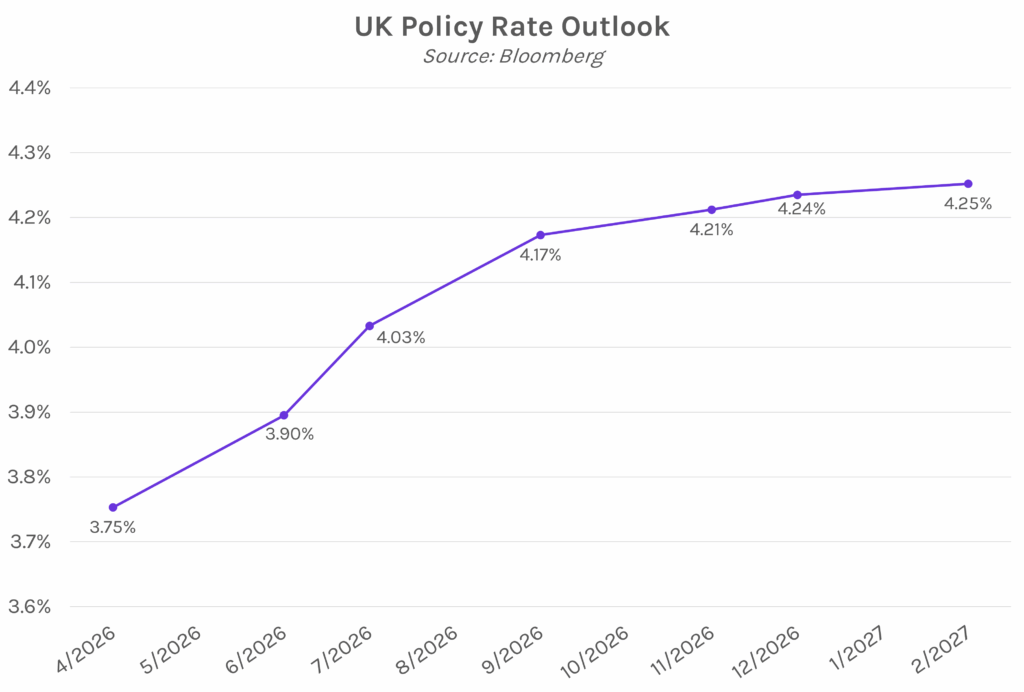
Energy costs push UK inflation higher. Data from the Office for National Statistics showed the UK consumer price index rose to 3.3% in March, in line with expectations but up from 3.0% in February. An 8.7% increase in motor fuel prices drove the rise, marking the largest gain since Russia invaded Ukraine in 2022. Airfare prices rose 10%, pushing services inflation, a key indicator of underlying price pressures, up to 4.5%, from 4.3%. Before the war in Iran, UK inflation was expected to fall back below the Bank of England’s 2% target in the second quarter. Since the conflict began, forecasts estimate inflation will hover near 3%, increasing the likelihood of a BOE rate hike in the third quarter. Elsewhere, two ECB officials said that uncertainty surrounding Iran remains too high to commit to a rate hike ahead of the next policy meeting on April 30.