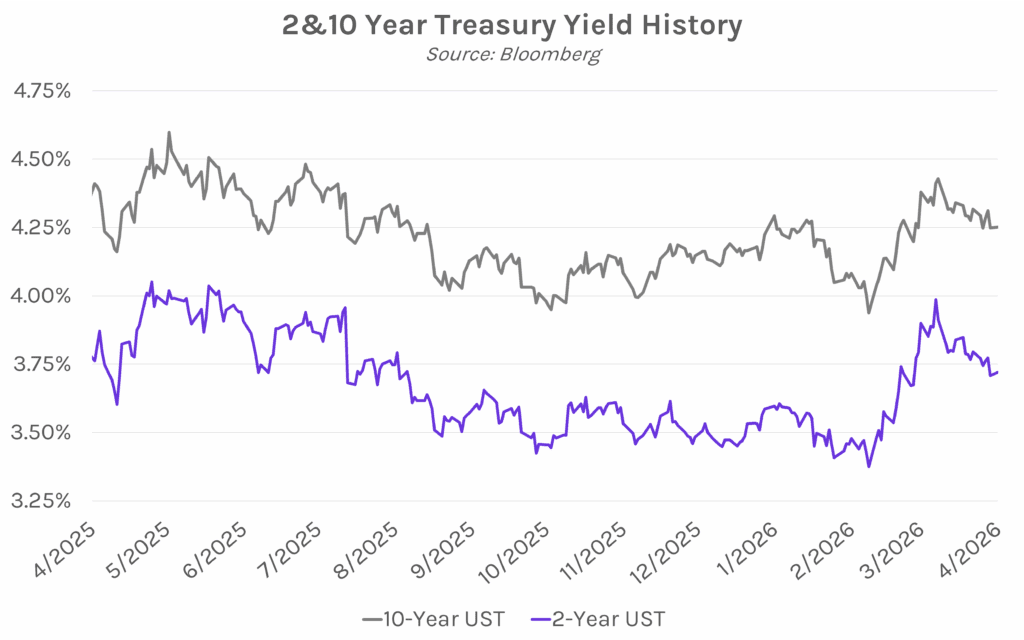
Yields nearly unchanged despite escalating geopolitical tensions. Treasury yields had a muted reaction to weekend news that Iran closed the Strait of Hormuz again and that the US Navy seized an Iranian ship that attempted to move through its blockade, increasing doubts of the US and Iran reaching a peace agreement. The 2-year yield closed 1bp higher at 3.72% while the 10-year yield closed flat at 4.25% after trading within a 3-4 bp range today. Meanwhile, equities fell as optimism for a US-Iran deal faded, with the S&P 500 and NASDAQ closing 0.24% and 0.26% lower, respectively. Markets are now eyeing updates from tomorrow’s congressional hearing for Fed Chair nominee Kevin Warsh, which should shed light on his plans for 2026 rate decisions and overall policy preferences.
Ceasefire extension in doubt. President Trump said today that the two-week ceasefire with Iran will expire on Wednesday evening, adding that an extension is “high unlikely” if no deal is reached. He also said the Strait of Hormuz would remain blockaded “until a deal is signed.” Tehran had previously agreed to reopen the strait but reversed its decision after the US refused to reciprocate. President Trump said he would not “be rushed into making a bad deal,… We’ve got all the time in the world.” US and Iranian delegations are heading to Pakistan for a second round of peace talks. Vice President JD Vance will lead the US delegation, though it remains unclear who will represent Iran, as Tehran has expressed hesitancy about engaging in talks with the US.
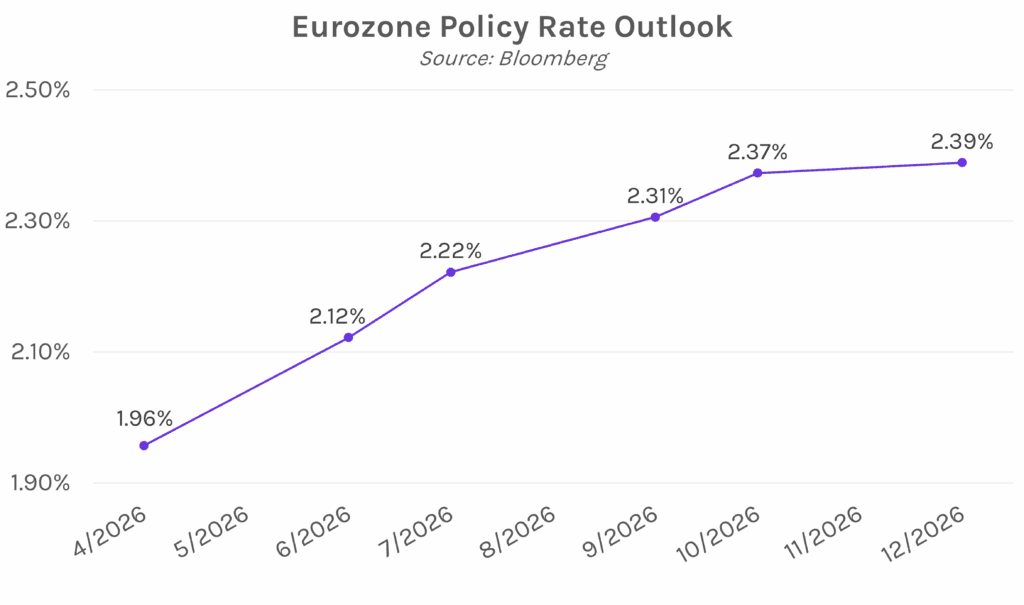
ECB cites policy uncertainty from war. European Central Bank President Christine Lagarde said the war in Iran is creating “double uncertainty” due to the potential length of the conflict and potential impact of elevated energy prices on broader inflation. Lagarde emphasized the importance of collecting more data before making conclusions regarding monetary policy. Lagarde elaborated, “The stop-start nature of the conflict – war, ceasefire, peace talks, their collapse, a naval blockade, its lifting, its reinstatement – makes it exceptionally hard to gauge the duration and depth of the consequences.” Inflation in the Euro-area is expected to rise towards 3% this month, while business activity is expected to slump, raising the risk of stagflation. The ECB is expected to hold policy rates steady at their April meeting ahead of two rate hikes by the end of 2026.