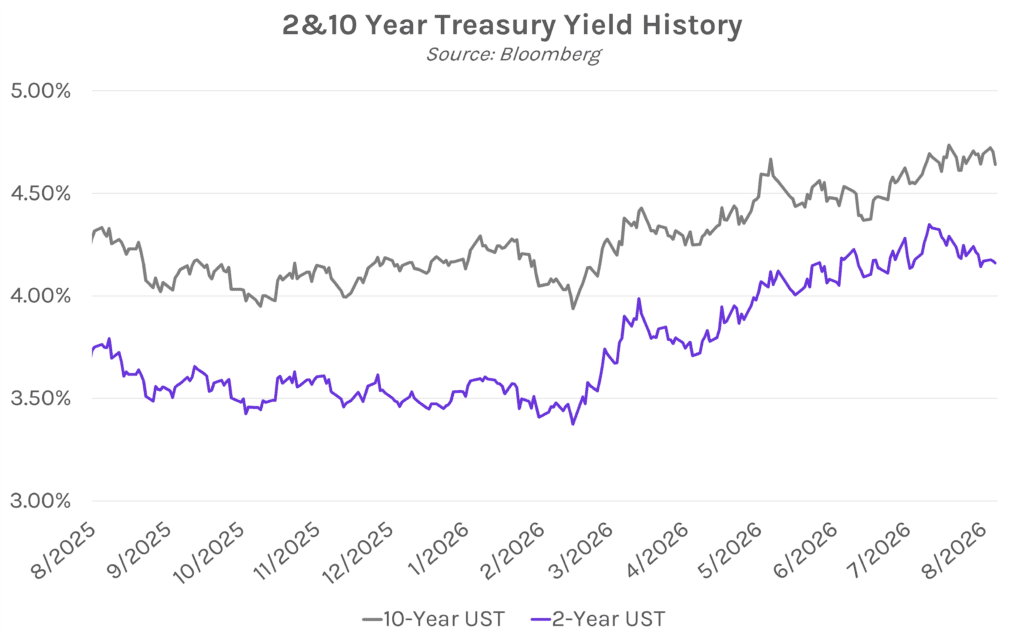
Yields decline as Treasury announces increased buybacks. Treasury yields fell today, with the long-end dropping as much as 8 bps, after it was announced that the Treasury Department would increase “the size of liquidity support buyback operations” for longer-dated US government bonds. The 2-year yield ultimately closed 1bp lower at 4.16%, while the 10-year yield closed 6 bps lower at 4.65%. Meanwhile, equities climbed on the buyback news, with the S&P 500 and NASDAQ closing 0.21% and 0.16% higher, respectively.
Treasury Department to ramp up bond buybacks. In a surprise announcement today, Treasury Secretary Bessent said the department would accelerate bond buybacks to “at least double” its maximum buyback from $2 billion to $4 billion or more, with a focus on 10-30-year government bonds. The move follows last week’s $25 billion 30-year UST auction, which recorded a yield of 5.216%, the highest since 2001, and yesterday’s close where the 30-year yield ended at 5.30% for the first time since 2007. A Treasury Department statement described the buybacks as reflecting the “Treasury’s desire to provide greater liquidity support in longer-dated nominal sectors where there is consistent strong sponsorship from market participants.” The change takes effect September 9 and runs through November 4.
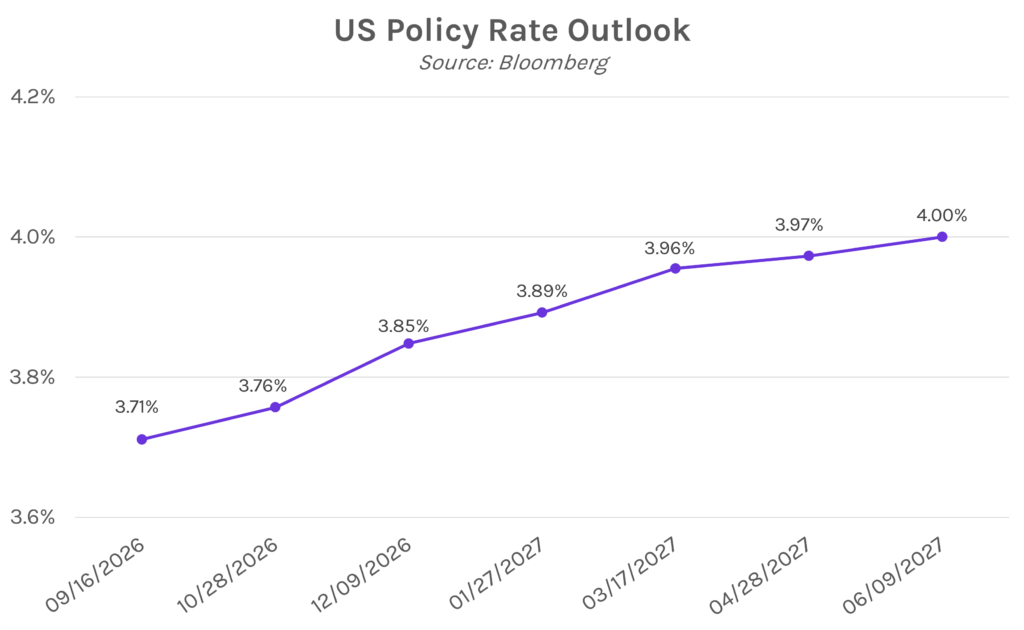
FOMC minutes highlight continued inflation concerns. The July FOMC meeting minutes were released today, providing insight into the divided policy decision where rates were ultimately left unchanged at 3.50%-3.75%, despite dissents in favor of a rate hike from Fed officials Logan, Hammack, and Kashkari. The minutes revealed the three argued that inaction risks a “more costly sequence of tightening moves at a later stage.” They were not alone as non-voters Schmid and Musalem indicated that they would have supported a rate hike. “Many” of their colleagues also showed concern for inflation stating they “assessed that policy tightening would likely be necessary if inflation did not decline.” Officials cited a “highly uncertain” environment as the Iran conflict re-escalated in July.