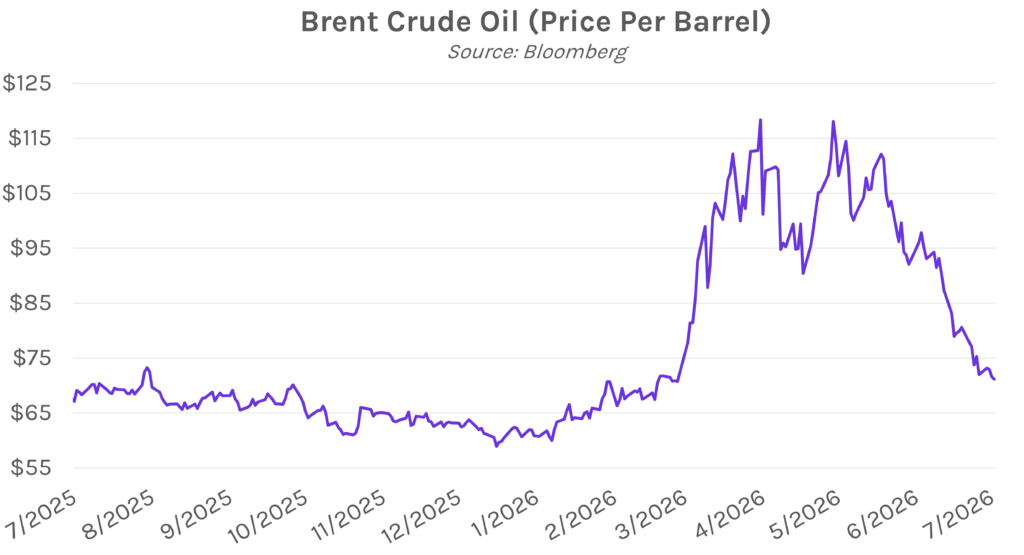
Yields drop following weak payrolls data. Treasury yields fell 4-6 bps in the immediate aftermath of significantly softer-than-anticipated payrolls data. The 2-year yield ultimately closed 4 bps lower at 4.14% (up 5 bps on the week), while the 10-year yield closed nearly flat at 4.48% (up 11 bps on the week). Meanwhile, Brent crude is hovering around $71 per barrel, its lowest level since late February as over 10 million barrels per day are now traveling through the Strait of Hormuz, helping to alleviate supply concerns. The S&P 500 is currently down ~0.74% and the NASDAQ is down over 1% as chipmaker stocks continue to sell-off.
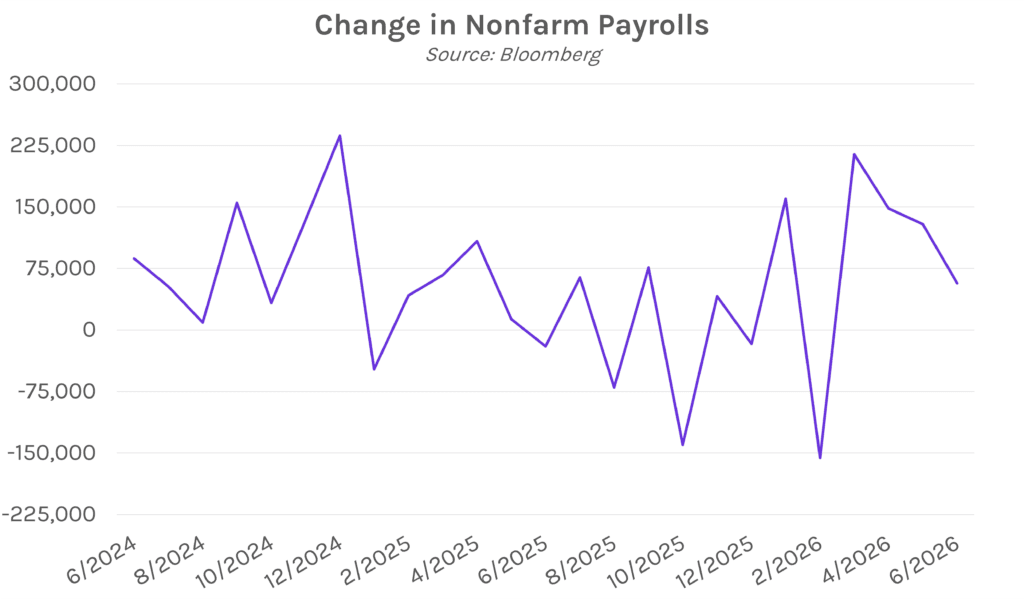
Jobs data falls short of expectations. Today’s nonfarm payrolls report showed 57k jobs added in June, considerably less than the 113k expected. The decrease was led by the largest drop in leisure and hospitality payrolls since 2020, despite those sectors leading gains last month. In addition to June’s weaker-than-expected numbers, May and April job gains were downwardly revised by a cumulative 74k. Meanwhile, the unemployment rate fell slightly from 4.3% in May to 4.2%, largely driven by a drop in the labor force participation rate rather than an increase in hiring. Chris Zaccarelli, chief invest officer at Northlight Asset Management, said, “if the employment mandate is brought back into play, it can increase the odds of leaving rates on hold.”
US-Iran talks make progress, no breakthrough. Talks between the US and Iran began in Doha today, with Qatar and Pakistan mediating as the White House and Tehran work to implement the June 17 memorandum that set a 60-day ceasefire and reopened the Strait of Hormuz. Qatar reported progress and both sides agreed to keep talking. Vice President Vance said the talks were going well but cautioned it was still early. Iran’s deputy foreign minister said working groups had been formed to negotiate a final agreement. Sticking points remain, including frozen Iranian assets, the future of the Strait, and Iran’s nuclear program, with Tehran still signaling it may charge vessel service fees despite the deal’s toll-free provision.