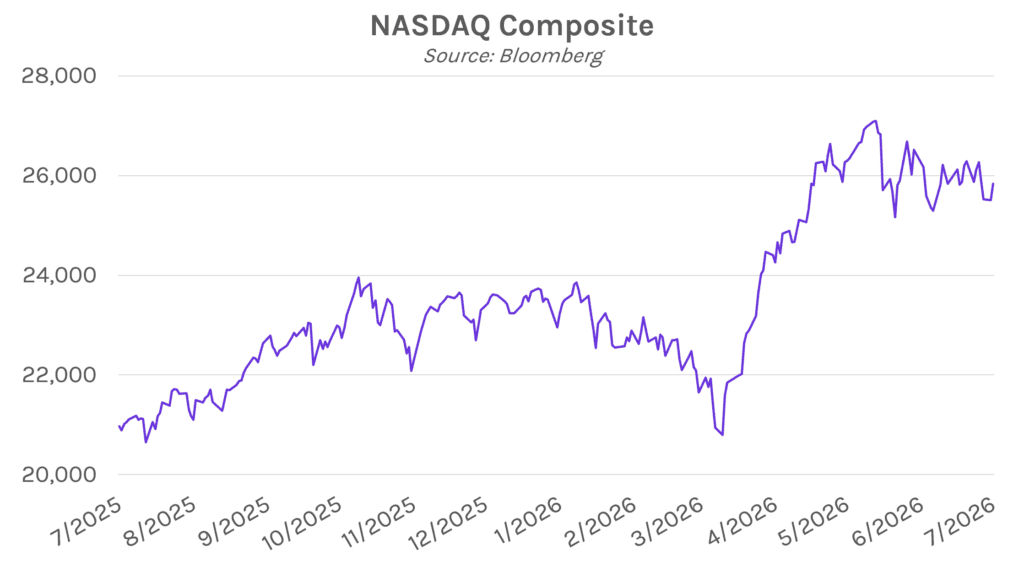
Yields rise on elevated oil prices. Treasury yields climbed as continued attacks between the US and Iran drove oil prices higher, stirring inflation concerns. The 2-year yield closed 6 bps higher at 4.26% and the 10-year yield closed 4 bps higher at 4.63%. Meanwhile, equities rallied on renewed AI enthusiasm, with the NASDAQ and S&P 500 climbing 1.29% and 0.89%, respectively. Brent crude climbed nearly 3% to ~$91.60 per barrel, its highest level in over a month.
Trump resists peace talks despite 10-day ceasefire proposal. Mediators presented Washington and Tehran with a proposal for a 10-day ceasefire that could revive last month’s memorandum of understanding, though divisions remain and President Trump has vowed to retaliate for the recent deaths of American troops. The US led another round of strikes on Iran on Monday evening, following the Houthi militia’s declaration of a naval blockade on Saudi Arabia, threatening to open a new front in the conflict. A Saudi-led coalition vowed to respond to the blockade with force, describing the threat as a “blatant violation of international law.” Rystad Energy estimates the blockade puts roughly 2.5 million barrels of Saudi crude at risk each day, at a time when traffic in the Strait of Hormuz remains at a standstill.
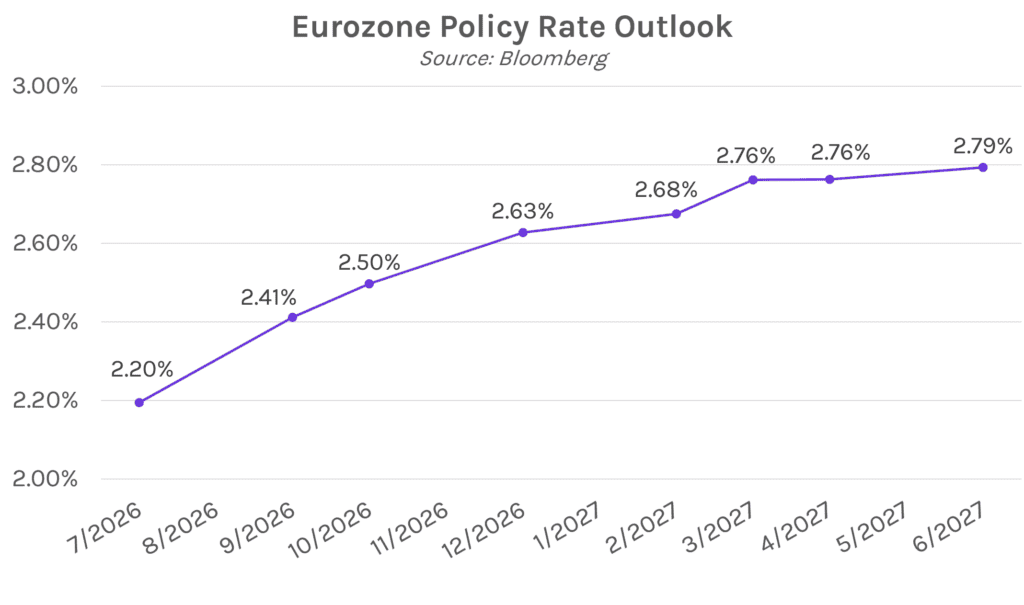
ECB likely to hold rates steady amid slowing growth. The European Central Bank is expected to hold rates steady this week, following a June meeting where they hiked deposit rates to 2.25%, the first increase since 2023. However, futures markets have a rate hike fully priced in by October as energy prices have begun to rise again on renewed tensions in the Middle East. The ECB’s hawkish tone is similar to that of the Fed, which has expressed a potential higher-for-longer stance due to energy-driven inflation. The FOMC will meet July 27-28 to make its own policy rate decision.