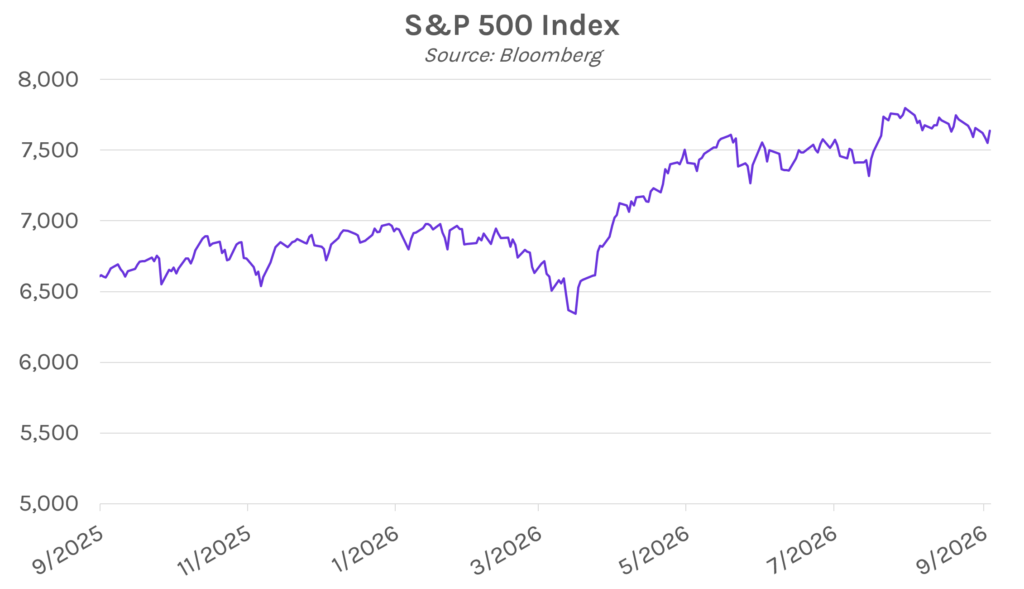
Yields decline alongside oil prices. Treasury yields trended lower across the curve today as optimism grew that Middle East oil supply disruptions would begin to ease. The 2-year yield closed 7 bps lower at 4.66%, while the 10-year closed 9 bps lower at 4.93%. WTI settled at $101 a barrel as equities rose on the energy optimism, with the S&P 500 and NASDAQ closing 1.1% and 1.7% higher, respectively.
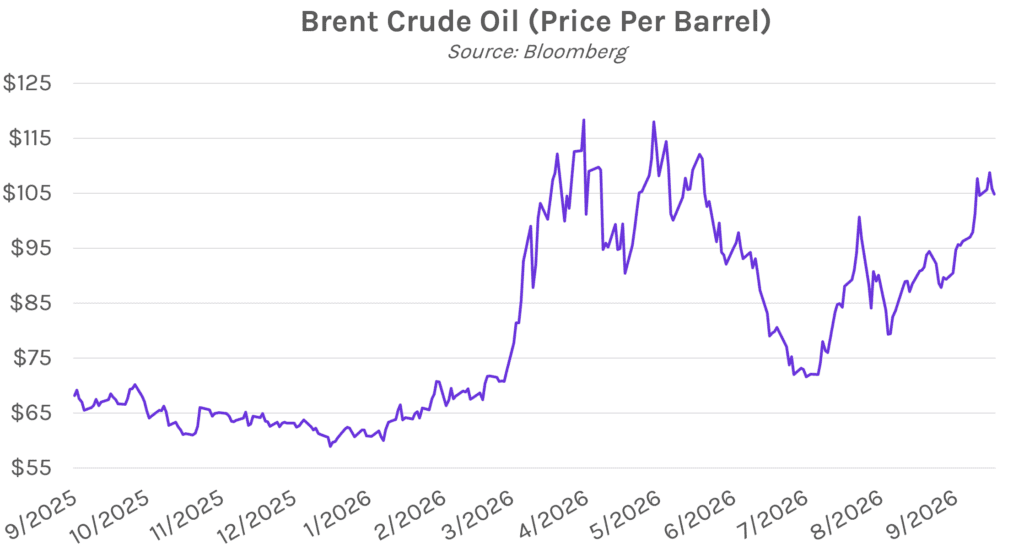
Oil prices hit one-week low as supply concerns ease. According to Iranian sources, China has asked Tehran to restrain attacks led by the Iran-backed Houthi militia, following a request from Saudi Arabia for Beijing to intervene. Houthi advances along the Red Sea coast and the Bab el-Mandeb Strait have deepened oil supply disruptions. The Chinese foreign ministry said it “does not wish to see regional tensions further spill over into Yemen and the Red Sea,” adding that “escalating regional instability is not in the interests of any party.” Brent crude fell to a one-week low on the news, closing near $104 a barrel. Saudi Arabia is also working to repair its East-West oil pipeline which was damaged in drone strikes last week. Officials believe it could reach half-capacity within days, though full restoration may take five to six weeks.
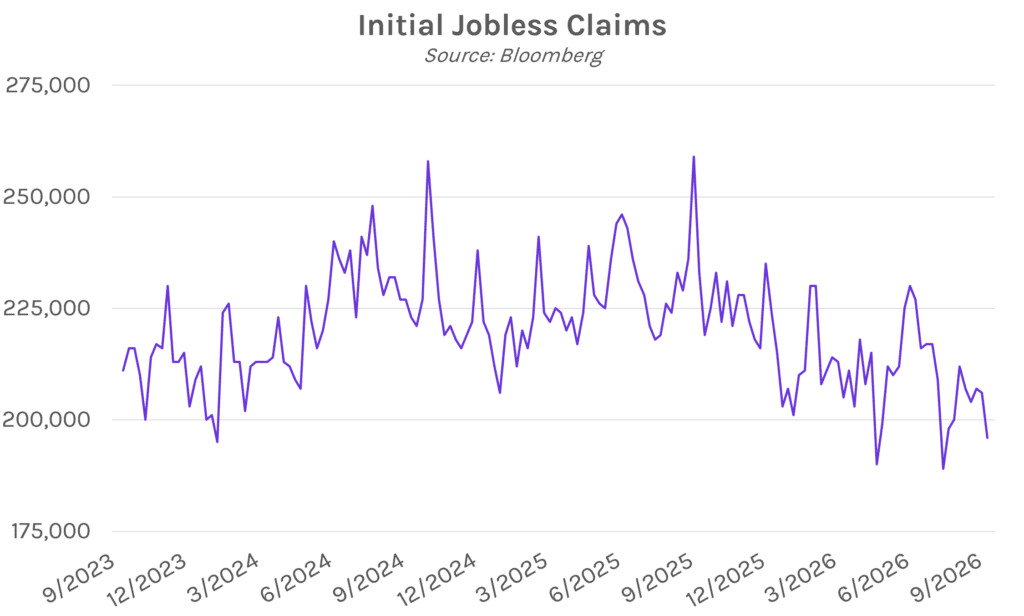
Jobless claims fall to lowest level since July. Initial jobless claims came in at 196k for the week ending September 12, below expectations of 207k and down 10k from the prior period, the lowest level since July. Continuing claims also beat expectations, coming in at 1.73 million against a forecast of 1.78 million, the lowest level since 2024. Both Labor Day and the start of the school year fell within the data collection period, which can distort the figures. However, the four-week moving average hit a 5-week low of 203k. Grace Zwemmer, US economist at Oxford Economics, noted that “jobless claims data continue to be consistent with a low pace of layoffs and a labor market that has struck a balance between a low rate of hiring and little growth in the labor force.”