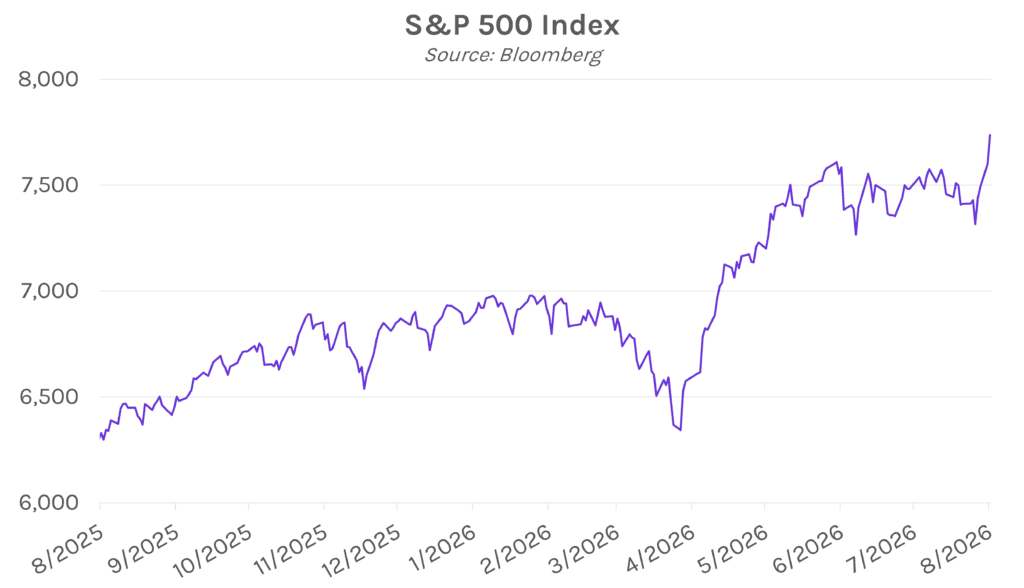
Yields decline as Hormuz deal progresses. Treasury yields fell across the curve today as Qatar indicated that a draft proposal between the US and Iran to reopen the Strait of Hormuz has been created, with US officials expressing optimism that an agreement can be met. The 2-year yield closed 5 bps lower at 4.19%, while the 10-year yield closed 6 bps lower at 4.61%. Meanwhile, the S&P 500 closed 1.79% higher at 7,737, a new all-time high.
Mediators say US-Iran peace talks are progressing. Qatari mediators today described US-Iran diplomacy as being “in very progressive stages” with draft peace agreements “being circulated.” Direct talks between Washington and Tehran do not appear to be occurring, though Treasury Secretary Scott Bessent said an agreement could be reached “today or tomorrow.” Iranian state-run media reported that Foreign Ministry spokesperson Esmail Baghaei also indicated talks were progressing positively. Nevertheless, tensions in the region remain elevated as a cargo vessel reportedly lost power after being struck in the Strait of Hormuz early Tuesday. Separately, Iran and Oman continued negotiations, with the two nations planning to enter a short-term agreement to allow Tehran control of a specified route through the strait.
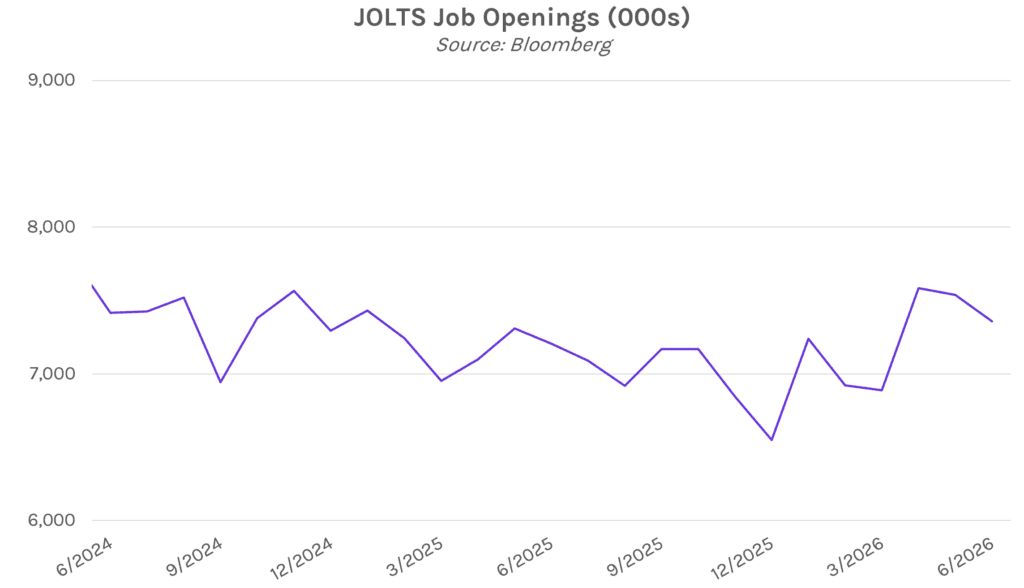
June job openings decline. JOLTS data released this morning showed 7.36 million job openings in June, below May’s downwardly revised 7.54 million and expectations of 7.45 million. Healthcare led the decline with 147k fewer openings, its largest drop since July 2025, followed by leisure and hospitality, which dropped 87k. Sneha Puri, economist at the Indeed Hiring Lab, said “healthcare’s reliance on international recruitment may be exactly the sector to watch as limited labor supply increasingly shapes hiring in the labor market.” The openings-to-unemployed ratio, a favored data point by the Fed, remained near one-to-one. Quits and layoffs rates were both unchanged at 2.0% and 1.1%, respectively.