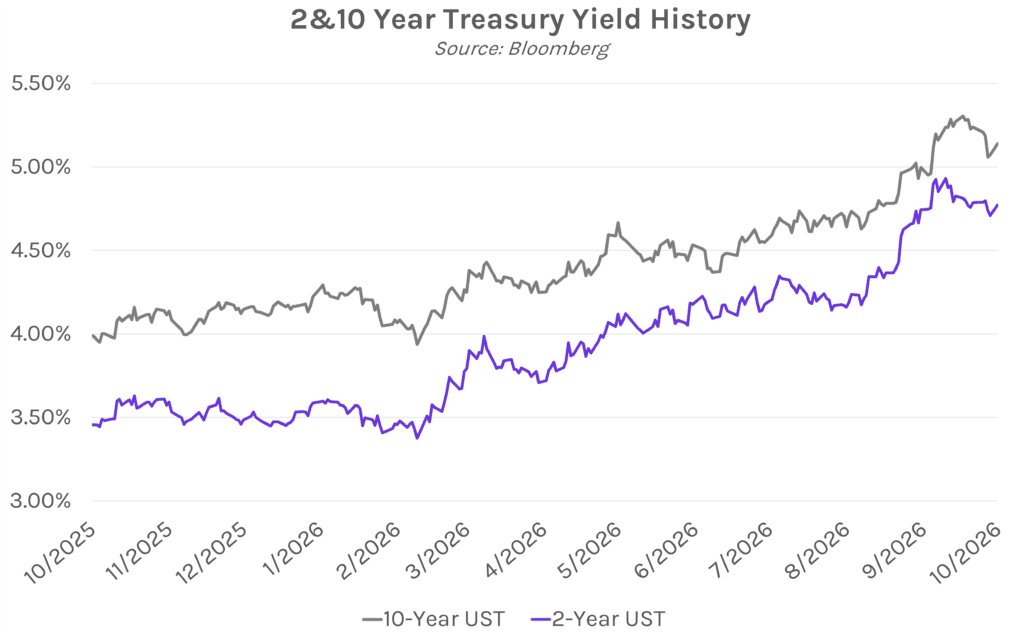
Yields climb on elevated oil prices, improved risk appetite. Treasury yields rose steadily over today’s session, as oil prices remained elevated and markets shifted risk-on, with technology stocks rallying as sentiment surrounding AI trade improved. The 2-year yield closed 6 bps higher at 4.77%, while the 10-year yield closed 7 bps higher at 5.14%. Meanwhile, equities rallied in a partial reversal of last week’s move, with the S&P 500 and NASDAQ closing 0.41% and 1.11% higher, respectively.
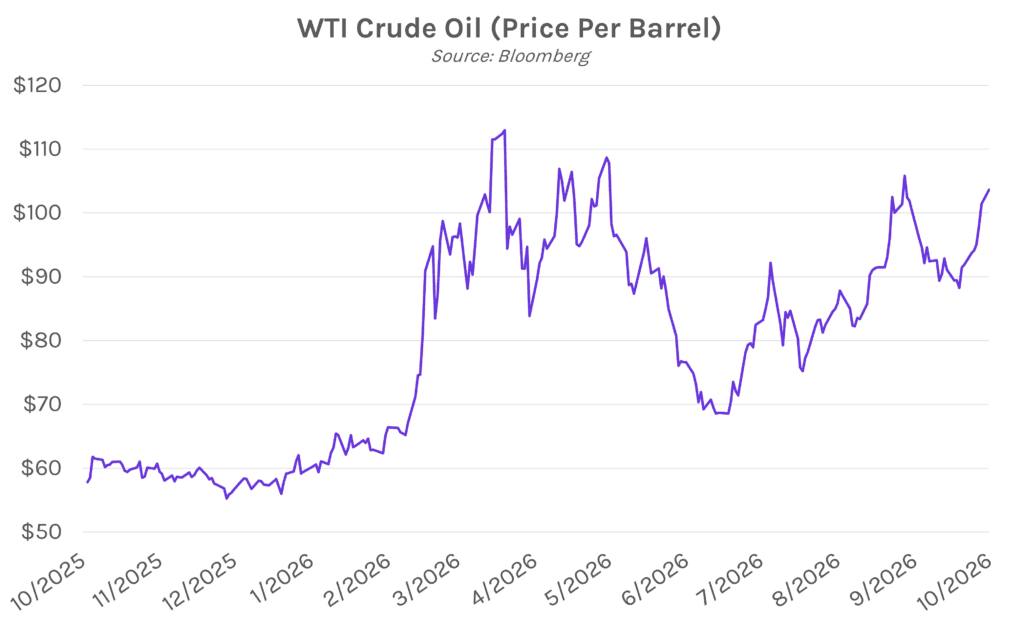
Oil prices move in opposite directions on Mid East turmoil. Oil prices were mixed on the day, with WTI crude closing 2.2% higher at nearly $104 per barrel, marking the highest settlement in over a month, while Brent crude closed 0.6% lower, near $109 per barrel. Houthi rebels in Yemen claimed to have carried out additional attacks on key infrastructure in Saudi Arabia today, and separately, an oil tanker caught fire in the Strait of Hormuz over the weekend. In an effort to ease energy supply concerns, President Trump today signed an executive order to waive some Russian oil sanctions, though experts believe the change will do little to resolve physical supply disruptions. Crude flows in the region averaged 8.5 million barrels per day for the week, down sharply from 20 million barrels per day in the prior week.
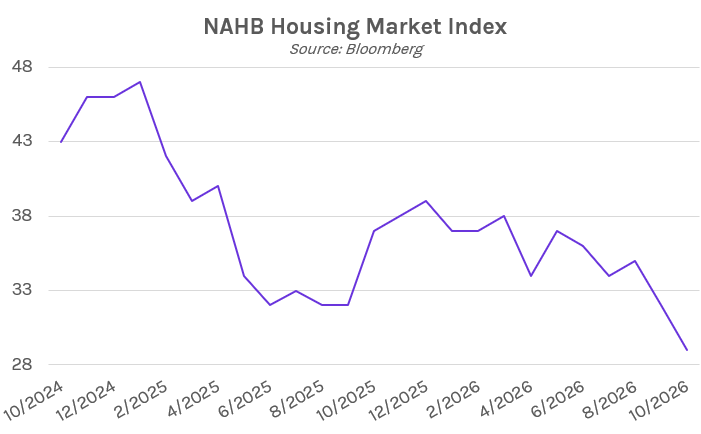
US homebuilder sentiment hits lowest level since 2012. The NAHB/Wells Fargo Housing Market Index came in at 29 today, below expectations of 31 and down three points from September. Labor shortages, higher costs, and rising mortgage rates drove the decline. NAHB Chairman Bill Owens said, “more than one-third of builders reported immigration enforcement activity in their market areas during the past month,” weighing on labor availability. Meanwhile, mortgage rates have climbed to their highest levels in three years, with the 30-year fixed rate averaging 7.40% last week, according to Freddie Mac. Low consumer sentiment was another headwind, with home buyer traffic falling “to its lowest level since April 2012, excluding the pandemic’s onset in April 2020,” according to NAHB Chief Economist Robert Dietz.