Yields rise as markets await US economic plan for Iran. Treasury yields climbed today, alongside oil, as Treasury Secretary Scott Bessent further teased plans to impose economic pressure on Iran, with details to follow Monday. Bessent also added to his buyback announcement from yesterday, saying that the Treasury Department may increase buybacks to “more than the $4 billion size.” The 2-year yield closed 3 bps higher at 4.19%, while the 10-year yield closed 6 bps higher at 4.70%. Meanwhile, WTI crude is up nearly 3% at ~$88 per barrel. Equities slid, with the S&P 500 and NASDAQ closing 0.87% and 1.00% lower, respectively.
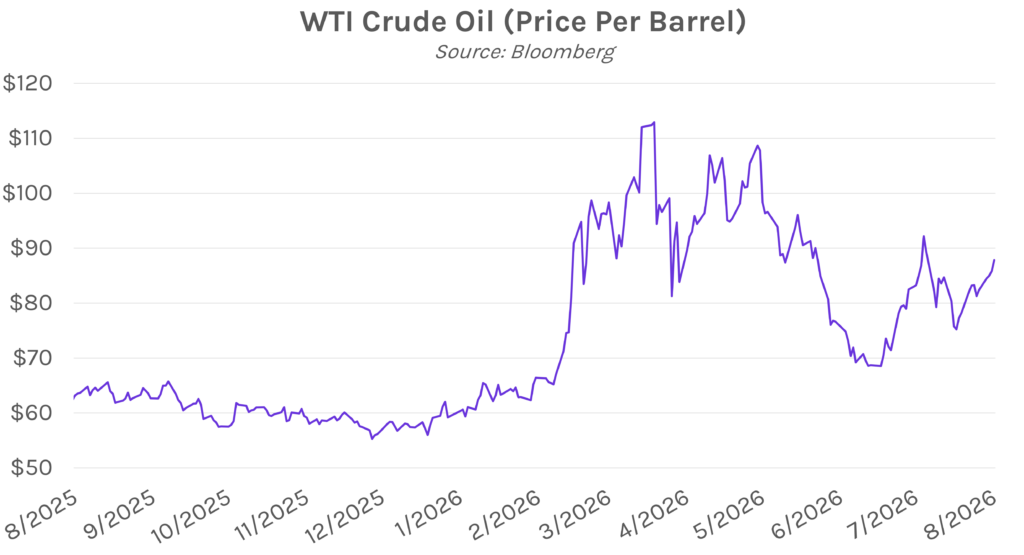
Trump threatens Iran with “an economic D-Day”. President Trump posted on social media today that the US would impose “an economic D-Day” on Iran, and warned that Washington would also extend economic penalties to any nation that gives “any type of lifeline” to Tehran. Treasury Secretary Bessent added that the US plans to impose “the greatest coordinated economic isolation in the history of the world” against Iran, stating that the US has “the blockade, and…the toughest sanctions in history.” Bessent said the measures would replace the need for further military strikes. Oil prices climbed following the comments, though Iran’s Foreign Minister Araghchi dismissed the threats, saying the US was “doubling down on failed policies.”
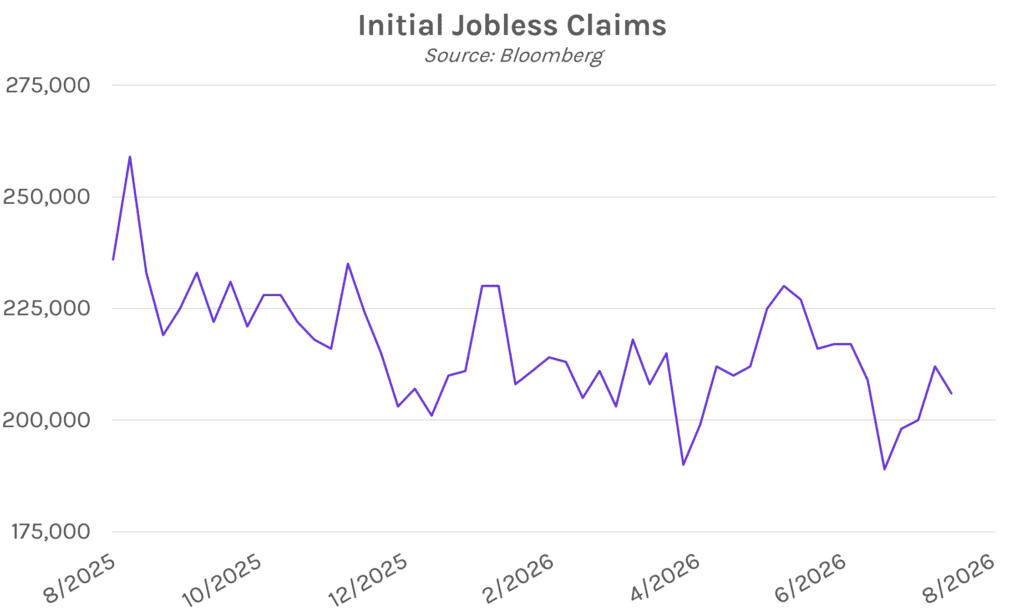
Initial jobless claims land soft. Initial jobless claims dropped to 206k this week, below expectations of 210k and last week’s upwardly revised 212k. Though slightly above the levels posted mid July, initial jobless claims remain at historic lows. Seasonally adjusted claims also declined, though the four-week moving average ticked up slightly to 204k. The job market continues to stay in a “slow to hire, slow to fire” environment as Matthew Martin, senior US economist at Oxford Economics, explains that “demand for workers remains soft, but the supply of workers has slowed even more – leaving the labor market roughly in balance.” Today’s soft print reinforces signs of stability in the job market and, if maintained, could allow Fed officials to focus on sticky inflation.