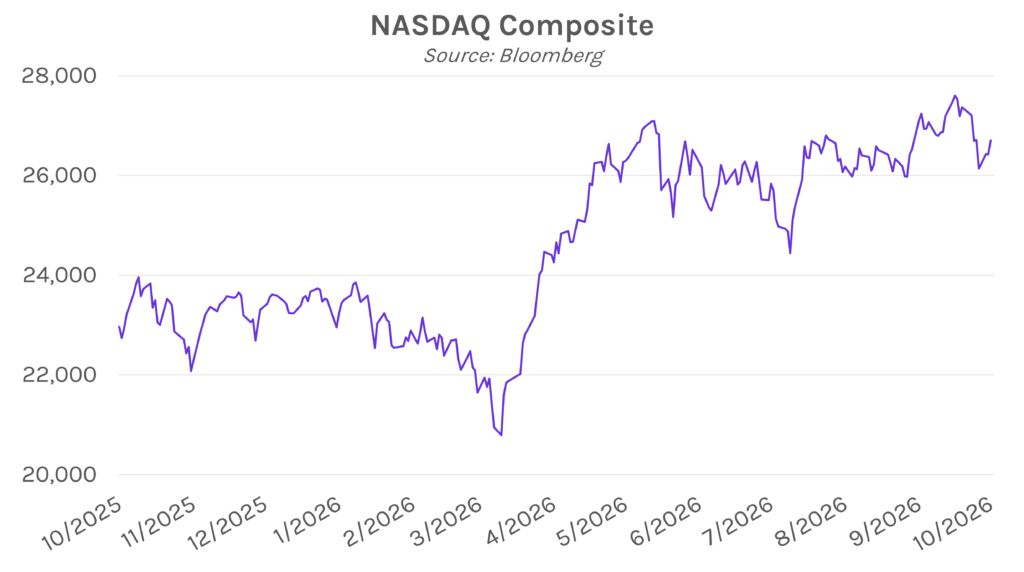
Yields edge higher as Middle East tensions remain elevated. Treasury yields saw a choppy session today, as oil prices whipsawed on attacks by the Houthi militia in the Middle East, with the US ordering non-essential government officials to leave Saudi Arabia. The 2-year yield closed 3 bps higher at 4.81%, while the 10-year yield closed 1bp higher at 5.12%. Meanwhile, equities continued to rally on the back of last night’s SpaceX earnings, with the S&P 500 and NASDAQ climbing 0.58% and 1.05%, respectively.
Attacks ramp up in the Middle East. Iran-backed Houthi militants have escalated their attacks against Saudi Arabia, including on civilian airports, resulting in the United States ordering non-critical US government employees to leave Saudi Arabia. Meanwhile, Iranian Foreign Minister Abbas Araghchi said negotiations between the US and Iran are still taking place through mediators. Araghchi said, “It is the American side that is closing the path, not Iran.” Rebecca Babin, senior energy trader at CIBC, said, “The market has seen numerous iterations of potential ceasefires and diplomatic breakthroughs so there is understandable skepticism around whether improving rhetoric will translate into tangible progress.”
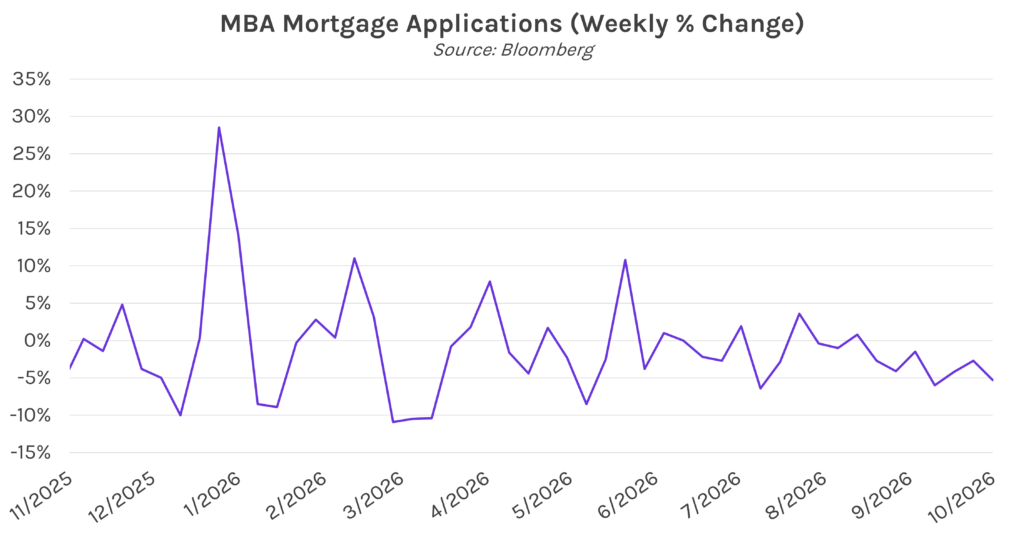
Mortgage applications fall despite dip in mortgage rates. US mortgage applications fell 5.3% in the week ending October 16, according to the Mortgage Brokers Association, down from a 2.7% WoW decline in the prior period. Home loan refinance requests also dipped 2% last week, a smaller drop relative to recent periods but down more than 59% YoY. The lower demand came despite a fall in the average 30-year fixed mortgage rate, which fell to 7.41% from 7.50%, marking the first decline in more than two months, though rates remain near historic highs. Mortgage rate movement has been relatively stable this week but has tracked oil prices closely. Matthew Graham, chief operating officer at Mortgage News Daily, cautioned “against placing too much emphasis on the oil price correlation,” adding that “it’s been highly unreliable for more than a month.”