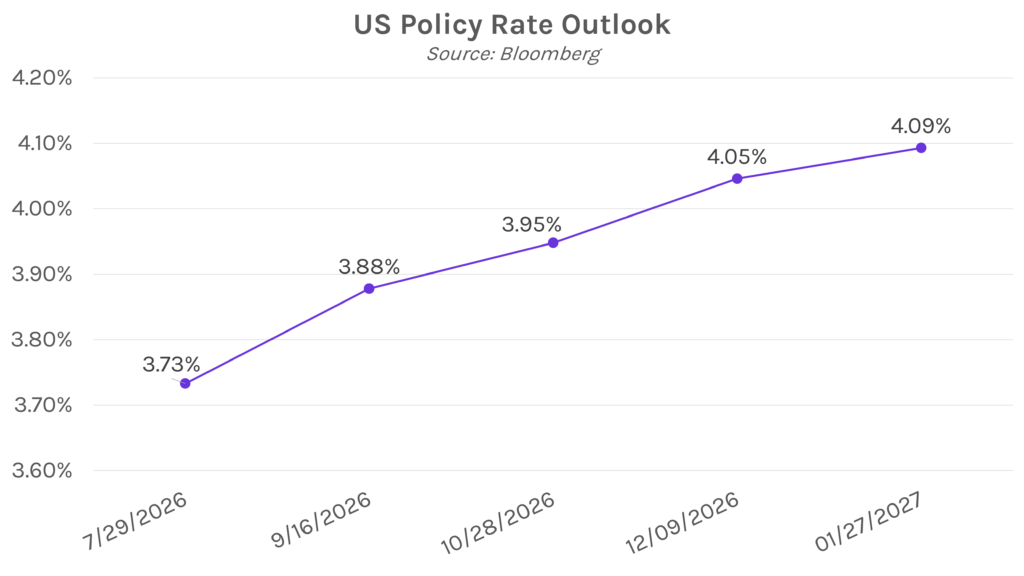
Yields climb alongside oil on Hormuz dispute. Treasury yields rose as the US and Iran disagree over whether the Strait of Hormuz remains open, sending oil prices higher today. Futures markets are now pricing in a rate hike by the September FOMC meeting due to concerns over potential oil supply disruptions from the standoff. The 2-year yield closed 7 bps higher at 4.28%, while the 10-year yield closed 6 bps higher at 4.62%. Meanwhile, equities slid on risk-off sentiment, with the S&P 500 and NASDAQ closing 0.79% and 1.55% lower, respectively.
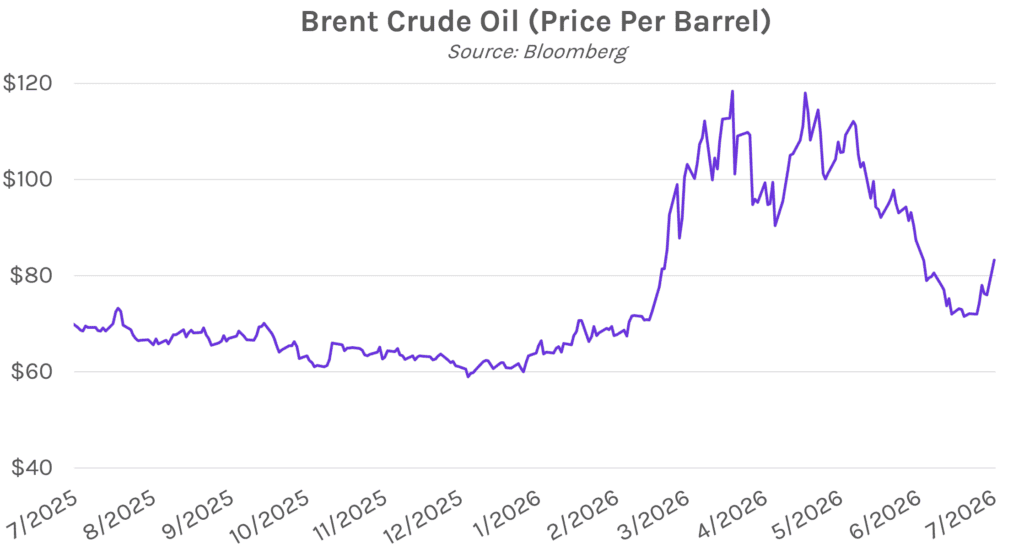
US-Iran continue strikes as future of Strait of Hormuz remains unclear. The US and Iran exchanged heavy strikes over the weekend and into Monday, with the US reporting strikes on roughly 140 targets while Iran launched attacks on US military bases. Following surging tensions over the past week, Iran declared the Strait of Hormuz closed and said it will not honor the memorandum of understanding if the US does not. Meanwhile, President Trump responded on social media, saying the strait is open “with or without Iran,” and announced that the US Navy would blockade Iranian ships while charging a 20% toll on other vessels transiting the waterway. Brent crude futures are up over 9% on the day, trading near $83 per barrel after closing at $76 on Friday.
Waller warns that hot CPI print could force the Fed’s hand. Fed Governor Christopher Waller spoke today ahead of tomorrow’s June CPI release, saying that if he sees “another higher [reading], I’m going to treat that as signal, not noise,” and that “the FOMC will need to consider tightening monetary policy in the near-term.” Waller cited AI-related demand, higher energy prices, and tariffs as the primary drivers of elevated inflation. That said, he stopped short of committing to a hike, noting there remains “a credible case for inflation to begin to fall back to our 2% goal,” though he indicated it would take multiple months of lower readings to justify keeping rates at their current level.