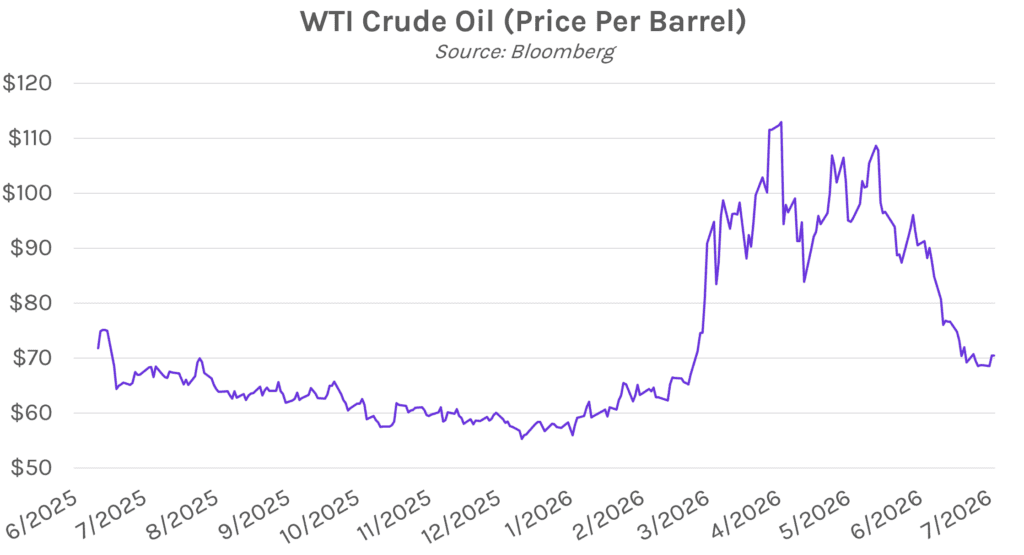
Yields jump as Hormuz attacks revive inflation fears. Treasury yields rose after attacks on three tankers in the Strait of Hormuz sent oil prices climbing, reviving energy-driven inflation concerns. The 2-year yield closed 7 bps higher at 4.18% and the 10-year yield closed 8 bps higher at 4.55%. WTI crude jumped over 5% to trade around $72 per barrel, with gains extending as the US revoked Iran’s authorization to sell oil. Meanwhile, equities fell, weighed down by heavy selling in semiconductor shares despite record earnings from Samsung Electronics Co., with the NASDAQ closing 1.16% lower.
Attacks in Strait of Hormuz test US-Iran truce. Three vessels in the Strait of Hormuz were attacked over the past day, attributed by a US official to Iran’s Revolutionary Guard and marking the largest tension flare since an interim peace deal was signed last month. The Joint Maritime Information Center released an update stating that, “The recent confirmed incidents highlight that the threat environment remains heightened and warrants extreme vigilance.” The incidents underscore the fragile relationship between Washington and Tehran as the US revoked the sanctions waiver that enabled Iran to sell oil internationally and launched airstrikes on Iran in response.
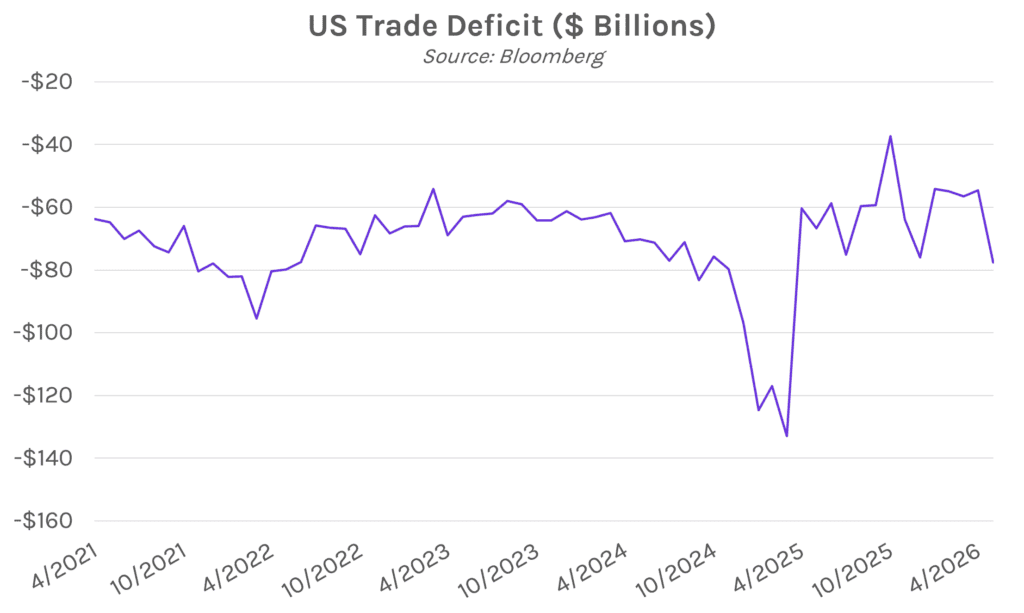
US trade deficit widens ahead of pharmaceutical tariffs. The US trade deficit reached $77.6 billion in May, the largest level since March 2025 and up notably from a revised $54.6 billion in April. Imports were up 3.3%, mainly due to consumer goods, specifically pharmaceuticals, and data center equipment. The surge in pharmaceuticals reflects businesses stockpiling ahead of the pharmaceutical tariff set to take effect at the end of the month, while ongoing AI expansion continues to drive demand for AI-infrastructure-related goods. Meanwhile, exports fell 3.2% in May, driven by a large decline in sales of gold. While the rise in imports could further pressure consumer prices, May’s print could represent a one-time movement ahead of the tariff deadline.