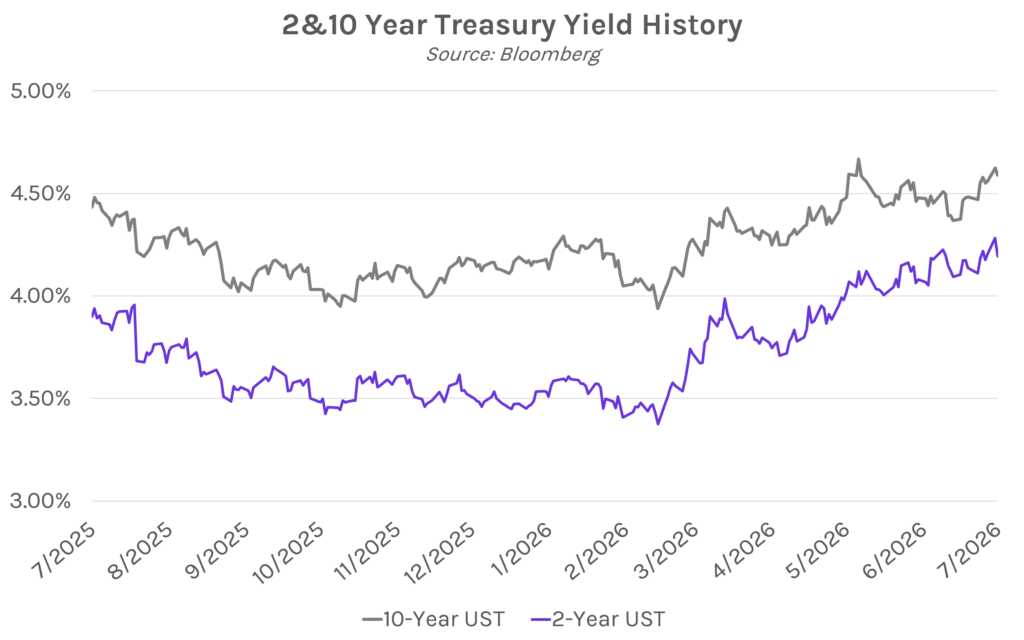
Yields drop on soft CPI print. Treasury yields fell 7-10 bps to intraday lows in the immediate aftermath of today’s cooler-than-expected June CPI report. The move partially reversed over the remainder of the session, with the 2-year yield ultimately closing 9 bps lower at 4.19% and the 10-year yield closing 3 bps lower at 4.59%. Futures markets now have a rate hike fully priced in by the December FOMC meeting, compared to September yesterday. Meanwhile, equities rallied on the back of the data release, with the S&P 500 and NASDAQ closing 0.38% and 0.90% higher, respectively.
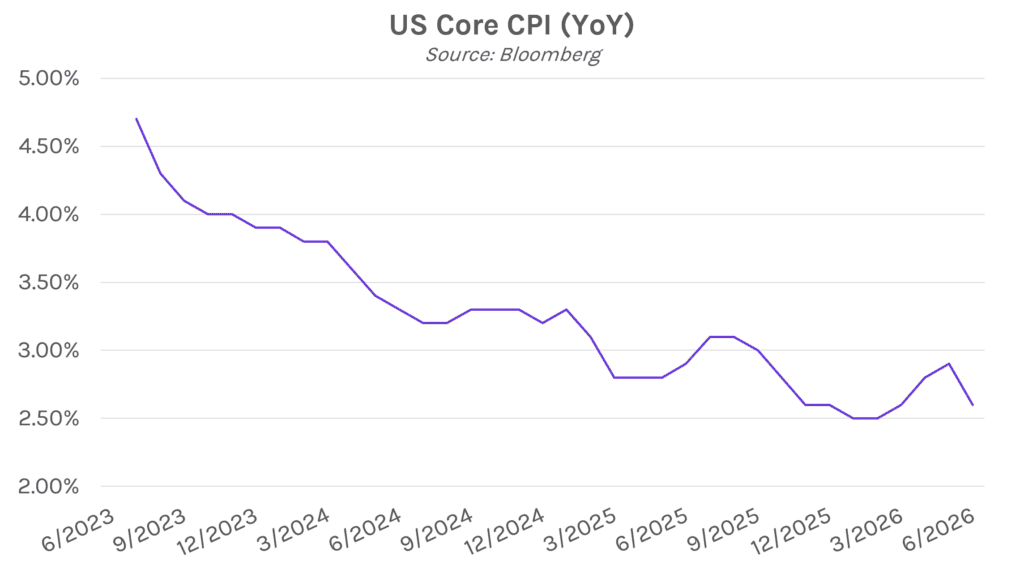
US inflation falls for the first time in six years. Headline CPI came in cooler than expected today, increasing 3.5% YoY, below expectations of 3.8% and May’s 4.2%. On a monthly basis, prices declined for the first time since April 2020, while annualized inflation posted its first drop since January. The decline was driven by energy costs, as gas prices fell in June amid easing Middle East tensions. Core CPI, which excludes food and energy prices, also came in below expectations, rising 2.6% YoY from 2.9% the prior month, against a forecast of 2.8%. Tom Porcelli, chief economist at Wells Fargo, said, “inflation will continue the process of slowing down over the coming year,” however, recent re-escalations in the Middle East add uncertainty to that outlook.
Warsh remains focused on inflation. In his first Congressional testimony as Fed Chair, Kevin Warsh reaffirmed his commitment to the Fed’s 2% inflation target. Warsh acknowledged that today’s CPI report was positive sign, but said there is still “plenty of work to do.” He gave no explicit signals on what the Fed will do next, but added, “We have the tools to do it…I’m going to ask our colleagues to have a good family fight about the extent and timing in which we would need to deploy those.” Olu Sonola, head of US economics at Fitch Ratings, said, “This is probably the closest Warsh has come to acknowledging that the Fed could raise rates in response to persistently high inflation.”