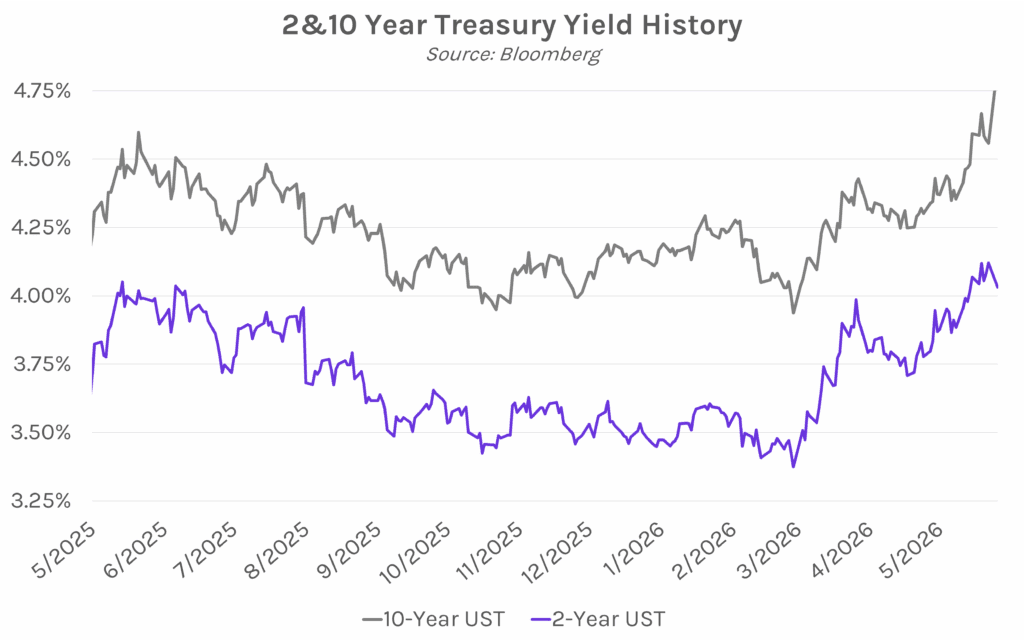
Yields fall as peace deal hopes outweigh weekend strikes. Treasury yields dropped ~7 bps at market open as optimism around a US-Iran framework agreement remained steady despite the US military conducting fresh strikes on Iran over the weekend. The move largely held as yields closed 5-9 bps lower across the curve, with the 2-year yield at 4.03% and the 10-year yield at 4.49%. Equities rallied alongside the decline in rates, with the S&P 500 and NASDAQ up 0.61% and 1.19%, respectively.
US touts peace deal optimism even as strikes continue. Overnight, the US conducted “self-defense strikes” against Iranian forces after Iran launched drones near American ships and deployed mine-laying boats in the Strait of Hormuz. Tehran called the strikes a “grave violation” of the current ceasefire agreement. Israel separately renewed attacks in Lebanon, with Israeli Prime Minister Benjamin Netanyahu saying his military would expand operations there despite the ceasefire with Hezbollah. Over the weekend, President Trump posted on social media that a peace deal would “be announced shortly,” but later said an agreement had not “even [been] fully negotiated yet.” Secretary of State Marco Rubio said that negotiating an end to the war could “take a few days.”
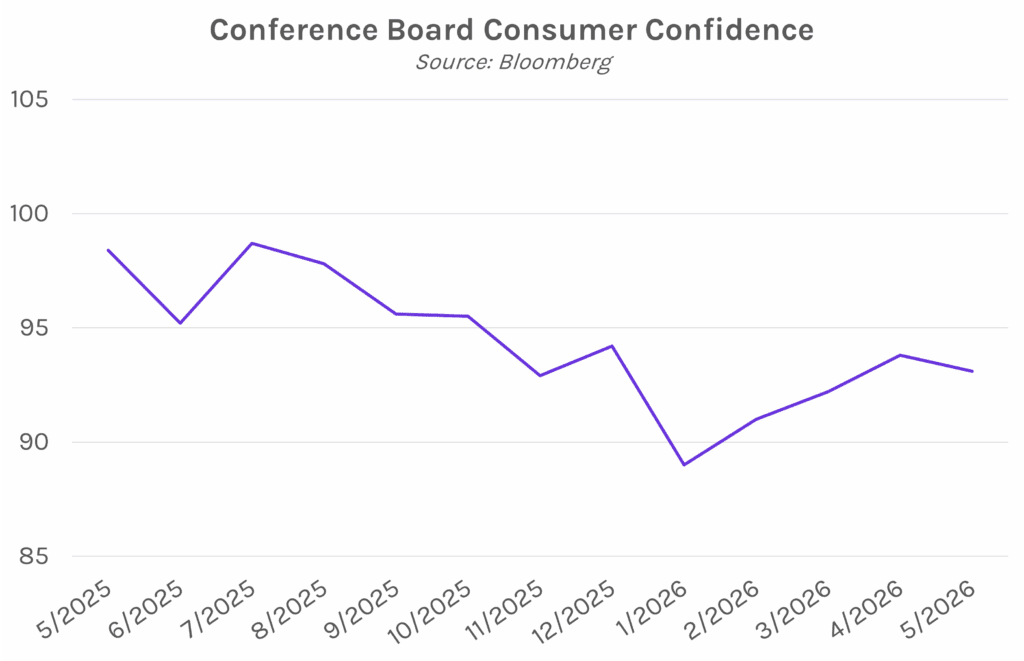
Consumer confidence edges lower as price pressures weigh on sentiment. The Conference Board’s consumer confidence index fell to 93.1 in May, above expectations of 92.0 but below April’s upwardly revised 93.8. The present situation gauge fell to a three-month low of 121.2, while consumer expectations for the next six months rose to 74.4. Conference Board Chief Economist Dana Peterson said the “inflationary impacts of the war in the Middle East intensified,” with the May report noting consumers cited rising oil and gas prices for a second consecutive month. Despite recent data pointing to resilience in consumer spending and stability in the labor market, two-thirds of consumers reported cutting back on spending due to rising prices.