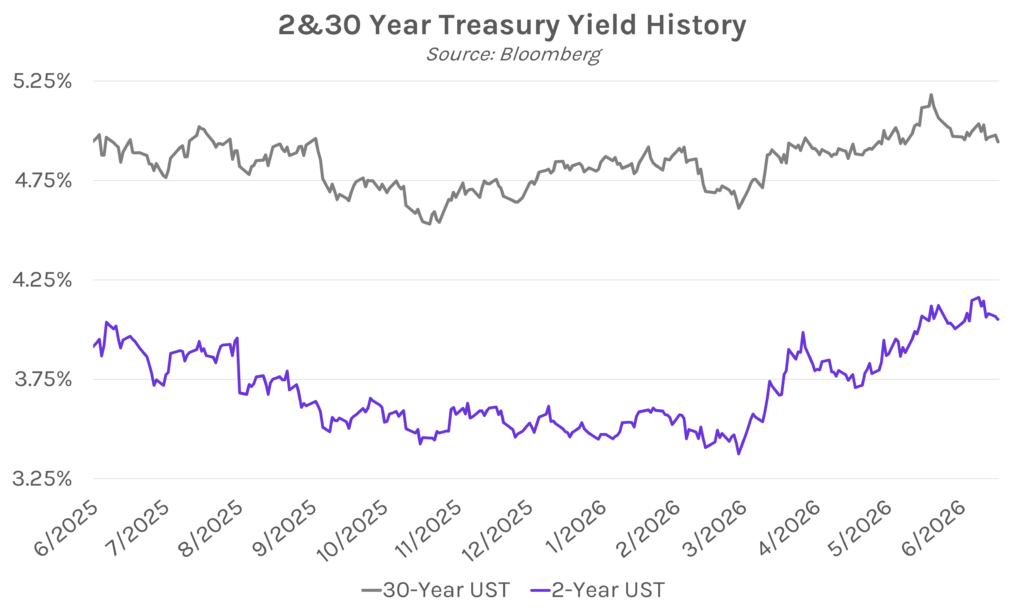
Yields decline on hopes that Hormuz reopens. Treasury yields fell across the curve today alongside oil prices as the US and Iran are set to sign a peace deal later this week, which would potentially reopen the Strait of Hormuz. The 2-year yield closed 1bp lower at 4.05%, while the 30-year yield closed 4 bps lower at 4.94%. Brent crude futures slid over 5% to $79 per barrel, its lowest level since early March. Meanwhile, equities tumbled as chipmakers sold off, with the S&P 500 and NASDAQ closing 0.57% and 1.15% lower, respectively.
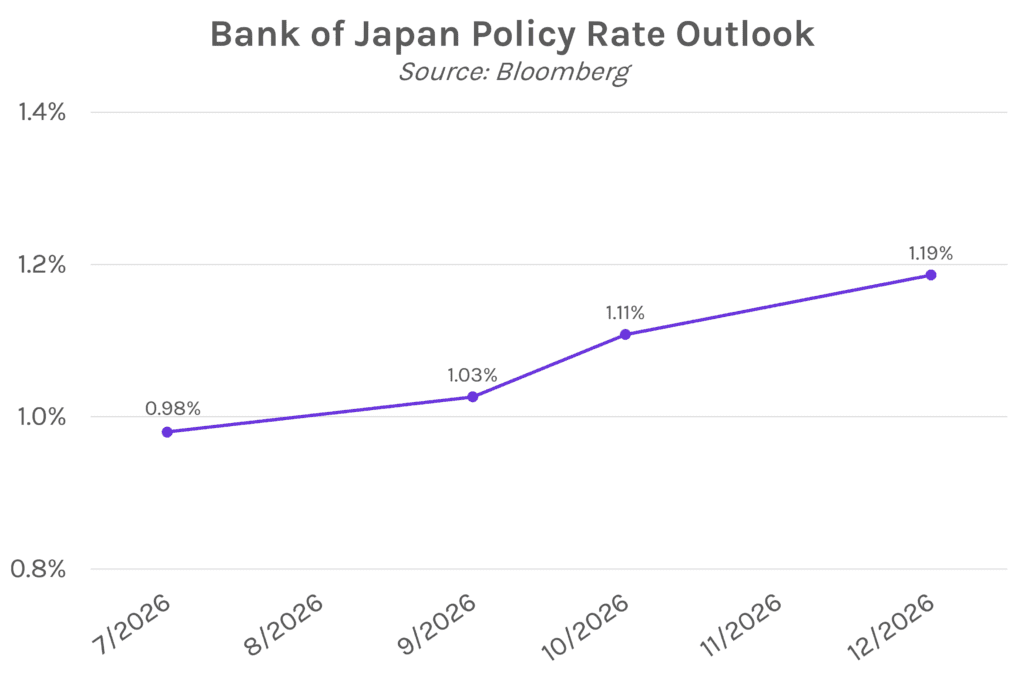
BOJ raises rates to a three-decade high. The Bank of Japan voted 7-1 to hike its benchmark rate to 1%, the highest level since 1995. The post-meeting statement said that the BOJ would continue adjusting policy rates alongside developments in the economy, as elevated energy prices were already being passed through business-to-business transactions and are likely to have a broader impact. Deputy Governor Shinichi Uchida, standing in for Governor Kazuo Ueda who was hospitalized for medical treatment last week, said, “Regarding the question of falling behind the curve, our basic approach is to continue raising policy interest rates while adjust the degree of monetary easing.”
Housing starts sink to six-year low. New residential construction starts fell 15.4% MoM in May, bringing the annualized pace to 1.18 million units, the weakest reading since 2020. The decline was driven by a sharp drop in multifamily starts, which fell 40.2%, while new single-family units edged down 1.9%. Soft demand has weighed on the housing market as homebuilders continue to slow production of non-contracted new homes as inventory lingers. Many builders have turned to price incentives such as offering discounted mortgage rates and cutting prices to entice buyers.