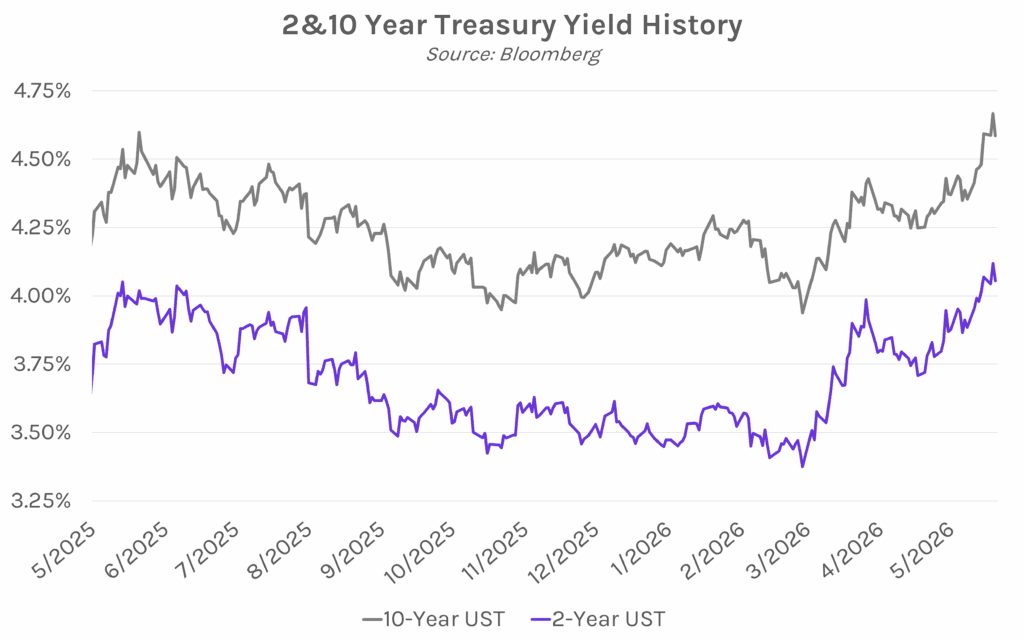
Yields plummet on rumored US-Iran peace deal. Treasury yields dropped ~10 bps, to intraday lows, on rumors of a potential US-Iran peace deal announcement and comments from President Trump that negotiations were in the final steps. The 2-year yield ultimately closed 6 bps lower at 4.06% while the 10-year yield closed 8 bps lower at 4.59%, though yields remain ~20bps higher on the month. Meanwhile, equities soared on the peace deal optimism, with the S&P 500 and NASDAQ closing 1.08% and 1.54% higher, respectively. WTI crude closed at $98.26 per barrel, below $100 for the first time in over a week.
US-Iran peace talks in progress. President Donald Trump shared today that the US is now in the “final stages” of peace talks with Iran, driving market optimism for an end to the war and relief for elevated energy prices. Trump added, “we’ll see what happens,” saying that if a deal is not made, “we’re going to do some things that are a little bit nasty, but hopefully that won’t happen.” Trump specified that he may be willing to wait a few days or into early next week for Iran’s response to the latest peace proposal. In response to these comments, Iran threatened retaliation in the event of a US attack, saying, “If aggression against Iran is repeated, the regional war that has been promised will this time extend beyond the region.”
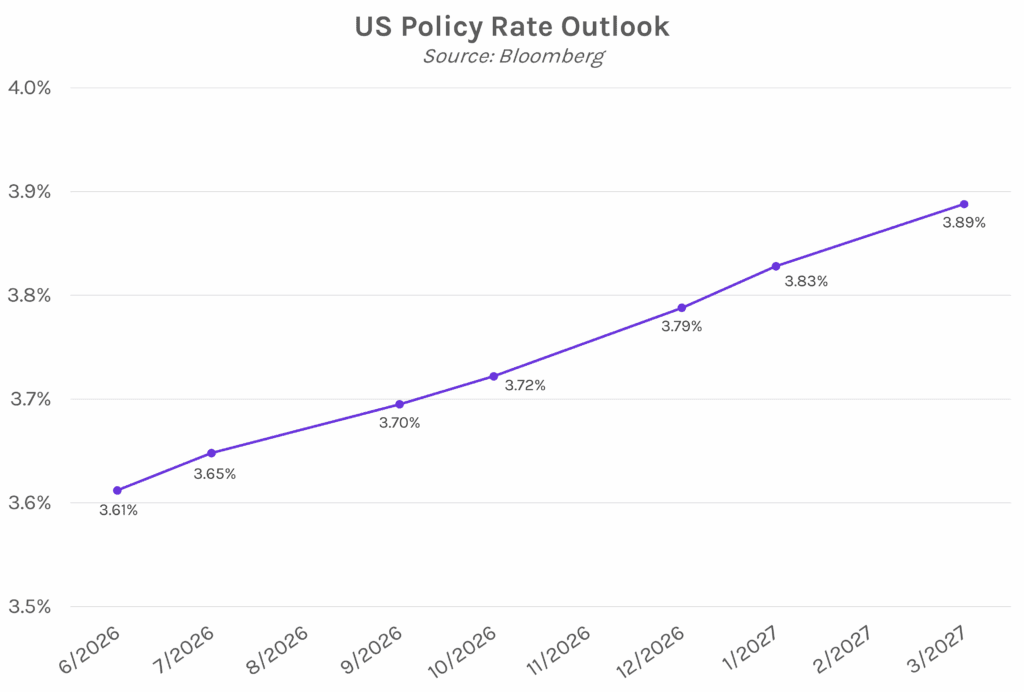
Fed remains open to rate hikes. The April FOMC meeting minutes highlighted inflation concerns among a majority of Fed officials. The record stated that “many participants indicated that they would have preferred removing the language from the post-meeting statement that suggested an easing bias regarding the likely direction of the committee’s future rate decisions.” While some officials still believe rate cuts will eventually be appropriate, most viewed “some policy firming” as “appropriate if inflation were to continue to run persistently above 2%.” On the other side of the dual mandate, “most” participants believe recent labor market data shows signs of stabilization, though employment risks remain skewed to the downside.