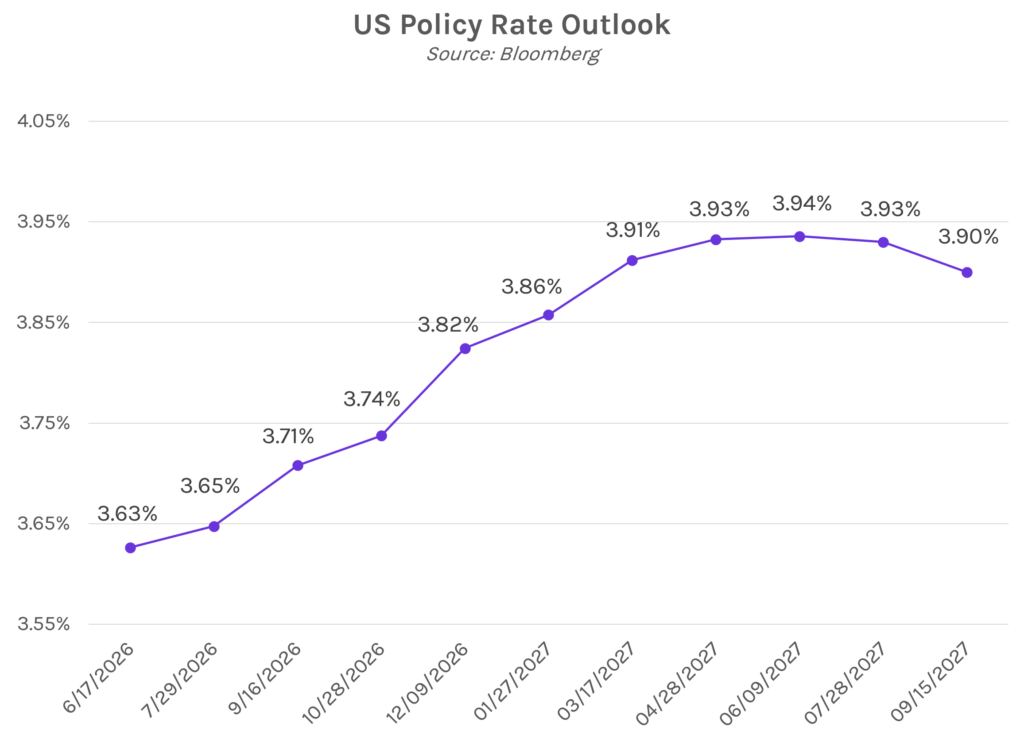
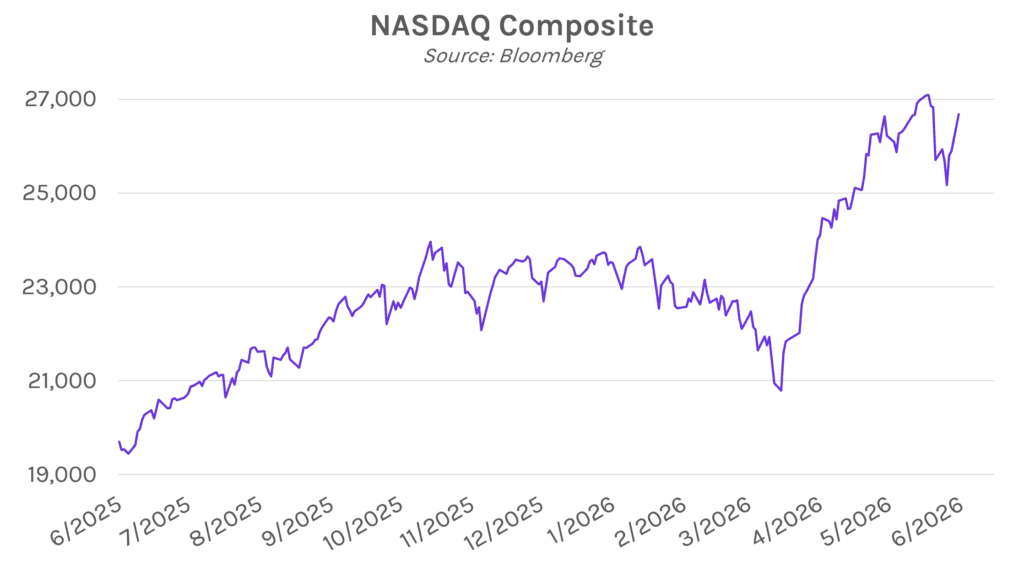
Yields nearly unchanged despite signing of framework US-Iran deal. Treasury yields fell 7 bps during Asian trading on news that the US and Iran reached a preliminary peace deal. The move then reversed course throughout the day as the path forward remains unclear, and yields closed mostly flat, with the 2-year yield 2 bps lower at 4.06% and the 10-year yield 1bp lower at 4.47%. Despite the muted Treasuries reaction, equities soared on the US-Iran optimism, with the S&P 500 and NASDAQ closing 1.65% and 3.07% higher. Brent crude dropped to $83.36 per barrel, down 30% from its wartime peak.
Path to reopening Hormuz remains precarious, despite interim deal. The US and Iran announced a framework peace agreement this weekend, though no official document has been released and the two sides have offered differing accounts of the terms. The deal reportedly centers on reopening the Strait of Hormuz and ending military attacks, with both sides acknowledging that more contentious issues, such as Iran’s nuclear program, remain unresolved. Vice President JD Vance today called the agreement “a very general document,” with many issues to be figured out “during the technical negotiation phase.” President Trump insisted the strait will be fully open by week’s end and “permanently toll-free”, though other US officials and European allies have expressed skepticism. An official signing is expected in Switzerland on Friday.
Markets await Warsh’s inaugural press conference as FOMC chair. The Fed is overwhelming expected to hold policy rates steady at 3.50-3.75% this week as officials continue to assess the effects of the Iran war on inflation. All eyes will be on Kevin Warsh as he holds his first press conference as Chairman, with investors watching for any formal signals of a shift away from the committee’s easing bias. While several officials held a hawkish tone during April’s FOMC meeting, Warsh has been a proponent of 2026 rate cuts due to expectations for AI-driven productivity & real wage growth. Markets will also look out for any comments on the future of the Dot Plot, as Warsh has been critical of traditional forward guidance.