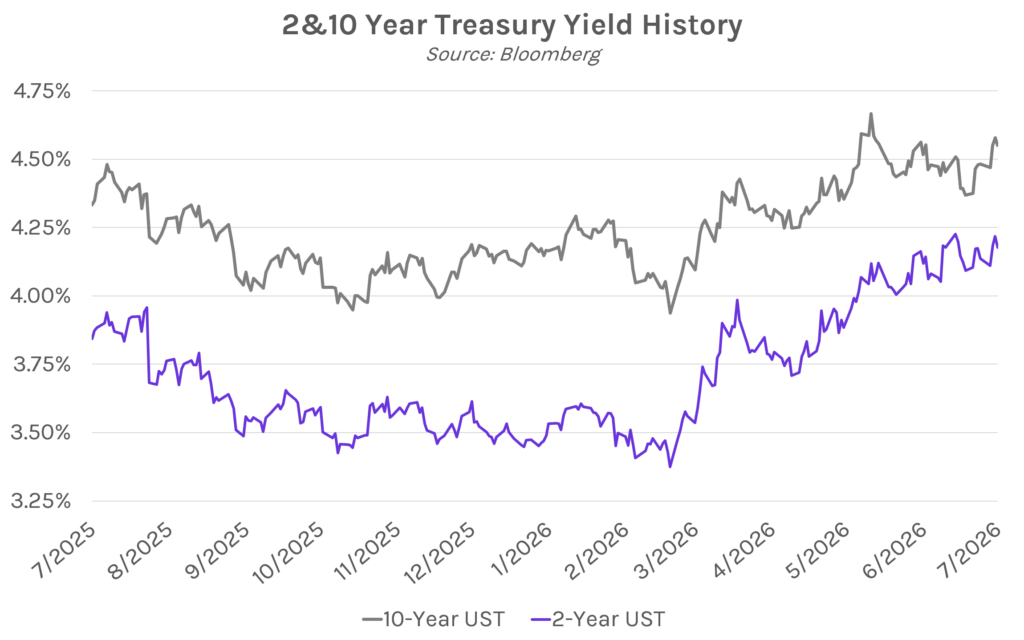
Yields fall as oil retreats despite US-Iran tensions. Treasury yields declined across the curve today, led by the front end, due to retreating oil prices as markets looked past renewed hostilities between the US and Iran. The 2-year yield closed 4 bps lower at 4.18% and the 10-year yield closed 3 bps lower at 4.55%. Meanwhile, equities rallied, led by a jump in semiconductor shares, with the NASDAQ and S&P 500 closing 1.30% and 0.81% higher, respectively.
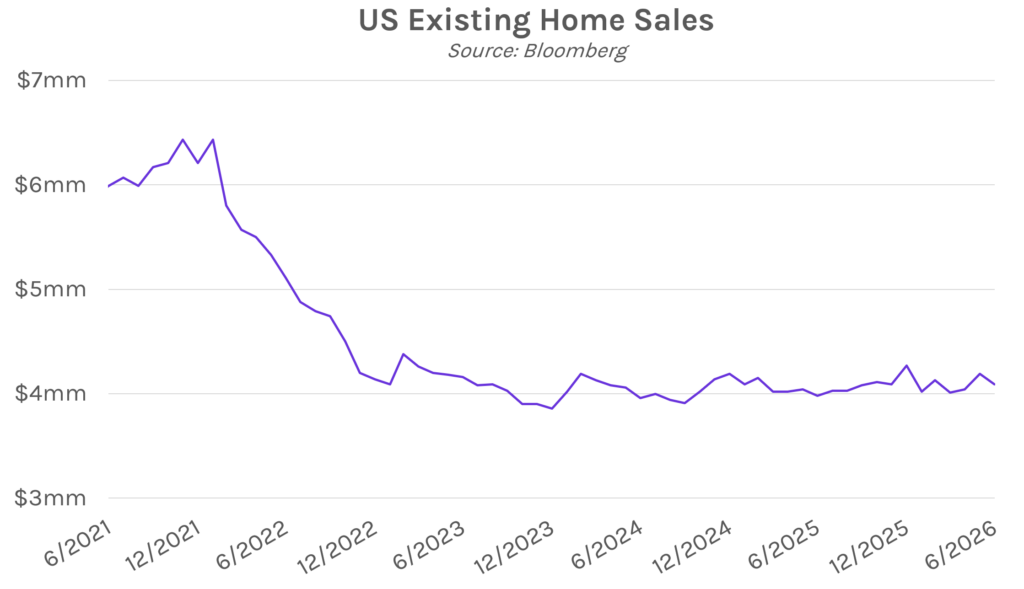
Existing home sales fall amid affordability concerns. Existing home sales slipped to an annualized rate of 4.09 million in June, down 2.4% MoM and short of the expected 4.20 million. Even though housing inventory is up 1.3% YoY, “The existing home sales market remained dormant in June, amid high mortgage rates and low consumer confidence,” noted Samuel Tombs of Pantheon Macroeconomics. Home sales are expected to improve long-term with support from the job gains that have been seen since the beginning of the year. In addition, wage growth is currently exceeding home price growth, which should also help alleviate affordability concerns.
PCE methodology change expected to lower core inflation readings. The Bureau of Economic Analysis will revise how it calculates certain components of its Personal Consumption Expenditure data, the Fed’s preferred inflation gauge. The BEA will update its inflation calculations for the portfolio management, legal services, and computer software sectors as part of its annual revisions, which take effect September 30 and apply retroactively back to 2021. Economists estimate the new methodology could lower core PCE inflation by 0.1% to 0.3%, which would trim May’s 3.4% reading closer to 3.2%. Markets will await the impacts of the revisions, which could strengthen the case for the Fed to hold rates.