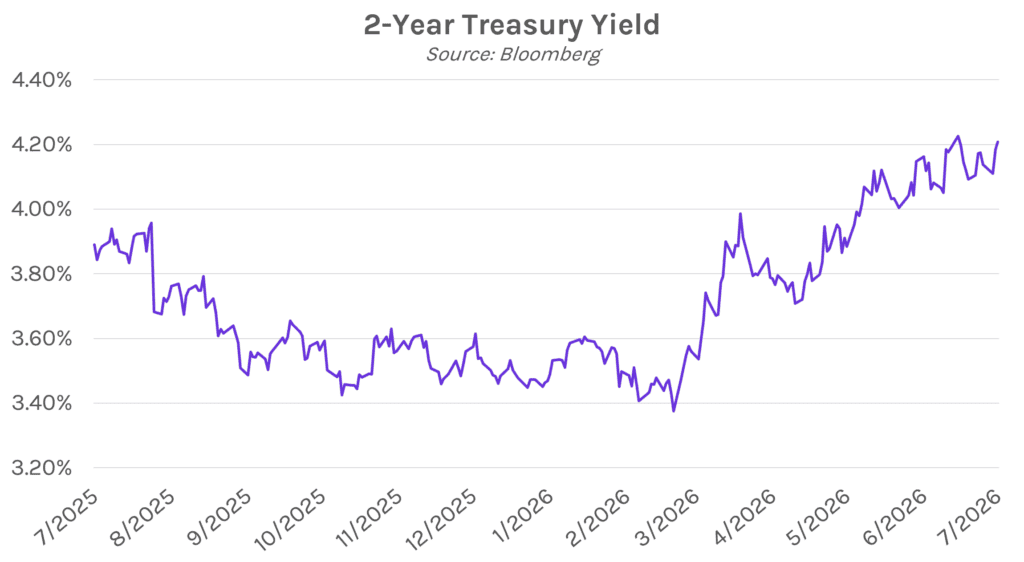
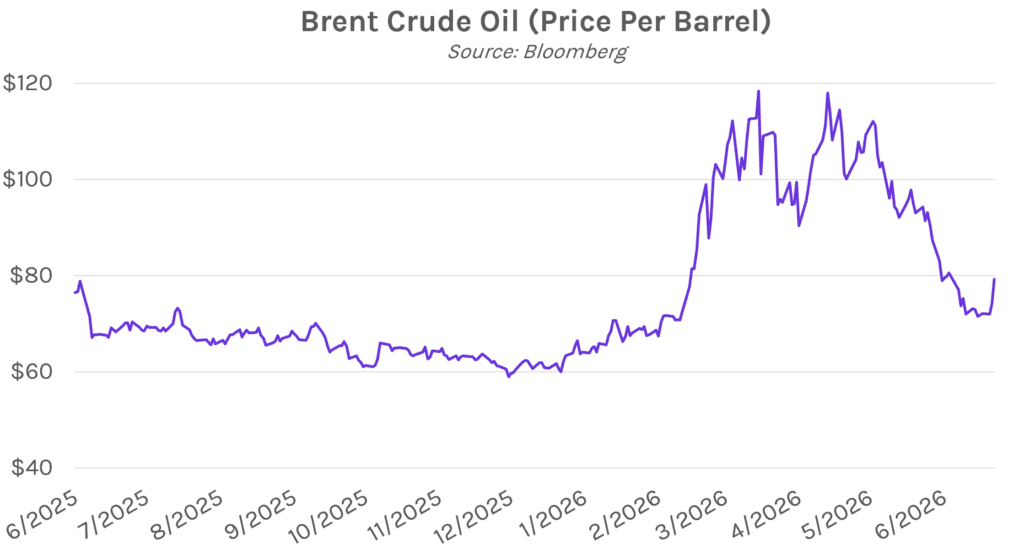
Yields climb as US-Iran tensions heighten. Treasury yields rose across the curve as President Trump said the ceasefire with Iran is “over” and the US launched additional strikes. The 2-year and 10-year yield both closed 3 bps higher at 4.22% and 4.58%, respectively. Meanwhile, Brent crude jumped 7% to roughly $79 per barrel on the escalating tensions. Equities were mixed, with the NASDAQ closing 0.20% higher on a rebound in technology shares while the S&P 500 slipped 0.28%.
US continues to launch retaliatory strikes on Iran. The US military struck Iran for a second day in retaliation for Iran’s attacks yesterday on commercial vessels in the Strait of Hormuz. The US Central Command said in a statement, “The United States is holding Iran accountable for recent unjustified aggression against commercial shipping and civilian crews freely navigating a vital international waterway.” It is reported that Iran’s Revolutionary Guard has struck military bases in Kuwait and Bahrain in response. Both nations have accused each other of violating the recently signed memorandum of understanding, and President Trump has threatened to reimpose the naval blockade and launch attacks on infrastructure. Trump said he does not think the war will start again and that he will not prevent negotiators from engaging in talks.
Fed minutes show divided path forward. Although Fed officials unanimously agreed to keep rates steady at 3.50%-3.75% in June, the FOMC meeting minutes released today highlighted a divided policy path ahead, with inflation serving as the main driver of decision making. According to the minutes, “many” of the policymakers believe that “ongoing strong demand for AI infrastructure would likely sustain upward pressure on prices for technology products and electricity,” while other Fed officials believed that the falling energy prices may bring inflation down on their own. Uncertainty in the Middle East complicates the decision further, as escalation or resolution could shift the outlook in either direction. Jeffery Roach, LPL Financial’s chief economist noted that the minutes revealed that the committee “will not commit to a specific scenario until the incoming data provides necessary clarity.”